Private Space Telescope to Surpass Hubble by 2029
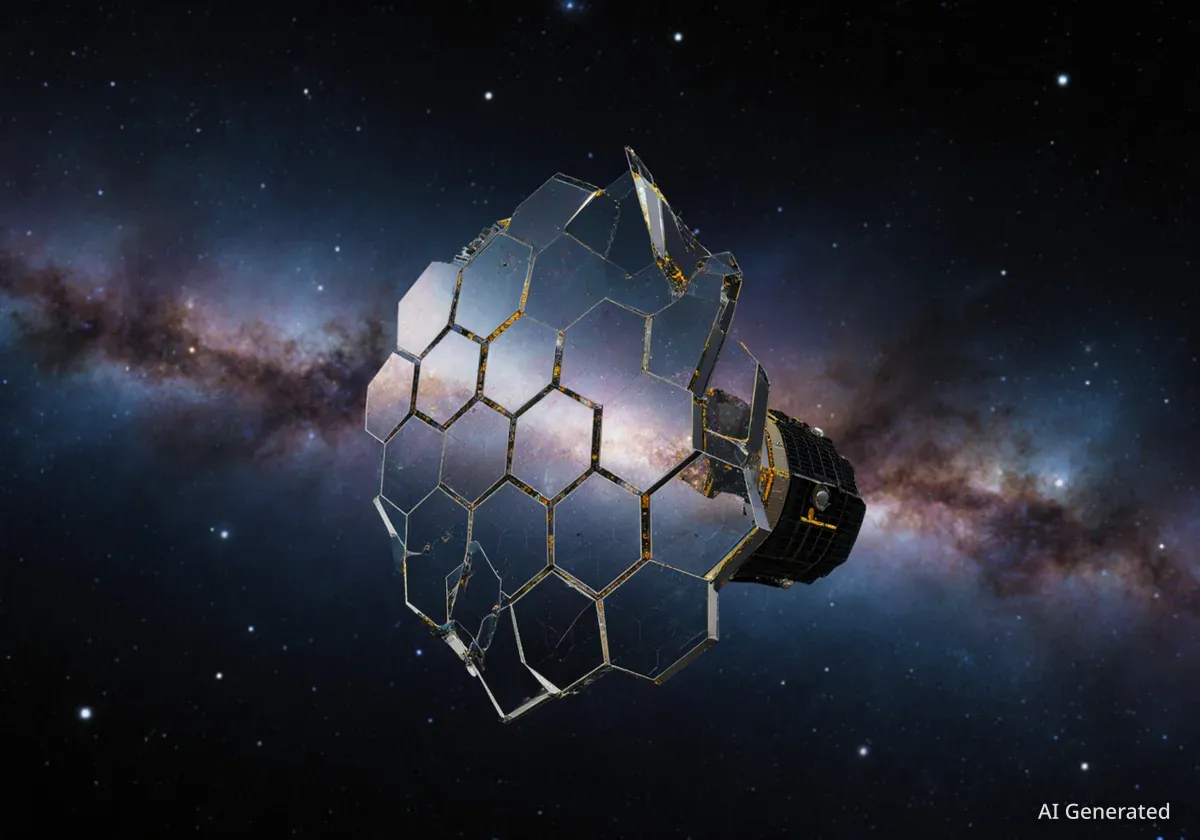
A new privately funded space telescope, the Lazuli Space Observatory, is set to launch by 2029 with a mirror larger than Hubble's to study dark energy and exoplanets.

Maya Singh is a science writer for Archeonis who specializes in making complex topics in astronomy, physics, and earth science accessible to a general audience. She covers celestial events, new scientific discoveries, and the growing field of space technology.
20 published articles
A new privately funded space telescope, the Lazuli Space Observatory, is set to launch by 2029 with a mirror larger than Hubble's to study dark energy and exoplanets.
NASA's SPHEREx telescope has released its first complete map of the entire sky, capturing the cosmos in 102 different infrared colors to study the Big Bang.
Astronomers using the Hubble Space Telescope have confirmed the existence of 'Cloud-9,' a massive, starless cloud of gas and dark matter 2,000 light-years away.
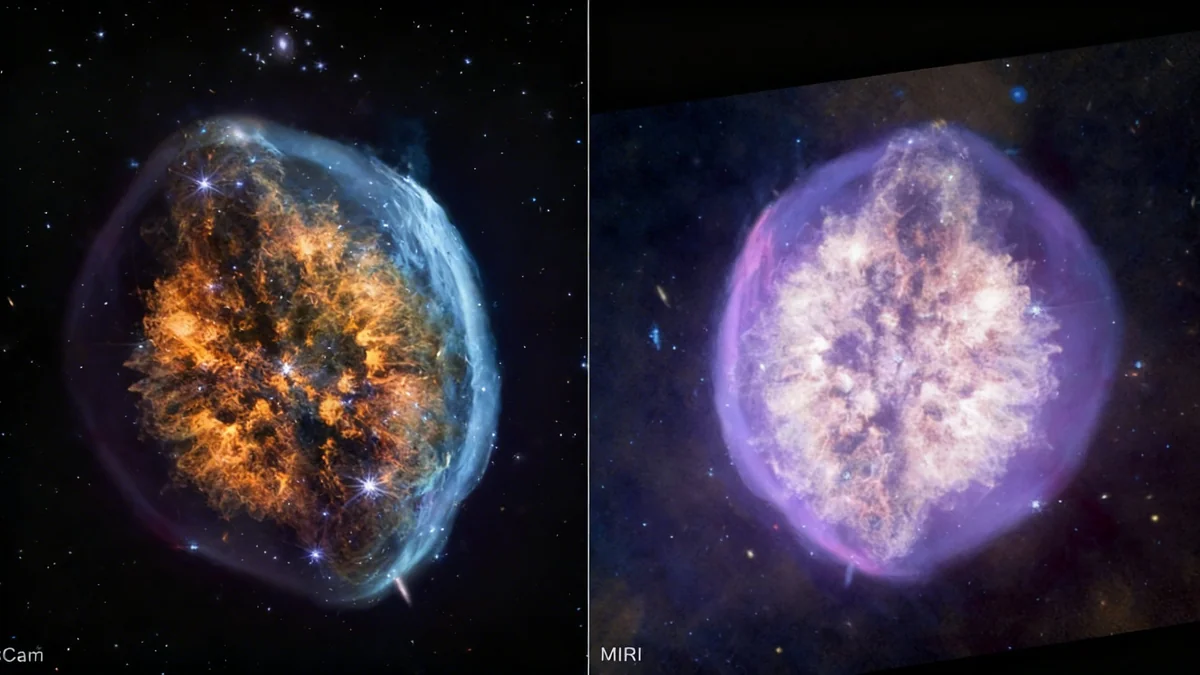
Astronomers may have witnessed a 'superkilonova,' a theoretical cosmic event where a star explodes twice, challenging our understanding of stellar death.
The 2026 Quadrantid meteor shower, one of the year's best, is expected to be a major disappointment due to a daylight peak and an interfering full moon.
Astronomers using the Hubble Telescope have witnessed the aftermath of two massive asteroid collisions in the Fomalhaut system, mistaking the debris for a planet.
A new study using Fast Radio Bursts has located all the universe's 'missing' normal matter, finding most of it hidden in the vast spaces between galaxies.
Using the James Webb Space Telescope, astronomers have detected a supernova from when the universe was just 730 million years old, challenging theories about early stars.
Located 2,700 light-years away, the stellar nursery NGC 2264 offers a detailed look at star formation, featuring the famous Christmas Tree cluster and Cone Nebula.
The European Space Agency's Euclid telescope has delivered a stunning new image of spiral galaxy NGC 646, showcasing its mission to map the dark universe.
Interstellar comet 3I/ATLAS is making its final close approach to Earth on Dec. 19, offering scientists a rare chance to study an object from outside our solar system.
The James Webb Space Telescope has captured a stunning new image of the galaxy cluster MACS J1149.5+2223, revealing hundreds of distant galaxies.
New images from NASA's Hubble and ESA's Juice spacecraft show interstellar comet 3I/ATLAS glowing with activity ahead of its close approach to Earth on Dec. 19.
A new study using the James Webb Space Telescope reveals unexpected UV radiation around infant stars, challenging current theories of star formation.
The International Space Station has marked 25 years of continuous human habitation, serving as a hub for global scientific cooperation and research.
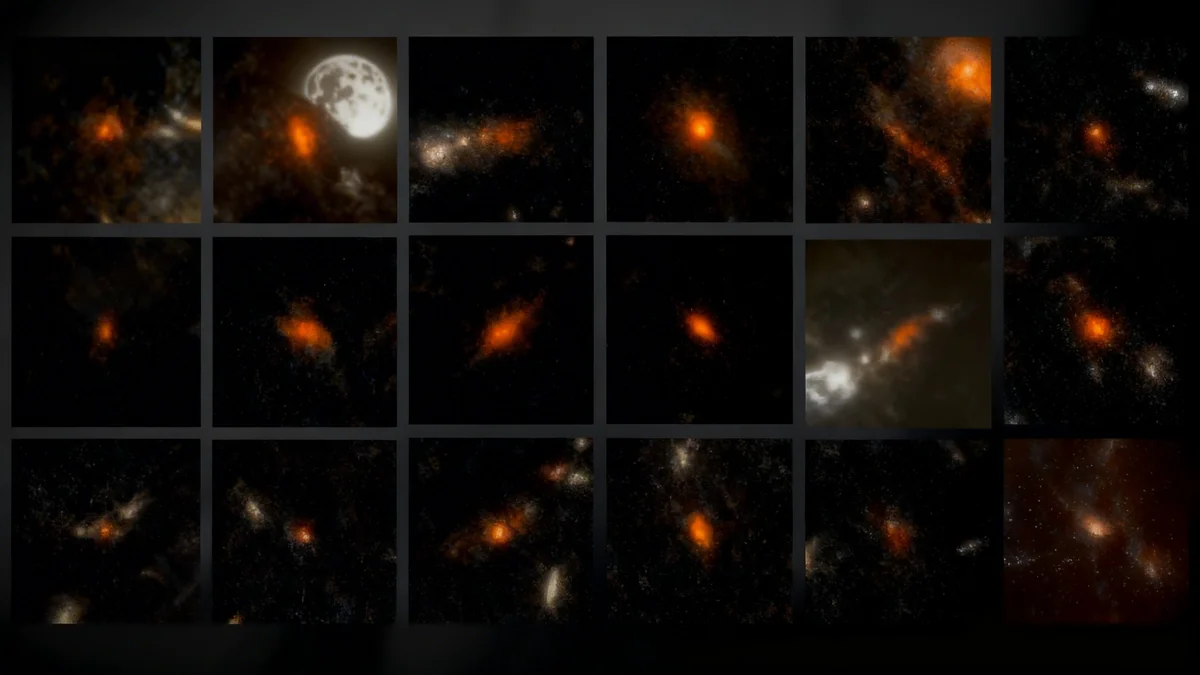
Astronomers propose a new theory for the mysterious 'little red dots' seen by the Webb Telescope, suggesting they are a new object: a 'black hole star'.
The Vera C. Rubin Observatory's first images have revealed a massive, 163,000-light-year-long stream of stars trailing the M61 galaxy, hinting at its violent past.
Belfast-born astrophysicist Dr. Rosemary Coogan is preparing for her first space mission to the International Space Station after being selected by the ESA.
A satellite re-entered Earth's atmosphere over Florida's First Coast Saturday morning, creating a bright, fragmented light show mistaken for a meteor or rocket launch.
Crucial NASA images of the mysterious interstellar object 3I/ATLAS are being withheld due to the government shutdown, delaying key scientific research.