
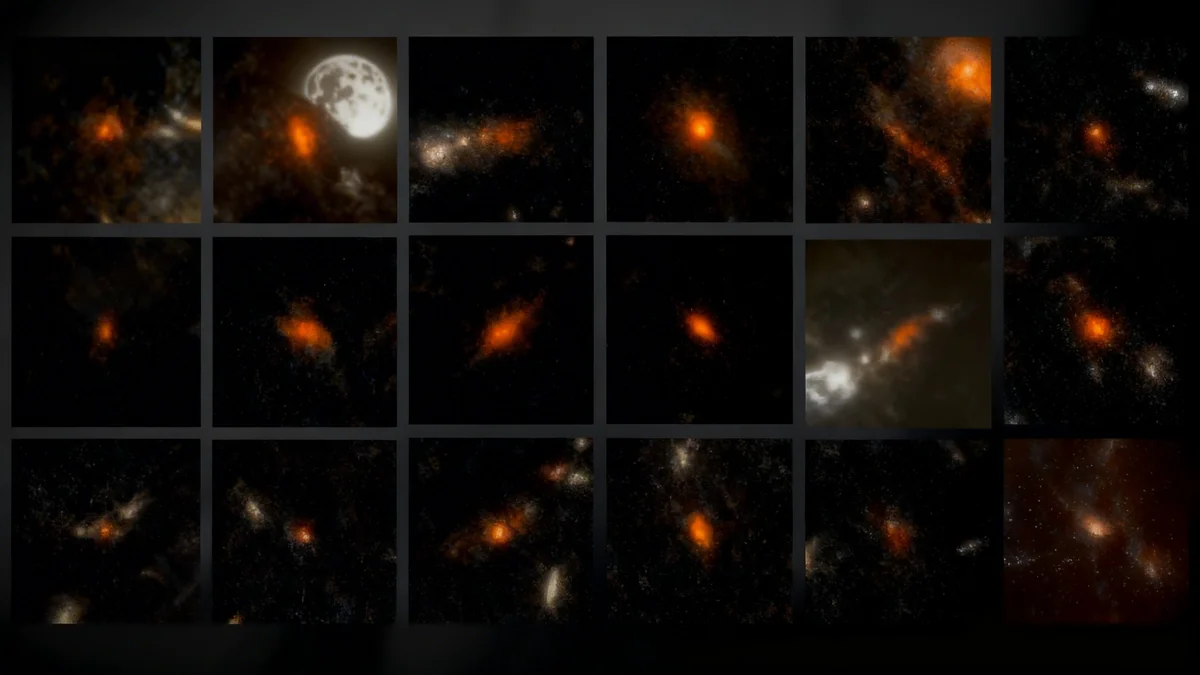

Astronomers using the James Webb Space Telescope (JWST) and the Atacama Large Millimeter/sub-millimeter Array (ALMA) have identified 70 ancient galaxies that could fundamentally alter our understanding of the universe's first billion years. These galaxies, teeming with dust and heavy elements, appear to have formed much earlier than current cosmological models permit.
The discovery suggests that the processes of star and galaxy formation were already well underway just 500 million years after the Big Bang, a finding that challenges long-held theories about cosmic evolution.
Key Takeaways
- A team of astronomers discovered 70 dusty, star-forming galaxies in the early universe.
- Observations were made using a combination of the James Webb Space Telescope and the ALMA radio telescope array in Chile.
- These galaxies existed as early as 500 million years after the Big Bang, far sooner than models predict for such mature systems.
- The presence of heavy elements, or "metals," indicates that multiple generations of stars had already lived and died, a process thought to take much longer.
- This finding may provide a missing link between different types of early galaxies and could require a revision of cosmic history.
A Surprising Find in the Cosmic Dawn
A new study has revealed a population of 70 galaxies located at the very edge of the observable universe. These systems are not just old; they are also surprisingly mature for their age. They are filled with cosmic dust, a byproduct of dying stars, and contain significant amounts of what astronomers call "metals"—elements heavier than hydrogen and helium.
According to established theories, the universe's first stars were composed almost entirely of hydrogen and helium. These stars had to complete their life cycles and explode as supernovae to create and scatter heavier elements into the cosmos. This process was believed to take a considerable amount of time, making the discovery of metal-rich galaxies so early in cosmic history a significant puzzle.
"Dusty galaxies are massive galaxies with large amounts of metals and cosmic dust," said team leader Jorge Zavala of the University of Massachusetts Amherst. "And these galaxies are very old, which means stars were being formed in the early universe, earlier than our current models predict."
This suggests that the cosmic assembly line for stars and galaxies was operating faster and more efficiently than previously thought.
Combining Telescopes for a Deeper Look
The research began with the Atacama Large Millimeter/sub-millimeter Array (ALMA), a powerful network of 66 radio antennas in northern Chile. Using ALMA, the research team initially identified a large sample of 400 bright and dusty galaxies. From this pool, they turned to the unparalleled infrared sensitivity of the James Webb Space Telescope.
The JWST's observations allowed the team to pinpoint which of these galaxies were truly ancient. The telescope's instruments helped filter out closer objects, narrowing the list down to 70 candidates located in the universe's infancy. Many of these galaxies had never been seen before.
Cosmic Timeline
- Big Bang: Approximately 13.8 billion years ago.
- First Stars Form: Previously estimated around 200-400 million years after the Big Bang.
- Discovered Galaxies: Confirmed to exist between 500 million and 1 billion years after the Big Bang.
- Implication: The cycle of star birth, death, and element creation happened much more rapidly than expected.
By combining data from both ALMA and JWST, the astronomers confirmed the extreme distances and ages of these galaxies. The results, published in The Astrophysical Journal Letters, provide strong evidence that complex galactic structures were in place when the universe was less than 7% of its current age.
The Missing Link in Galaxy Evolution
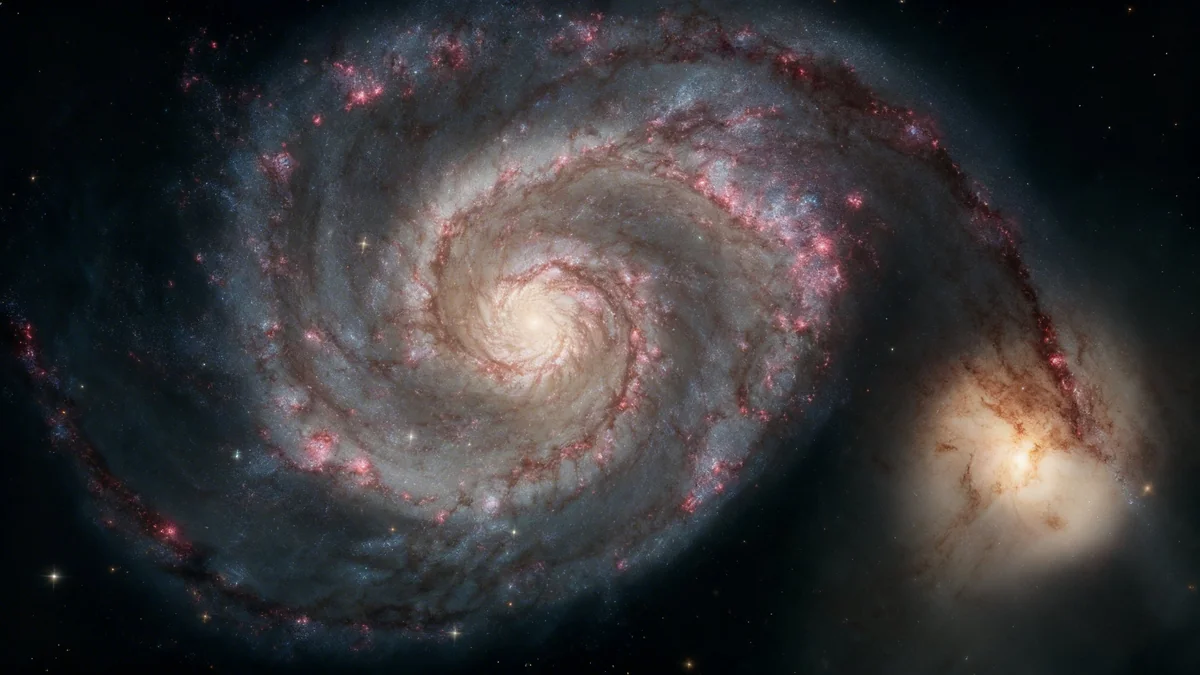
This discovery does more than just push back the timeline for star formation. It may also solve a lingering mystery about the lifecycle of galaxies in the early cosmos. Astronomers have previously identified two other puzzling populations of ancient galaxies using the JWST.
The first group consists of ultrabright, actively star-birthing galaxies, considered to be in their infancy. The second group is made up of quiescent or "dead" galaxies, which have mysteriously stopped forming stars at a very early age. The newly found dusty galaxies could be the connection between these two extremes.
What Are "Metals" in Astronomy?
In cosmology, any element heavier than hydrogen and helium is referred to as a "metal." These elements are forged inside stars through nuclear fusion. When massive stars die, they release these metals into space, enriching the cosmic gas clouds from which new stars and planets form. The presence of metals is a key indicator of a galaxy's age and star-formation history.
Jorge Zavala explained the potential connection, stating, "It's as if we now have snapshots of the lifecycle of these rare galaxies. The ultrabright ones are young galaxies, the quiescent ones are in their old age, and the ones we found are young adults."
If these three populations are indeed linked, it would represent a complete, albeit accelerated, evolutionary path for massive galaxies in the early universe. The dusty galaxies represent a crucial transitional phase where star formation is intense but the galaxy is beginning to mature.
Rewriting the Story of the Universe
The implications of this research are profound. If stars were forming and enriching the cosmos with heavy elements so quickly, the foundational models of cosmology may need significant revision. These models are built on our understanding of physics and the observed expansion of the universe, but they have struggled to account for the growing number of unexpectedly mature galaxies found by the JWST.
Further research is necessary to confirm the evolutionary link between the three types of early galaxies. Astronomers will continue to use the JWST and ALMA to study these objects in greater detail, analyzing their chemical compositions, mass, and star-formation rates.
For now, these 70 faint, dusty specks of light from the dawn of time have opened a new window into our cosmic origins. They show a universe that was surprisingly busy and complex from a very early age, forcing scientists to rethink the first chapters of the universe's history.