NASA's High-Risk Mars Mission Tests a New Space Strategy
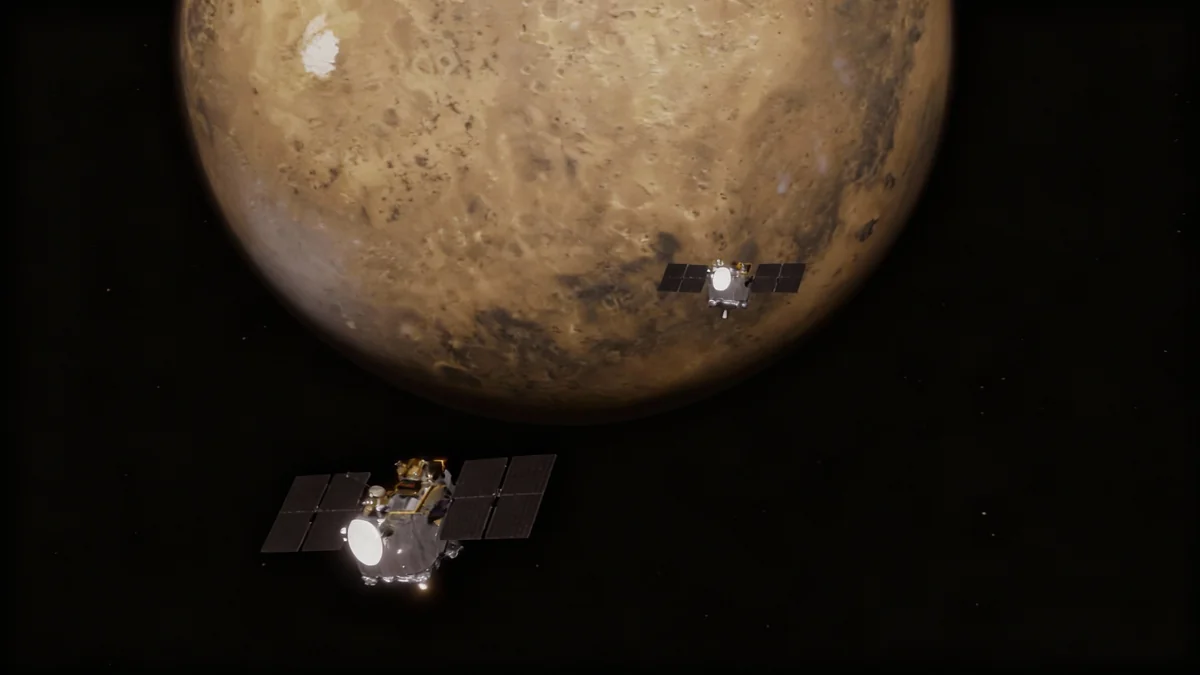
NASA's ESCAPADE mission is testing a new low-cost, high-risk strategy for planetary exploration. Now on its way to Mars, its success could reshape space science.
29 articles tagged

NASA's ESCAPADE mission is testing a new low-cost, high-risk strategy for planetary exploration. Now on its way to Mars, its success could reshape space science.

A new study identifies a specific class of asteroids rich in olivine and spinel as the most viable targets for future space mining, shifting focus from older theories.

NASA's ESCAPADE mission, a low-cost, high-risk project, has launched toward Mars to test a new model for planetary science reliant on commercial partnerships.

NASA is set to launch ESCAPADE, a pioneering mission with two identical satellites designed to solve the mystery of how Mars lost its ancient atmosphere.

The ongoing federal government shutdown has frozen funding for critical planetary science missions, halting research on Mars, Jupiter, and asteroid detection.

Ancient 3.7-billion-year-old rocks from Western Australia reveal a chemical signature matching Apollo moon samples, supporting the theory of the moon's violent formation.

Scientists have found a compelling explanation for the Moon's uneven dust cloud, linking it to the extreme temperature swings between the lunar day and night.

The University of Central Florida is launching Florida's first doctoral program in planetary and space sciences, set to begin in Fall 2026.

Scientists have developed a lightweight laser drill that vaporizes ice, offering a new method for exploring the hidden oceans of moons like Jupiter's Europa.

Japan's Akatsuki spacecraft, humanity's last active probe at Venus, has been declared dead by JAXA, concluding a resilient decade-long mission.

Samples from the moon's far side, collected by China's Chang'e 6 mission, contain fragments of a rare, water-rich meteorite, offering new clues to Earth's origins.

Scientists at Purdue University are analyzing pristine samples from asteroid Bennu, offering an unprecedented look into the 4.5-billion-year history of our solar system.