



A new study has identified a specific class of asteroids as the most promising candidates for future space mining, shifting focus away from more primitive bodies previously considered. Researchers determined that while many asteroids are not yet practical for resource extraction, those rich in olivine and spinel offer a viable path toward obtaining valuable materials in space.
The findings, based on a detailed chemical analysis of meteorites found on Earth, provide a critical roadmap for future space missions and the development of technologies needed to harness off-world resources. This research helps clarify which celestial bodies could one day supply water, fuel, and metals for long-duration missions to the Moon and Mars.
Key Takeaways
- A study led by the Institute of Space Sciences (ICE-CSIC) analyzed carbonaceous chondrite meteorites to assess asteroid mining viability.
- Researchers concluded that mining primordial, undifferentiated asteroids is currently impractical due to low concentrations of valuable elements.
- A different class of asteroids, identifiable by olivine and spinel signatures, are now considered more promising targets for resource extraction.
- Water-rich asteroids are highlighted as a key priority for supplying future space missions with fuel and life support resources.
- Significant technological development is still required for large-scale mining operations in low-gravity environments.
Rethinking Asteroid Resources
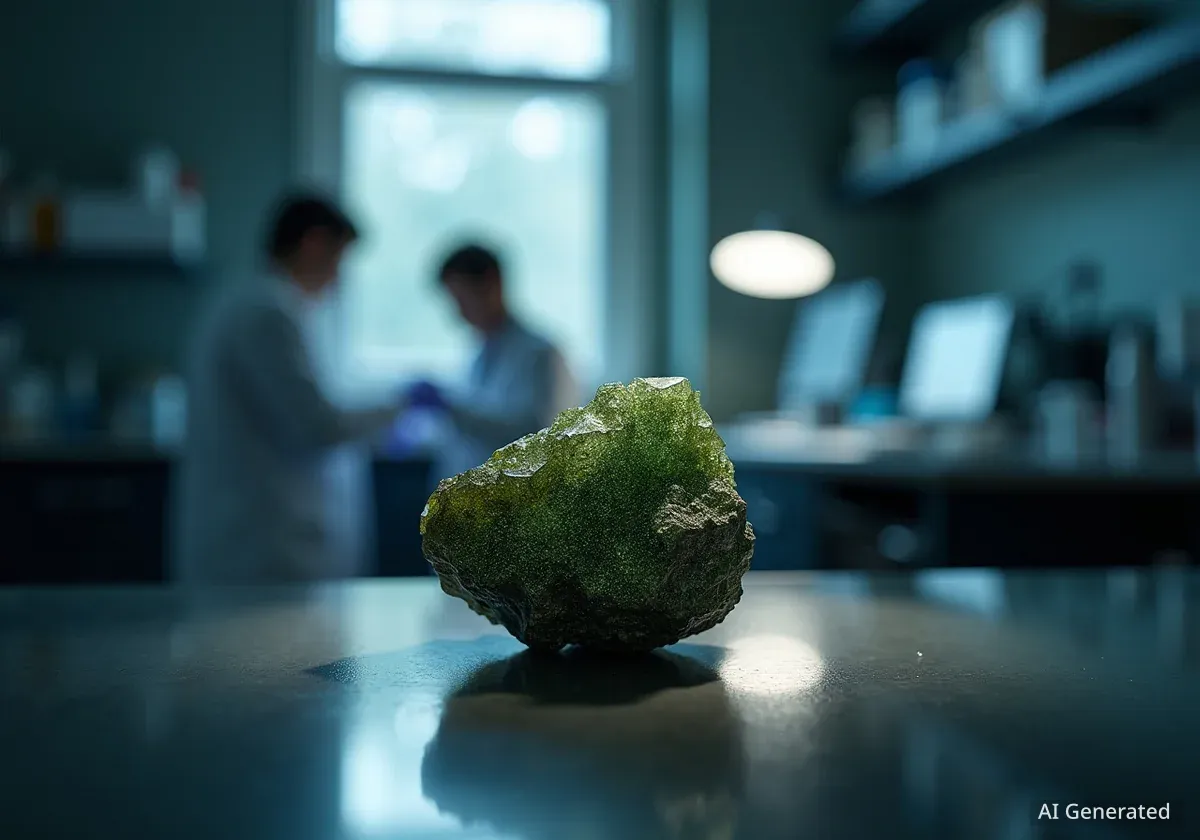
For years, scientists have viewed asteroids as potential reservoirs of valuable materials, from precious metals to water ice. However, a recent investigation provides a more nuanced picture, suggesting that not all asteroids are created equal when it comes to mining potential. A team of Spanish researchers conducted a comprehensive chemical analysis of carbonaceous chondrites, rare meteorites that originate from carbon-rich C-type asteroids.
These meteorites, which make up only 5% of all meteorite falls, are considered direct samples of the asteroids they came from. "The scientific interest in each of these meteorites is that they sample small, undifferentiated asteroids, and provide valuable information on the chemical composition and evolutionary history of the bodies from which they originate," said Josep M. Trigo-Rodríguez, an astrophysicist at ICE-CSIC and the study's lead author.
Using mass spectrometry, the team determined the precise chemical makeup of six common types of these meteorites. The goal was to understand if extracting materials from their parent asteroids would be a practical endeavor. The results indicate that many of the most primitive, or undifferentiated, asteroids may not be worthwhile targets for now.
Fragile Messengers from Space
Carbonaceous chondrites are extremely fragile. Many break apart upon entering Earth's atmosphere, making intact samples exceptionally rare. They are most often recovered from environments like Antarctica or the Sahara Desert, where conditions are favorable for their preservation.
Identifying the Right Targets
The study's most significant conclusion is the identification of a more promising type of asteroid for resource extraction. While the primordial building blocks of the solar system are scientifically fascinating, they often lack the concentrated deposits of valuable elements needed to make mining economically viable.
Instead, the research points toward a different class of relatively pristine asteroids that show distinct signatures of olivine and spinel minerals. These bodies are now considered more attractive targets. Identifying these asteroids from Earth requires a combination of telescopic observation and a deep understanding of the meteorites they produce.
Water is singled out as a particularly critical resource. "If we are looking for water, there are certain asteroids from which hydrated carbonaceous chondrites originate," explained Trigo-Rodríguez. These water-bearing minerals could be processed to provide drinking water, breathable air, and even rocket fuel for missions venturing deeper into the solar system.
"For certain water-rich carbonaceous asteroids, extracting water for reuse seems more viable, either as fuel or as a primary resource for exploring other worlds."
- Josep M. Trigo-Rodríguez, Institute of Space Sciences (ICE-CSIC)
Prioritizing these water-rich asteroids could dramatically reduce the cost and complexity of human space exploration by lessening the need to launch heavy supplies from Earth.
The Technological Hurdles Ahead
While the study provides a clearer target list, scientists emphasize that the technological challenges of asteroid mining remain immense. Extracting resources in a low-gravity environment is a concept still in its infancy. Jordi Ibáñez-Insa, a co-author and researcher at Geosciences Barcelona, noted the difference between current capabilities and future needs.
He explained that while missions can collect small amounts of loose surface material, or regolith, developing large-scale collection systems is a completely different challenge. New methods and machinery will be required to operate effectively on the surface of a small, fast-moving celestial body.
From Science Fiction to Reality
The concept of asteroid mining has long been a staple of science fiction, but it is slowly moving toward reality. Several private companies and national space agencies are exploring concepts for capturing and processing materials from near-Earth asteroids. These efforts are driven by the long-term goal of establishing a sustainable human presence beyond Earth.
"It sounds like science fiction, but it also seemed like science fiction when the first sample return missions were being planned thirty years ago," commented Pau Grèbol Tomàs, a predoctoral researcher at ICE-CSIC.
Trigo-Rodríguez added that progress requires a concerted effort. "Companies capable of taking decisive steps in the technological development necessary to extract and collect these materials under low-gravity conditions are truly needed," he stated. Furthermore, the environmental impact of such operations, including the processing of materials and waste generation, must be carefully studied and managed.
A Dual-Purpose Endeavor
Beyond resource acquisition, the pursuit of asteroid mining offers additional benefits. A deeper understanding of asteroid composition and structure is crucial for planetary defense. By studying these objects up close, scientists can better prepare to mitigate the threat posed by a potentially hazardous asteroid on a collision course with Earth.
Trigo-Rodríguez proposed a long-term vision where mining could serve a defensive purpose. "We could even mine and shrink potentially hazardous asteroids so that they cease to be dangerous," he explained. This dual-purpose approach could provide both the resources to explore the solar system and the knowledge to protect our home planet.
The path forward involves a combination of continued meteorite analysis on Earth and new sample return missions. These missions are essential to confirm the link between specific meteorites and their parent asteroids, ensuring that future mining efforts are directed at the most valuable and accessible targets in our cosmic neighborhood.