Congress Proposes $24.4 Billion NASA Budget, Rejects Cuts
Congress has proposed a $24.4 billion budget for NASA, rejecting a White House plan for deep cuts and restoring funding for key science missions.

Lena Petrova is an incisive reporter covering the intersection of science, policy, and societal development. Her work often explores how scientific advancements are fostered through educational programs and national efforts.
20 published articles
Congress has proposed a $24.4 billion budget for NASA, rejecting a White House plan for deep cuts and restoring funding for key science missions.
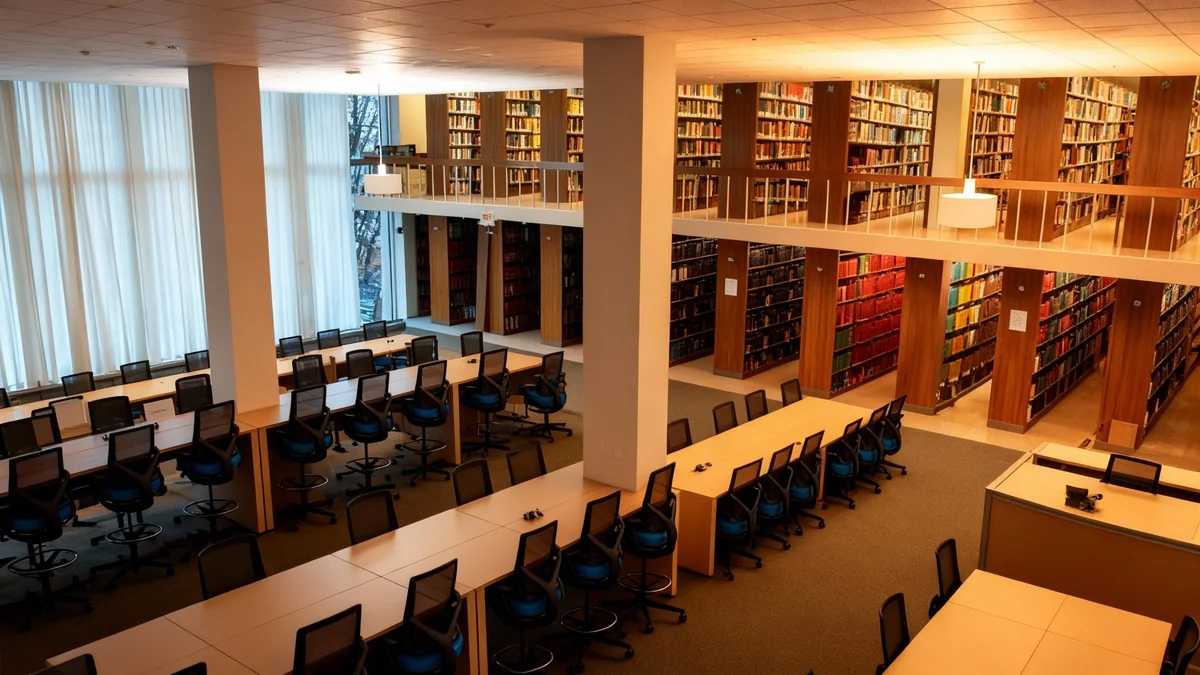
NASA has closed its largest research library at the Goddard Space Flight Center, placing over 100,000 unique and non-digitized documents at risk of disposal.
The White House has announced a proposal to dismantle the National Center for Atmospheric Research (NCAR), citing concerns over "climate alarmism."
While most were at the dinner table, Maryland native Chris Williams spent Thanksgiving on a journey to the stars, capping a career spanning MIT, Harvard, and supernova research.
Canada is set to announce historic investments in European Space Agency programs this week, reinforcing a decades-long partnership that boosts the national economy and scientific innovation.
UC Berkeley's Space Center and the University of Luxembourg have signed a five-year agreement to advance collaborative research in space technology, robotics, and law.
Scientists at NASA's Goddard Space Center are reporting a disruptive campaign of political pressure and reorganization from the White House, sparking fears for the future of critical research.
The Kansas Geological Survey has opened an expanded 5,500-square-foot laboratory to enhance research on the state's subsurface natural resources.
The ongoing federal government shutdown has frozen funding for critical planetary science missions, halting research on Mars, Jupiter, and asteroid detection.
The University of Central Florida is launching Florida's first doctoral program in planetary and space sciences, set to begin in Fall 2026.
Democratic leaders and space policy experts are outlining a new, ambitious vision for America's future in space, advocating for robust government programs and embracing the commercial space industry.
The European and African Space Agencies have concluded a joint training course for 30 young engineers, strengthening a strategic partnership in space.
A team of Durham University students, mentored by a Lockheed Martin engineer, has successfully built and tested an advanced 3D-printed liquid-propellant rocket engine.
The University of Central Florida is hosting a major week-long event, featuring two international conferences and leaders from NASA and Blue Origin.
Emporia State University has been selected to host a live radio conversation between local students and astronauts aboard the International Space Station.
NASA's Artemis program faces critical delays from private partners like SpaceX, prompting the agency to diversify with a new contract for Blue Origin.
Three University of Central Florida students have been awarded the prestigious 2025 Astronaut Scholarship, recognizing their outstanding work in STEM fields.
Decades after it was first proposed, space-based solar power remains a distant goal, caught between its promise of unlimited clean energy and immense cost.
A new study reveals female astronauts experience greater brain fluid shifts than males, while globe flattening affects male eyes more during spaceflight.
The University of Pittsburgh has joined a new Axiom Space alliance with 14 other institutions to advance scientific research on future commercial space stations.