

The University of Central Florida (UCF), a key institution in America's space exploration efforts, has announced the creation of a new doctoral program in planetary and space sciences. The program, the first of its kind in Florida, is set to welcome its inaugural class in the fall of 2026, aiming to train the next generation of scientists for roles in government, private industry, and academia.
This initiative solidifies UCF's role as a leading 'Space University' by offering a specialized, interdisciplinary curriculum designed to meet the growing demands of the space sector. Applications for the new Ph.D. program are now open, with a priority deadline set for December 1, 2025.
Key Takeaways
- The University of Central Florida is launching a new Ph.D. program in planetary and space sciences, the first in the state of Florida.
- The program will begin in Fall 2026, with applications currently open for the first cohort.
- It features an interdisciplinary approach, combining physics, geology, data science, astrobiology, and engineering.
- The curriculum is designed to prepare graduates for high-demand jobs at agencies like NASA, in the private space industry, and in academic research.
A Strategic Move for America's Space University
The establishment of this doctoral program is a significant development for both UCF and the state of Florida. The university, which was originally founded to support the nation's ambitions during the Space Race, continues to build on its legacy. The new program was officially approved by Florida's Board of Governors, making it a unique educational offering within the state.
Professor Addie Dove, chair of the Department of Physics, emphasized the program's strategic importance. "As SpaceU, we are aiming to be the premier engineering and technology university in the state and a destination for space-focused learning in the world," she stated. "We want to ensure the programs we offer reflect the university’s strategic approach as well as what’s necessary to succeed in today’s workforce."
From Track to Full Program
The new Ph.D. was developed from an existing planetary sciences track within the university's physics doctoral degree. Its elevation to a standalone program reflects the growing complexity and specialization required in the field, as well as the high concentration of planetary science faculty at UCF.
This move is intended to attract top-tier talent to Florida and supply the burgeoning space industry with highly skilled professionals. The curriculum is designed to be forward-thinking, addressing the current and future needs of space exploration and research.
An Interdisciplinary Approach to Space Science
A core feature of the new doctoral program is its interdisciplinary nature. It moves beyond traditional physics to incorporate a wide range of scientific disciplines, creating a more holistic educational experience for students.
The program will cover areas including:
- Astrobiology
- Astrochemistry
- Astrogeology
- Astronomy
- Data Analysis and Machine Learning
- Scientific Instrument Development
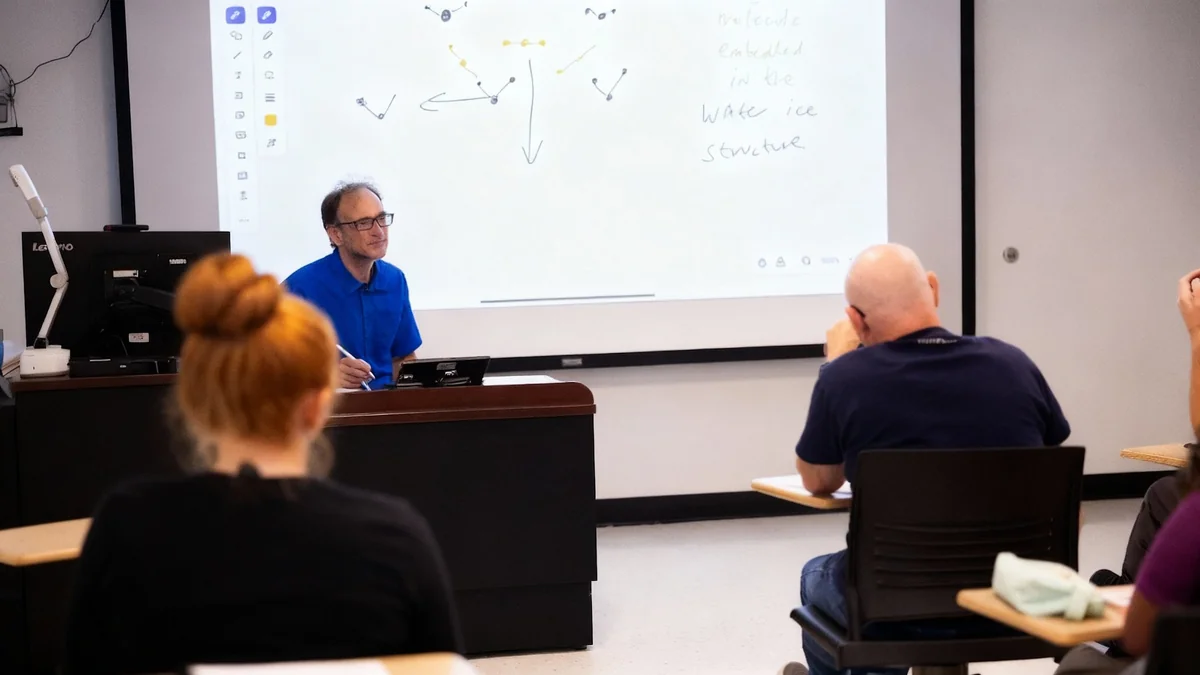
This broad scope is intentional, designed to attract students from diverse STEM backgrounds. "This program is not just for physics students, but also for students who have studied geology, engineering, data science or many other STEM fields," Professor Dove explained. This approach recognizes that modern space science is a collaborative effort requiring expertise from multiple fields.
"It’s relatively unusual to have a separate Ph.D. program in planetary and space sciences like this. It’s an exciting step forward. We have a large number of faculty working on planetary science and there are very few universities with that kind of knowledge in one place."
Yan Fernandez, Professor of Physics and Program Director
By integrating these different areas, UCF aims to produce graduates who can tackle complex problems, from analyzing geological data from other planets to designing the next generation of space telescopes and probes.
Preparing for the Data-Driven Future of Space
The program places a strong emphasis on skills that are becoming increasingly critical in planetary science: big data analysis and machine learning. As space missions and ground-based telescopes generate unprecedented amounts of information, the ability to process and interpret this data is essential.
The Data Deluge
Modern space missions and observatories can generate terabytes of data daily. The ability to efficiently analyze these massive datasets is a crucial skill for 21st-century scientists, driving new discoveries and insights about our universe.
Professor Yan Fernandez, the director of the new doctoral program, highlighted this focus. "There’s a need for a program like this because we are awash in data," he said. "Students who understand these aspects of big data, efficient programming and working in problems in planetary science can contribute in many ways to innovative research and to cutting-edge science."
This training in data science will not only prepare students for academic research but also make them highly valuable candidates for the private space sector, where data analysis is crucial for everything from satellite operations to mission planning.
Career Pathways and Industry Connections
Graduates of the new planetary and space sciences Ph.D. program will be positioned for a wide range of career opportunities. The university's strong ties to the space industry provide a significant advantage for its students.
Potential career paths for graduates include roles as scientists in fields such as:
- Astronomy
- Atmospheric Physics
- Space Science
- Geoscience
Employment opportunities are projected to grow, particularly in Florida, which is a major hub for the aerospace industry. Graduates will be qualified for positions at governmental agencies like NASA, research institutions, and a growing number of private space companies involved in launch services, satellite technology, and exploration hardware.
Professor Dove noted the success of students from the previous planetary sciences track. "Many of our students obtain internships or fellowships over the course of their studies... Our graduates have become postdocs and have worked on spacecraft missions. Some have continued into academia, some have worked for NASA and we have also seen students go on to work for companies that develop hardware and technology to send to space."
The program aims to continue this legacy, providing a direct pipeline of talent to fuel the future of space exploration and scientific discovery. Prospective students are encouraged to apply by the December 1, 2025, priority deadline to be considered for the inaugural Fall 2026 cohort.