

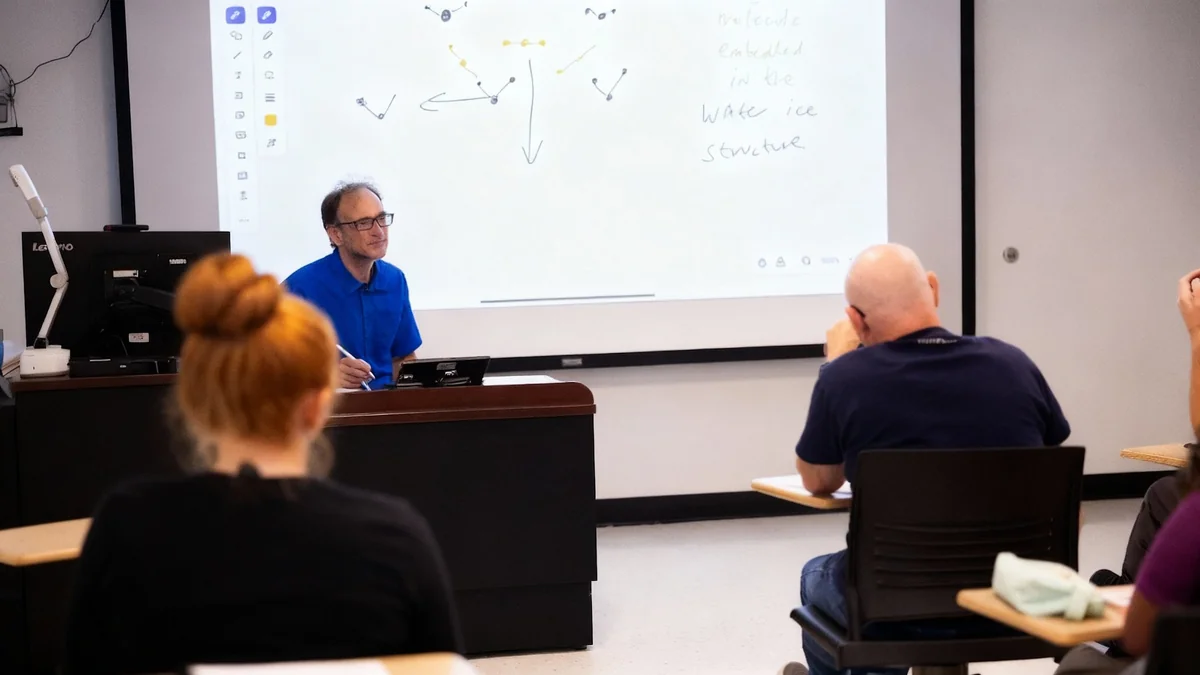
In Huntsville, Alabama, a unique program is challenging the notion that Space Camp is just for kids. The Adult Space Academy offers a multi-day, immersive experience that trades hotel comforts for hands-on astronaut training, focusing on teamwork, problem-solving, and performance under pressure. It's an opportunity for adults to step out of their daily routines and into the demanding world of space exploration.
Participants don flight suits, live in dormitories, and work with strangers from diverse backgrounds to complete simulated space missions. The program, held at the U.S. Space & Rocket Center, is designed not as a nostalgic trip, but as a structured simulation that pushes mental and physical boundaries.
Key Takeaways
- Adult Space Camp in Huntsville, Alabama, is a structured program focused on immersive astronaut training simulations, not just tourism.
- The experience emphasizes teamwork and communication, requiring participants to collaborate with strangers to solve complex problems under pressure.
- Activities include realistic simulators like the Multi-Axis Trainer, model rocket construction, and a final, comprehensive simulated space mission.
- The program is set against the backdrop of Huntsville, a city with a deep, ongoing history in America's space program through NASA's Marshall Space Flight Center.
Setting the Stage for a Mission
The transition from civilian to astronaut trainee begins almost immediately upon arrival. Instead of a hotel check-in, participants are assigned to dormitories with bunk beds and shared spaces. This simple logistical step is the first of many designed to shift the mindset from that of a tourist to a team member.
A key moment in this transformation is receiving a flight suit. While an optional purchase, the uniform serves as a powerful symbol, creating a sense of purpose and unity among the diverse group of attendees. Campers come from all walks of life—engineers, artists, and retirees—each bringing different skills but sharing a common goal for the weekend.
The orientation solidifies this new reality. Teams are formed, roles are assigned, and the weekend's demanding schedule is laid out. It is here that the program's core objective becomes clear: this is not a passive experience. Success depends on active participation, clear communication, and mutual trust among people who have just met.
The Huntsville Connection
Huntsville is not merely a location for Space Camp; it is integral to its authenticity. The city is home to NASA’s Marshall Space Flight Center, a critical hub for rocket propulsion research and development since the dawn of the space age. This living history provides a unique context, grounding the camp's activities in the real-world work that continues to push the boundaries of space exploration.
Training for the Unfamiliar
The curriculum quickly moves from orientation to hands-on training, using simulators that replicate the physical challenges of space travel. These exercises are designed to teach participants how to manage disorientation and remain focused when their physical senses are unreliable.
Confronting Disorientation
The Multi-Axis Trainer is often the most memorable and challenging simulator. Participants are strapped into a device that spins them simultaneously on multiple axes, mimicking the tumbling sensation of a spacecraft re-entering the atmosphere. The goal is not to endure it, but to learn how to remain calm and functional when all sense of direction is lost. It's a physical lesson in why astronauts rely so heavily on procedures and training rather than instinct.
Did You Know? The Multi-Axis Trainer, often called the "human centrifuge," was used in the early days of the Mercury program to test an astronaut's ability to control a vehicle during a tumble. It demonstrates the extreme physical and mental control required for spaceflight.
Other simulators introduce the feeling of altered gravity and the challenges of moving in a weightless environment. These experiences underscore the precision required for even the simplest tasks in space and highlight practical solutions, like the extensive use of Velcro to secure tools and equipment.
From Individual to Crew
While the simulators test individual resilience, much of the Adult Space Camp experience is built around collaborative effort. The program is structured to transform a group of strangers into a functioning crew.
Building and Launching
One of the core activities is the construction and launch of a model rocket. This task requires careful reading of instructions, precision assembly, and teamwork to ensure a successful outcome. It’s a practical exercise in engineering and project management on a small scale.
The launch itself is a shared moment of anticipation and success—or a lesson in troubleshooting. The activity serves as a tangible metaphor for the larger complexities of space missions, where success is built on countless small, precise steps executed correctly.
"The team-building challenges are where you see the dynamics form. You quickly learn who leads, who listens, and how to communicate when you're all processing information differently. It's less about space facts and more about human interaction under pressure."
The Final Mission
The program culminates in a final, high-stakes simulated mission. This capstone event brings together all the skills learned throughout the weekend. Participants are assigned specific roles, such as Mission Control, Commander, or Pilot, and must work together to navigate a complex scenario, often a mission to Mars or the International Space Station.
The simulation is designed to be unpredictable, throwing anomalies and unexpected problems at the crew. Teams must rely on their training, follow checklists, and communicate clearly to resolve issues and complete the mission objectives. It is here that the true test of teamwork occurs, as each person's performance directly impacts the success of the entire group.
Is Adult Space Camp Worth the Trip?
The Adult Space Academy offers a unique experience that goes beyond typical tourism. It is not a luxury vacation but an immersive workshop in problem-solving, adaptability, and collaboration. Participants leave with a deeper appreciation for the mental and physical demands of space exploration and, often, a renewed sense of their own capabilities.
The cost for a three-day program typically ranges from $700 to $900, which includes lodging and meals. Sessions are scheduled on specific dates and often fill up quickly.
For those seeking a challenge that engages both mind and body, and for anyone who has ever looked at the stars and wondered 'what if,' Adult Space Camp provides a compelling, hands-on answer. It’s a chance to stop watching from the sidelines and become an active participant in the story of space exploration.