

While many Americans were preparing for a Thanksgiving feast, one Maryland native embarked on a different kind of journey. Chris Williams, a scientist with a diverse and impressive background, spent the holiday contributing to a mission that reached for the stars, a culmination of a career that has spanned astrophysics, medicine, and public service.
Raised in Potomac, Maryland, Williams has built a career that connects the furthest reaches of the cosmos with practical applications on Earth. His story is a testament to a multidisciplinary approach to science and a commitment to understanding the universe.
Key Takeaways
- Chris Williams, a scientist from Potomac, Maryland, was involved in a space-related mission on Thanksgiving Day.
- His background includes astrophysics research at MIT and clinical physics at Harvard Medical School.
- Williams has contributed to major international scientific projects, including a radio telescope in Australia.
- His career also includes public service as a volunteer firefighter and EMT, showcasing a broad range of skills and commitments.
A Career Spanning Earth and Sky
Chris Williams' professional path is not easily categorized. His work has taken him from the halls of some of the nation's most prestigious academic institutions to remote locations in pursuit of cosmic knowledge. As an astrophysics researcher at the Massachusetts Institute of Technology (MIT), he delved into the fundamental questions of our universe.
His expertise also extends into the medical field. Williams served as a clinical physicist at Harvard Medical School, applying the principles of physics to healthcare and medical technology. This dual focus on both the vastness of space and the intricacies of human health provides him with a unique perspective that is rare in the scientific community.
This combination of skills highlights a modern approach to science, where knowledge from one field can provide unexpected solutions and insights in another. It underscores the interconnectedness of different scientific disciplines.
From Australian Outback to Washington D.C.
Williams' contributions to science are global. He was instrumental in the construction of a low-frequency radio telescope array in the remote landscape of Western Australia. Such projects are vital for observing celestial phenomena that are invisible to traditional optical telescopes, allowing scientists to study the early universe and cosmic events in unprecedented detail.
What is a Radio Telescope?
Unlike optical telescopes that see visible light, radio telescopes are designed to detect radio waves emitted by astronomical objects. By using large antennas, or arrays of smaller ones, they can 'see' through cosmic dust and gas, revealing information about stars, galaxies, black holes, and other cosmic structures that would otherwise be hidden.
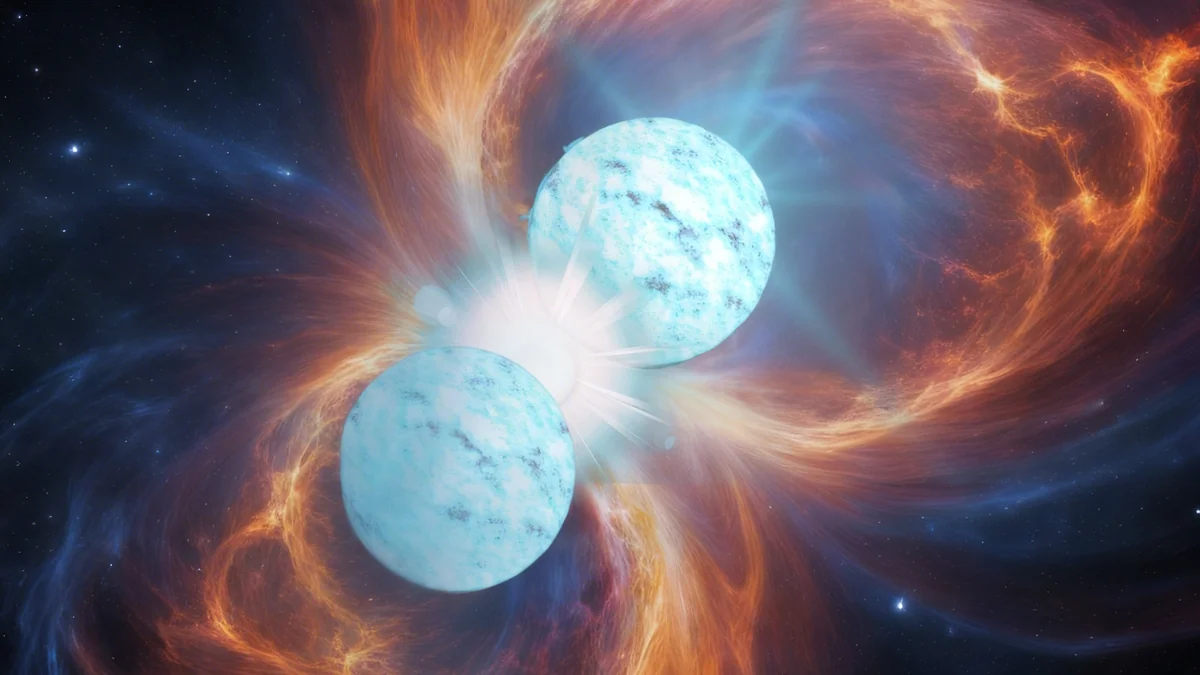
Closer to his Maryland roots, Williams worked at the U.S. Naval Research Laboratory in Washington, D.C. There, his research focused on supernovas—the powerful and luminous stellar explosions that mark the end of a massive star's life. Studying these events helps scientists understand the life cycle of stars and the distribution of chemical elements throughout the universe.
This work, both at home and abroad, has placed him at the forefront of astronomical research, contributing to humanity's collective understanding of the cosmos.
A Commitment to Community Service
Beyond his academic and research achievements, Chris Williams has also demonstrated a strong commitment to his local community. He has volunteered his time as an emergency medical technician (EMT) and a firefighter, roles that demand courage, quick thinking, and a dedication to helping others in times of crisis.
This dedication to public service provides a striking contrast to his more abstract, theoretical work in astrophysics. It shows a personality grounded in practical, hands-on action and a desire to make a direct impact on people's lives. Juggling the demands of high-level scientific research with the responsibilities of an emergency responder is a remarkable feat.
The Dual Life of a Scientist-Responder
Many professionals in demanding fields find value in volunteering. For scientists, roles like firefighting or emergency medical services can offer a different kind of problem-solving and a direct connection to the community, balancing out the often solitary and long-term nature of research.
This aspect of his life story adds another layer to his character, illustrating that his interests are not confined to the laboratory or the observatory. It is a powerful example of how scientific minds can also be deeply engaged in civic duty.
A Thanksgiving Unlike Any Other
While the specifics of his Thanksgiving Day mission remain under wraps, his involvement signifies a continued dedication to pushing the boundaries of exploration. For Williams, a day traditionally associated with being home was instead spent engaged in a project that looks outward, toward the future of science and technology.
His journey from a childhood in Potomac to a career that reaches for the stars serves as an inspiration. It showcases how a foundation in science, technology, engineering, and mathematics (STEM) can lead to a life of immense variety and impact.
As humanity continues to explore the final frontier, the work of dedicated individuals like Chris Williams is essential. His multifaceted career, blending deep-space research with down-to-earth service, reminds us that the quest for knowledge is a profoundly human endeavor, one that can take us from our own backyards to the very edges of the known universe.