

A new analysis based on 50 years of solar data suggests NASA should consider delaying its Artemis 2 mission until the latter half of 2026 to protect its astronauts. Scientists have developed a new forecasting model that predicts a period of intense solar superflare activity, which could pose significant radiation risks to the crew as they travel beyond Earth's protective magnetic field.
The research, which identified previously unknown solar cycles, indicates that the sun is entering a high-risk period that will last until the middle of 2026. This window of heightened activity directly overlaps with NASA's current launch schedule for the crewed lunar flyby, which is slated for no earlier than April 2026.
Key Takeaways
- New research predicts a heightened risk of solar superflares from mid-2025 to mid-2026.
- Scientists recommend delaying the Artemis 2 moon mission until late 2026 to ensure astronaut safety.
- The forecast is based on a new model using 50 years of X-ray data from GOES satellites.
- Astronauts traveling to the moon are outside Earth's magnetic shield, increasing their vulnerability to solar radiation.
A New Model for Predicting Solar Storms
A multinational team of solar physicists has developed a new method for forecasting periods of extreme solar activity. By analyzing five decades of X-ray observations from the Geostationary Operational Environmental Satellites (GOES) program, which has monitored the sun since 1975, the team identified two distinct cycles that influence the sun's behavior.
These cycles, with periods of 1.7 years and seven years, appear to correlate with the buildup of magnetic energy in specific regions of the sun. When these cycles align, the probability of powerful solar superflares increases dramatically. Superflares are the most energetic explosions in our solar system, releasing massive amounts of radiation that can endanger astronauts and disrupt technology.
Victor M. Velasco Herrera of the National Autonomous University of Mexico, who led the research, explained the limitations of current methods.
"Traditional solar forecasting struggles with these extreme events because they happen so quickly and unpredictably," Velasco Herrera stated.
His team's model does not predict individual flares but instead forecasts extended high-risk seasons, providing a much longer lead time for mission planning.
Implications for the Artemis 2 Mission
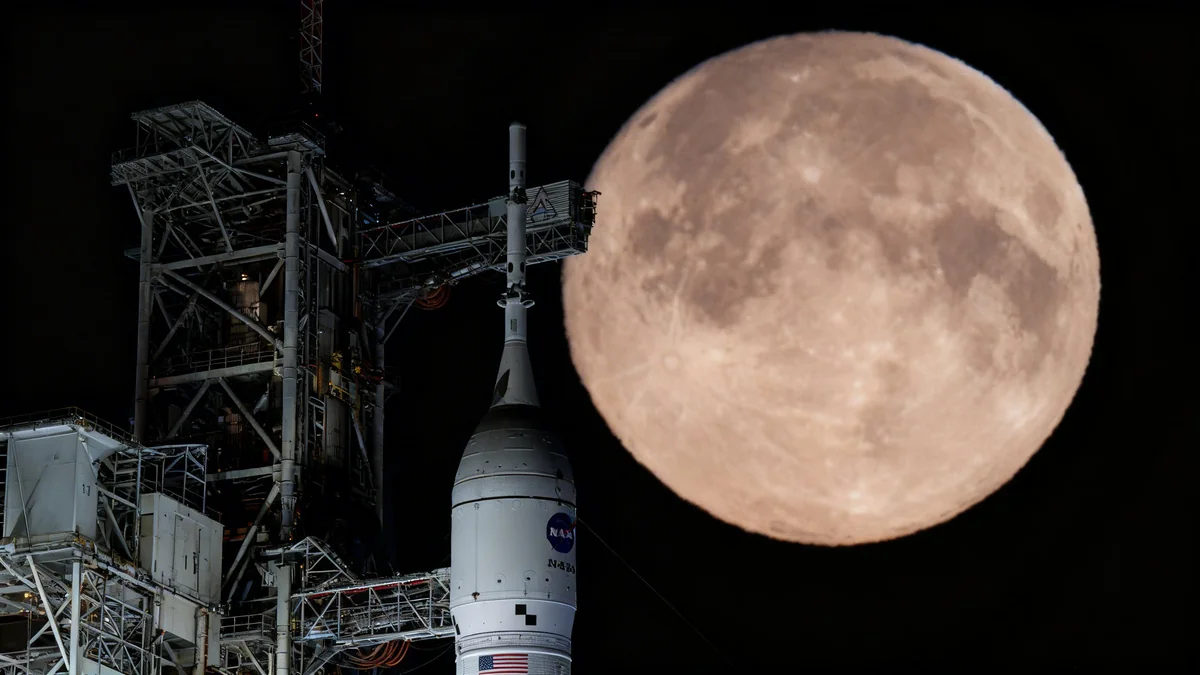
The findings have immediate and critical implications for NASA's upcoming crewed mission to the moon. The Artemis 2 mission will send four astronauts on a trajectory around the moon, marking humanity's first journey beyond low-Earth orbit since the Apollo program.
The Danger of Solar Radiation
Earth's magnetic field acts as a natural shield, deflecting the most harmful solar radiation. Once astronauts travel beyond this protective bubble, they are directly exposed to solar particle events. A powerful superflare could deliver a dangerous, potentially lethal, dose of radiation to an unshielded crew, damage spacecraft electronics, and disrupt communications with Earth.
According to the new forecast, the current period of enhanced superflare activity began in mid-2025 and is expected to last until mid-2026. The model specifically points to the sun's southern hemisphere, between 5 and 25 degrees south latitude, as the primary hotspot for this activity.
This timeline presents a direct conflict with NASA's plan to launch Artemis 2 in April 2026. The researchers argue that launching during this peak season would place the crew at an unnecessarily high risk.
"Given how active the sun is right now, our forecasts suggest that delaying the launch until the end of 2026 may be a much safer decision," Velasco Herrera advised.
Validating the Forecast
The predictive power of the new model was unexpectedly tested and validated while the team's research paper was under review. In late 2025, data released from the European Space Agency's Solar Orbiter mission described four superflares that had erupted on the far side of the sun in May 2024.
These events, which were not visible from Earth at the time, occurred in a location and at a time that aligned perfectly with the team's predictions. This provided strong, independent confirmation of the model's accuracy.
"We created our forecast without knowing about these far-side superflares," Velasco Herrera noted. "When they were discovered during our paper review process, they aligned perfectly with our predicted patterns."
Future Solar Hotspots
The model also predicts the next period of heightened solar activity. It is forecast to begin in early 2027 and run through the middle of that year, with the activity expected to be concentrated in the sun's northern hemisphere, between 10 and 30 degrees latitude.
A New Tool for Space Weather Preparedness
Beyond the Artemis program, this new forecasting capability offers significant benefits for protecting critical infrastructure both in space and on Earth. Solar storms can damage satellites, disrupt GPS and radio communications, and even cause widespread power grid failures.
By providing long-range warnings, the model could give operators ample time to prepare.
- Satellite Operators: Can place satellites into a safe mode to protect sensitive electronics.
- Power Grid Managers: Can take preemptive measures to prevent blackouts.
- Airlines: Can reroute flights that pass over polar regions, where radiation exposure is higher during solar events.
- Space Agencies: Can schedule spacewalks and missions for periods of lower solar activity.
"Our method gives space weather operators and satellite managers one to two years of advance warning about when conditions are most dangerous," Velasco Herrera said. "This critical lead time allows them to prepare and protect communications systems, power grids and astronaut safety."
The research, published in the Journal of Geophysical Research: Space Physics, represents a major step forward in our ability to anticipate and mitigate the effects of the sun's most violent outbursts. As humanity pushes further into space, such predictive tools will become increasingly essential for ensuring the safety of explorers and the resilience of our technology.