
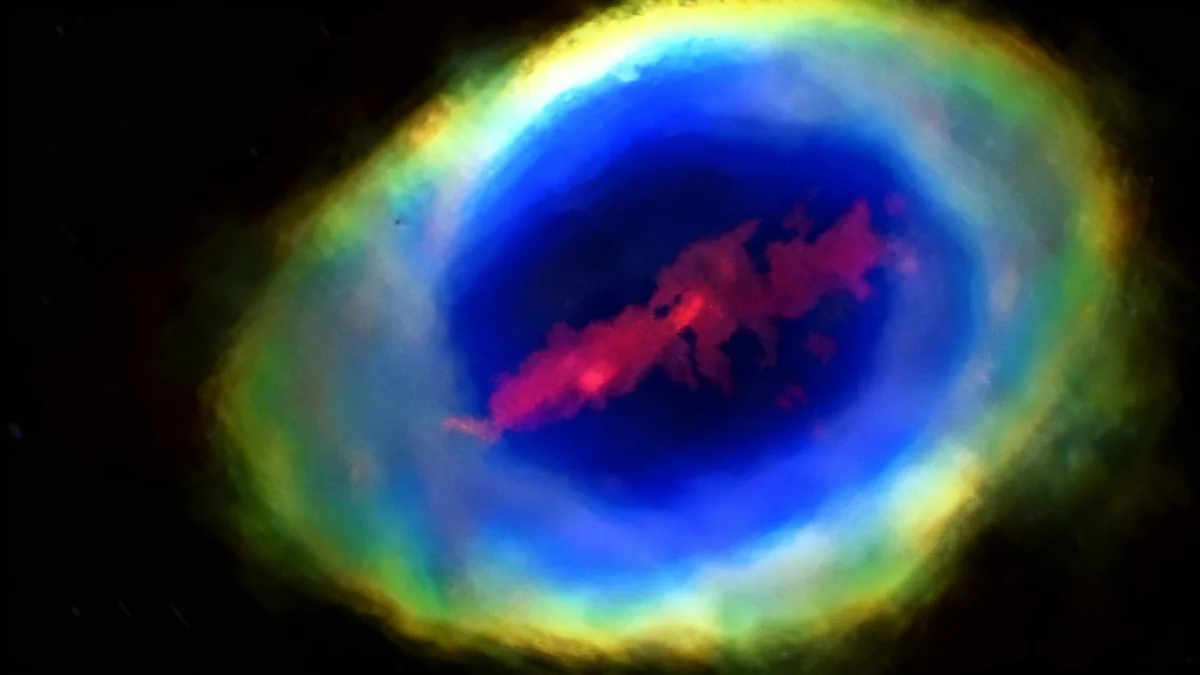

Astronomers have detected a massive, previously unknown structure made of iron in a distant nebula, a discovery that could provide a startling preview of Earth's ultimate fate. The bar-shaped cloud, located 2,283 light-years away, presents a cosmic mystery that may be linked to the destruction of a rocky planet much like our own.
Key Takeaways
- A large, bar-shaped structure of iron atoms has been discovered in the center of the famous Ring Nebula.
- The discovery was made by a team from Cardiff University and University College London using the new WEAVE instrument.
- One leading theory suggests the iron is the remnant of a rocky planet that was destroyed by its dying star.
- If this theory is correct, the structure offers a glimpse into what might happen to Earth in several billion years.
A Surprise in a Familiar Nebula
The Ring Nebula has been a favorite subject for astronomers for centuries, known for its vibrant colors and distinct shape. It is a planetary nebula, the glowing shell of gas cast off by a star similar to our Sun at the end of its life. Despite countless observations, this new feature remained hidden until now.
Using a powerful new instrument called the WHT Enhanced Area Velocity Explorer (WEAVE), researchers were able to analyze the nebula's chemical composition with unprecedented detail. This new capability allowed them to see what other telescopes had missed.
"When we processed the data and scrolled through the images, one thing popped out as clear as anything – this previously unknown 'bar' of ionized iron atoms, in the middle of the familiar and iconic ring," said Dr. Roger Wesson, the lead author of the study.
Cosmic Dimensions
- Location: Ring Nebula
- Distance from Earth: 2,283 light-years
- Structure Width: Approximately 500 times the width of Pluto's orbit around the Sun.
Two Theories for a Cosmic Anomaly
The origin of this enormous iron structure is currently unclear, but scientists have proposed two primary explanations. Each possibility offers different insights into the final stages of a star's life.
The first theory suggests the iron bar was formed during the creation of the nebula itself. As the central star collapsed from a red giant into a dense white dwarf, complex processes could have concentrated heavy elements like iron into the linear shape now observed.
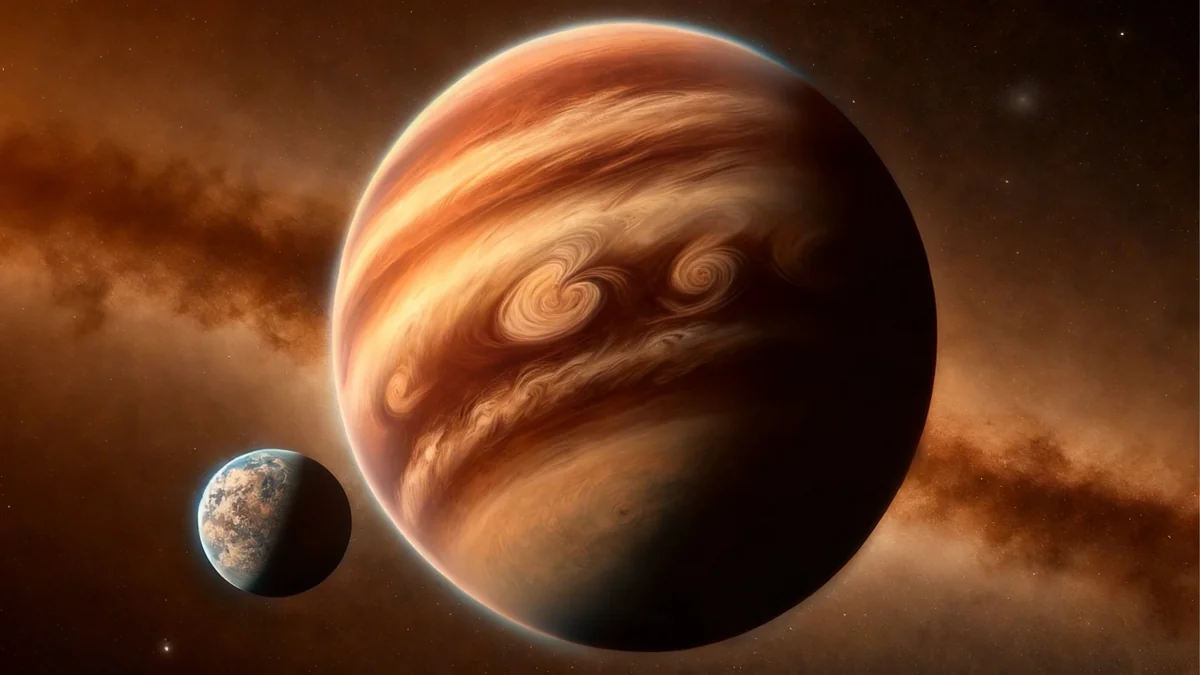
However, a second, more dramatic theory is gaining attention. This hypothesis proposes that the iron is the leftover material from a rocky planet that once orbited the dying star. As the star expanded into a red giant, it would have engulfed and vaporized any nearby planets, leaving behind a cloud of their core materials.
The Life Cycle of a Sun-Like Star
Stars like our Sun spend billions of years fusing hydrogen into helium. When they run out of hydrogen fuel, they expand dramatically into red giants, swallowing inner planets. Eventually, they shed their outer layers, creating a planetary nebula, and their core collapses into a small, dense star called a white dwarf. This is the predicted fate of our own solar system.
A Glimpse into Our Planet's Future
If the second theory proves correct, the iron bar in the Ring Nebula is more than just a cosmic curiosity—it could be a direct look at Earth's distant future. In about five billion years, our own Sun will begin its death throes, expanding to a size that will engulf Mercury, Venus, and almost certainly Earth.
The intense heat and gravitational forces would tear our planet apart, vaporizing its crust and mantle. The dense iron core, however, could be left behind as a cloud of plasma, a silent testament to a world that once was. The structure seen in the Ring Nebula may be the first direct observation of such a planetary remnant.
This finding gives astronomers a potential model for what happens to planetary systems after their stars die. It suggests that the chemical signatures of destroyed worlds might be detectable long after the cataclysmic event.
The Power of New Technology
This discovery was made possible by the WEAVE instrument, which is mounted on the William Herschel Telescope in La Palma, Spain. Unlike previous instruments that could only look at small, specific points, WEAVE can capture a spectrum for the entire nebula at once. This allows scientists to create a complete chemical map.
Dr. Wesson highlighted the instrument's power, stating that WEAVE allowed them "to observe it in a new way, providing so much more detail than before." This ability to map the chemical elements across a wide field of view is what made the iron bar visible for the first time.
"We definitely need to know more – particularly whether any other chemical elements co-exist with the newly-detected iron, as this would probably tell us the right class of model to pursue," added co-author Professor Janet Drew.
What Comes Next?
The research team is planning further observations to solve the mystery. By looking for other elements like silicon, magnesium, and nickel alongside the iron, they hope to determine if the material came from a star or a rocky planet. The composition of a planet's core is distinct from the material found in a star's outer layers.
The WEAVE instrument is scheduled to conduct eight major surveys over the next five years, observing everything from dying stars in our galaxy to the most distant galaxies in the universe. Scientists are hopeful they will find more examples of this phenomenon.
"It would be very surprising if the iron bar in the Ring is unique," Dr. Wesson concluded. Finding similar structures in other planetary nebulae would strengthen the theory that we are witnessing the ghostly remains of destroyed worlds, providing a clearer picture of the life and death of solar systems across the cosmos.