Astronomers Uncover Hidden Filament of the Cosmic Web
Astronomers using China's FAST telescope have identified a faint, thread-like structure of galaxies, revealing a hidden filament of the cosmic web.

#Astronomy#Cosmic Web#Dark Matter
15 articles tagged
Astronomers using China's FAST telescope have identified a faint, thread-like structure of galaxies, revealing a hidden filament of the cosmic web.
The James Webb Space Telescope is using massive galaxy clusters as natural cosmic lenses to hunt for the universe's first 'dinosaur' stars from over 13 billion years ago.
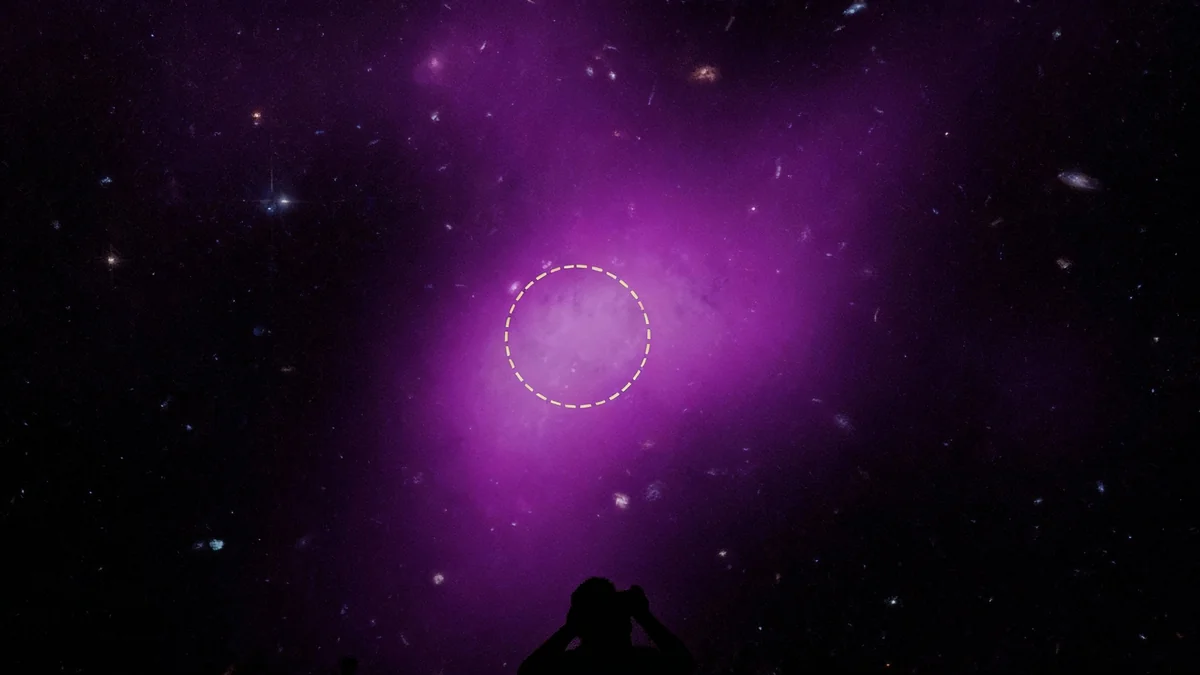
Astronomers using the Hubble Space Telescope have confirmed the existence of 'Cloud-9,' a massive, starless cloud of gas and dark matter 2,000 light-years away.
A new study using Fast Radio Bursts has located all the universe's 'missing' normal matter, finding most of it hidden in the vast spaces between galaxies.

The European Space Agency's Euclid telescope has delivered a stunning new image of spiral galaxy NGC 646, showcasing its mission to map the dark universe.
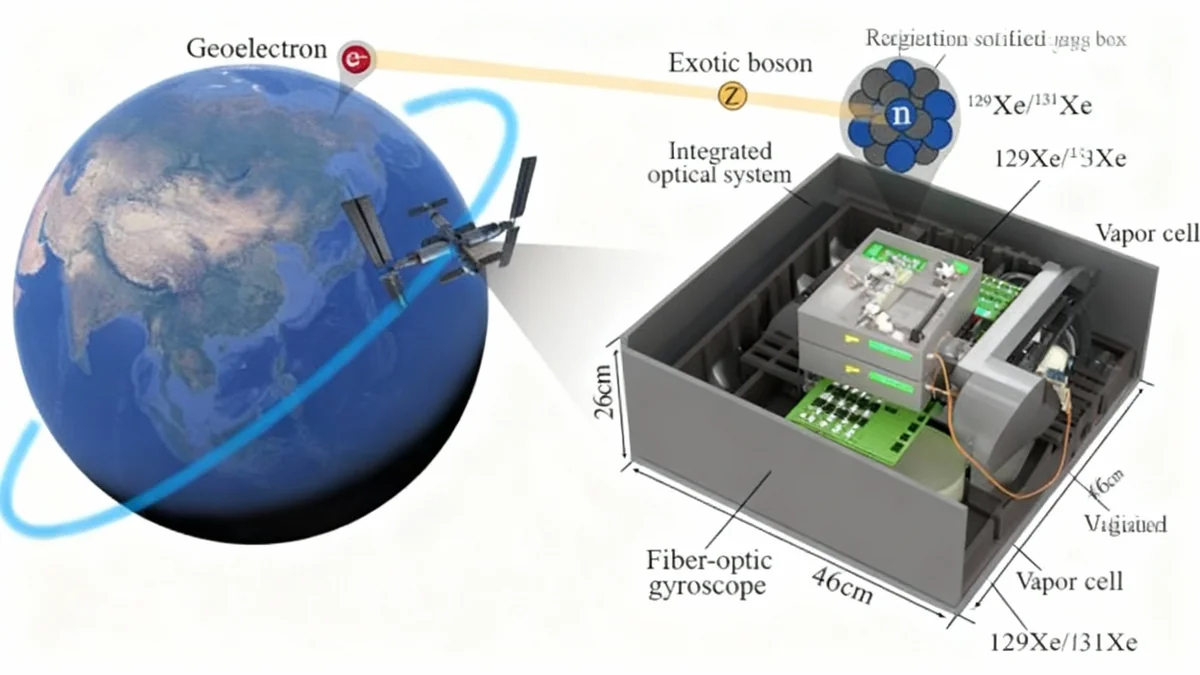
A new quantum sensor aboard the China Space Station will use the entire planet as a natural laboratory to search for dark matter and other exotic forces with unprecedented sensitivity.
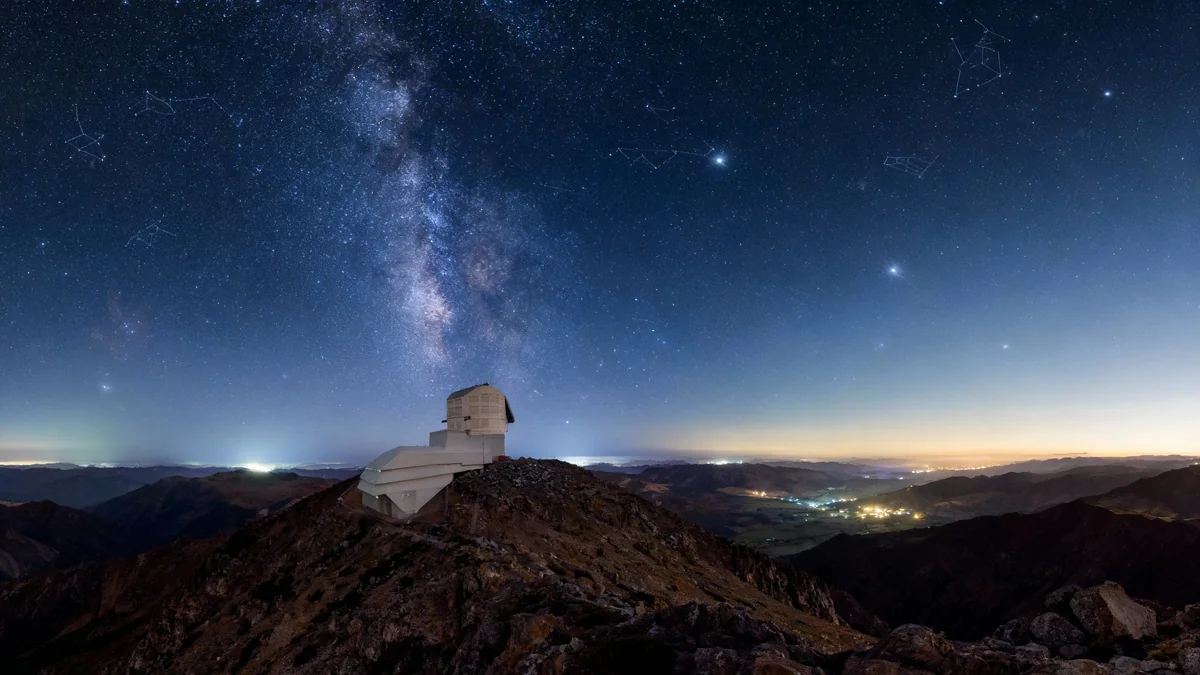
The Vera C. Rubin Observatory in Chile has begun a 10-year mission to map the southern sky, using the world's largest digital camera to track billions of objects.
The Vera C. Rubin Observatory has begun its 10-year mission to survey the southern sky, using a rapid telescope and the world's largest digital camera.
Scientists have detected a starless object 10 billion light-years away that could be the smallest clump of pure dark matter ever observed, supporting a key cosmic theory.
Using a global network of telescopes, astronomers have identified the smallest dark object ever found by observing how its gravity bends light from a distant galaxy.
Scientists are working to solve some of the universe's most persistent questions, including the Hubble tension, the nature of dark matter, and the origin of fast radio bursts.

The Euclid satellite is two years into a six-year mission to create the largest 3D map of the universe, aiming to solve the mysteries of dark matter and dark energy.