Star Vanishes in Andromeda, Leaving a Black Hole Behind
Astronomers have witnessed a massive star in the Andromeda galaxy vanish, concluding it collapsed into a black hole without a supernova explosion.

#Astronomy#Black Hole#Andromeda Galaxy
12 articles tagged
Astronomers have witnessed a massive star in the Andromeda galaxy vanish, concluding it collapsed into a black hole without a supernova explosion.
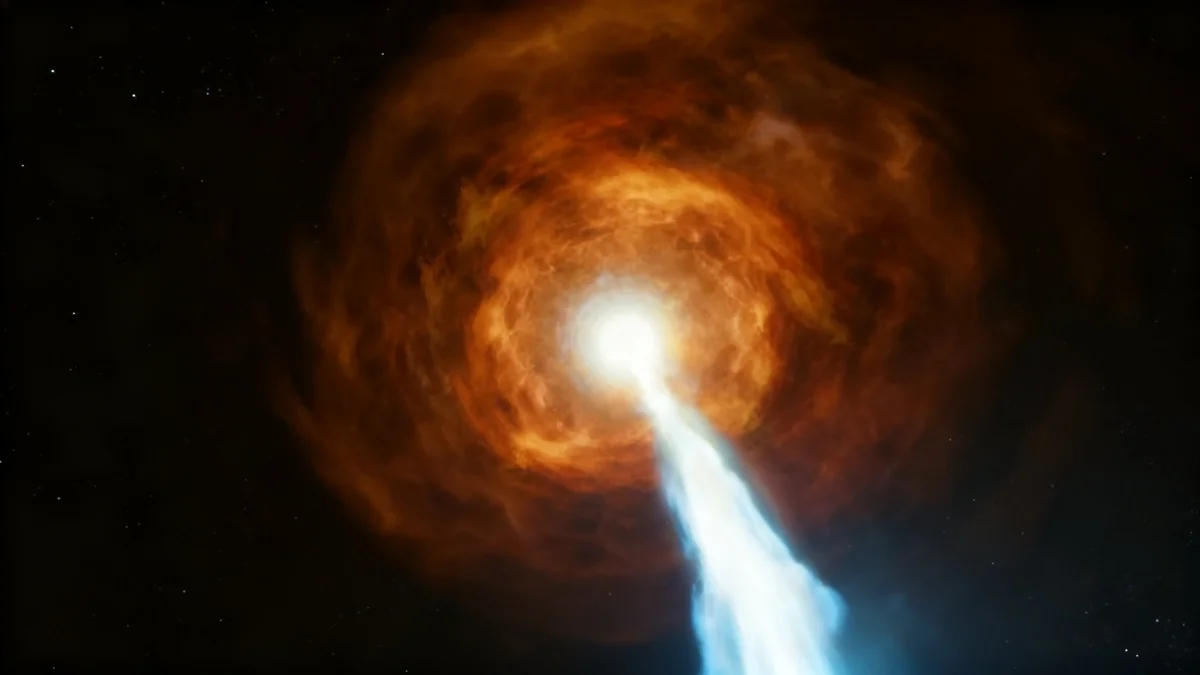
Astronomers have detected a record-breaking gamma-ray burst that lasted for seven hours, challenging existing theories about how stars die in cosmic explosions.

Astronomers have discovered a young galaxy being slowly starved by its central black hole in a process described as a "death by a thousand cuts."
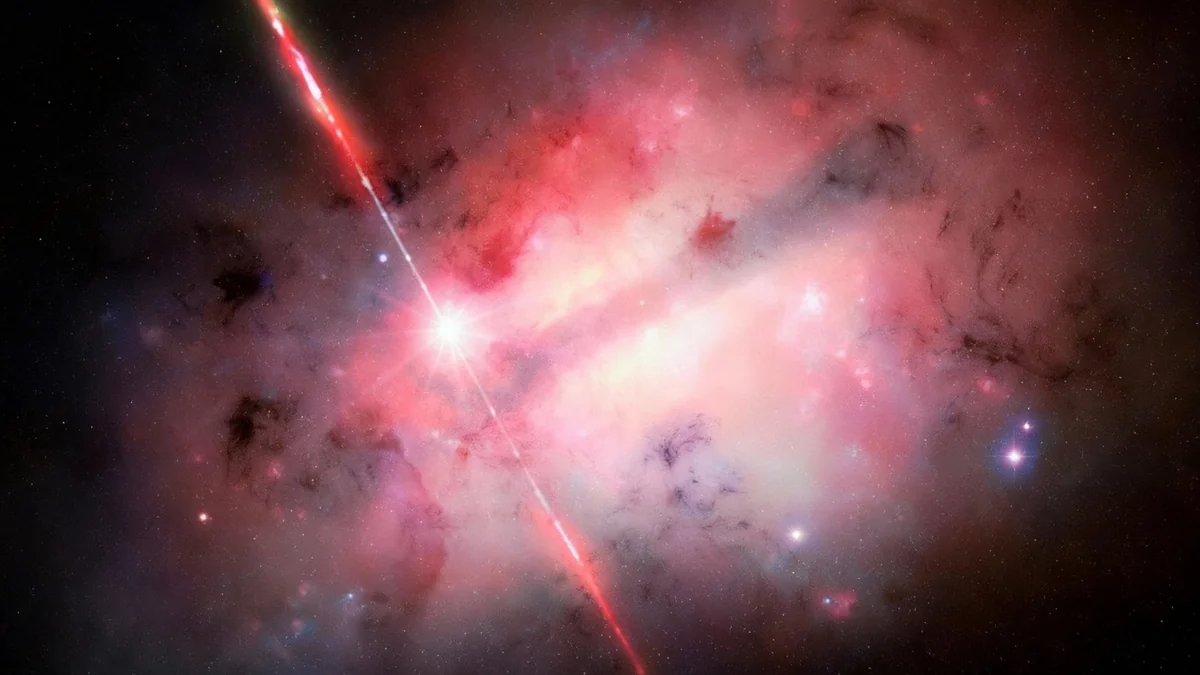
Astronomers report an unprecedented cosmic explosion, a gamma-ray burst (GRB 250702B) that lasted over seven hours, challenging existing models.
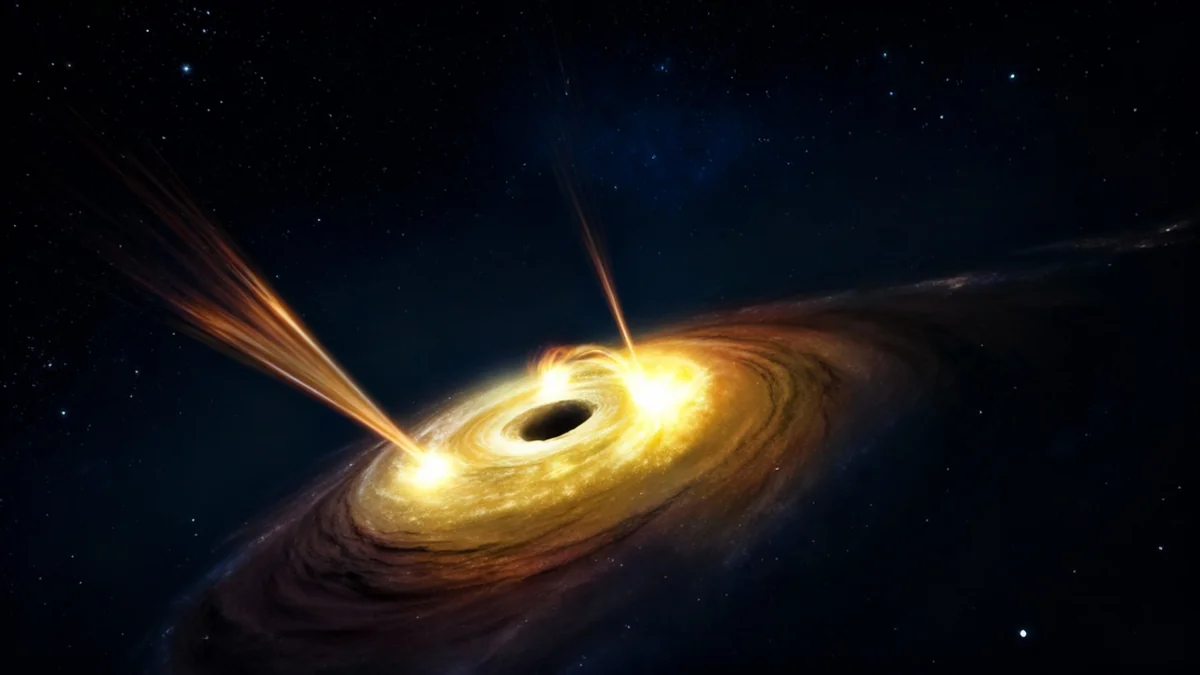
Astronomers have detected a black hole generating winds at 130 million mph, about 20% the speed of light, revealing a surprising link to solar physics.
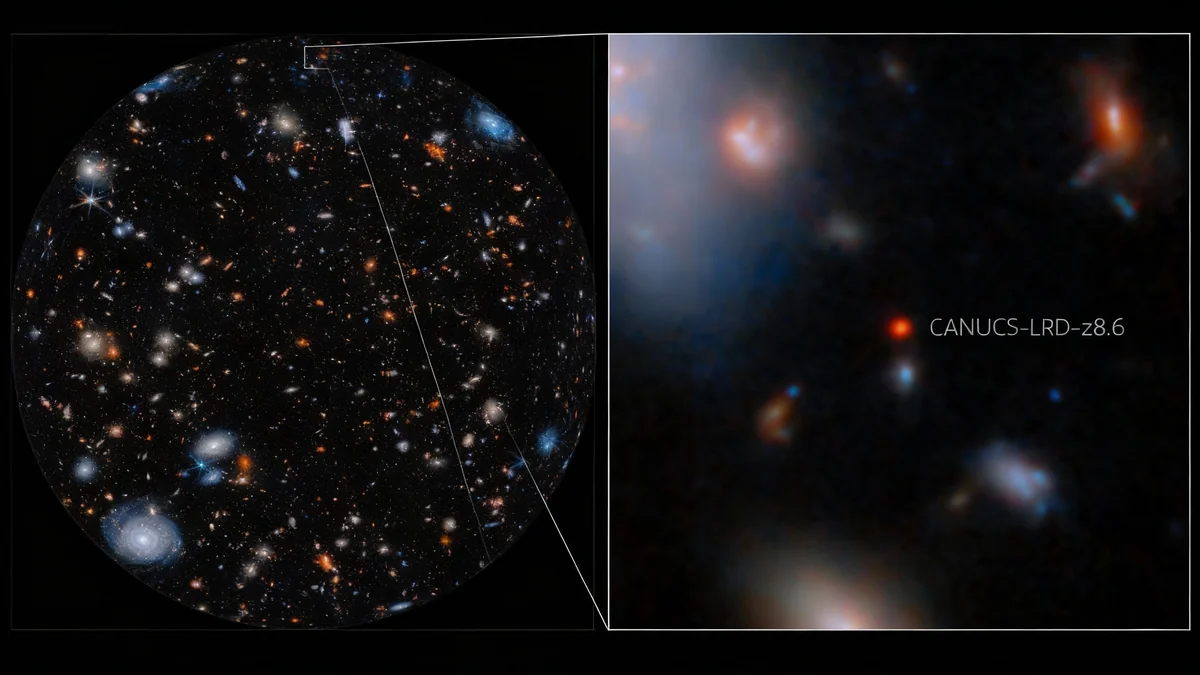
Astronomers using the James Webb Space Telescope have found a supermassive black hole in the early universe that is growing far faster than its host galaxy.
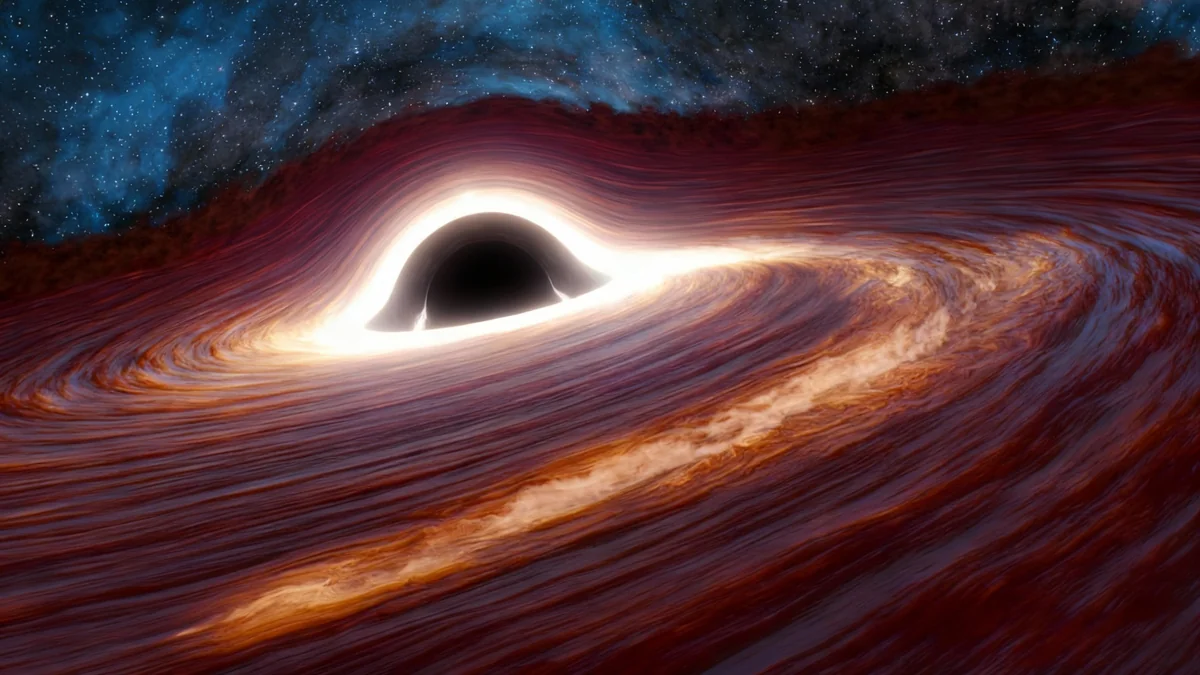
Astronomers have detected the most powerful flare ever seen from a black hole, an event 10 billion light-years away that shines with the power of 10 trillion suns.

Scientists have gained a clearer view of the massive jet from the M87 galaxy's black hole using James Webb Space Telescope data, revealing new details and a hint of the elusive counter-jet.
For the first time, astronomers have captured a direct radio image of two supermassive black holes orbiting each other at the heart of quasar OJ287.
The James Webb Space Telescope has captured the clearest-ever infrared image of the jet from M87's supermassive black hole, revealing its elusive counter-jet.
A supermassive black hole in the early universe, RACS J0320-35, was found growing 2.4 times faster than the theoretical limit, challenging cosmic models.
New images from the Event Horizon Telescope show the magnetic field around the M87 black hole has unexpectedly reversed, challenging current scientific models.