

Astronomers have observed an unprecedented cosmic explosion, a gamma-ray burst (GRB) that lasted over seven hours. This event, named GRB 250702B, defies existing scientific models for what causes these energetic phenomena. Researchers used a network of telescopes worldwide to study its afterglow and pinpoint its origin.
Key Takeaways
- GRB 250702B is the longest gamma-ray burst ever recorded, lasting over seven hours.
- It originated 8 billion light-years away in a galaxy heavily obscured by dust.
- The explosion's nature is still unknown, but theories include a massive star's death or a black hole merger.
- Multi-wavelength observations, including infrared and X-ray, were crucial for detection.
Unusual Duration Challenges Scientific Models
Gamma-ray bursts are the most powerful explosions in the universe since the Big Bang. Typically, these events are short-lived, lasting from milliseconds to a few minutes. However, GRB 250702B, detected on July 2, 2025, by NASA's Fermi Gamma-ray Space Telescope, continued to emit bursts for more than seven hours, setting a new record.
This extraordinary duration presents a significant challenge to current astrophysical theories. Scientists had to quickly mobilize a global network of telescopes to capture data from the event's afterglow. The effort involved instruments like the twin 8.1-meter Gemini telescopes in Chile and Hawaii, the Very Large Telescope in Chile, and the Keck Observatory in Hawaii.
"This was the longest gamma-ray burst that humans have observed — long enough that it does not fit into any of our existing models for what causes gamma-ray bursts," stated Jonathan Carney, lead author of the study and a doctoral student at the University of North Carolina at Chapel Hill.
Fast Facts on GRBs
- Gamma-ray bursts are detected about once a day.
- They are the most energetic explosions in the universe since the Big Bang.
- The closest GRB ever recorded was over 100 million light-years away.
Tracing the Origin Through Cosmic Dust
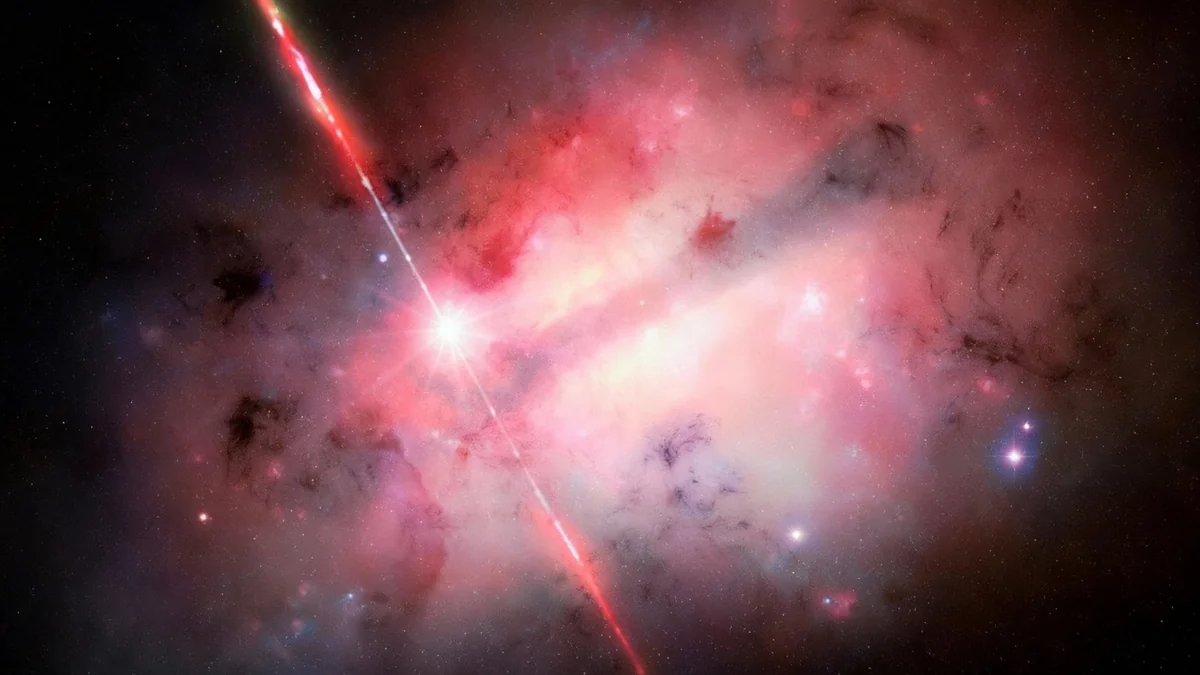
Pinpointing the source of GRB 250702B was particularly difficult. The explosion occurred 8 billion light-years from Earth, within a massive galaxy. This distant galaxy is exceptionally dusty, blocking most visible light from reaching our telescopes. This made traditional optical observations almost impossible.
To overcome this challenge, astronomers relied on observations across different wavelengths. Infrared and high-energy X-ray wavelengths were the only light detected. The Hubble Space Telescope provided early data, and later, the infrared James Webb Space Telescope offered the clearest view of GRB 250702B's host galaxy.
The team published their findings on November 26 in The Astrophysical Journal Letters. Their analysis suggests the burst originated from a previously unobserved or rare type of explosion. This event launched a narrow jet of material, traveling at least 99% the speed of light, directly towards our solar system.
The Role of Advanced Telescopes
The successful observation of GRB 250702B highlights the critical importance of international collaboration and advanced telescopic technology. Without the ability to observe across the electromagnetic spectrum, particularly in infrared and X-ray, this unique event might have remained a mystery. The dust in the host galaxy acted as a natural filter, making the event almost invisible in ordinary visible light.
Understanding Gamma-Ray Bursts
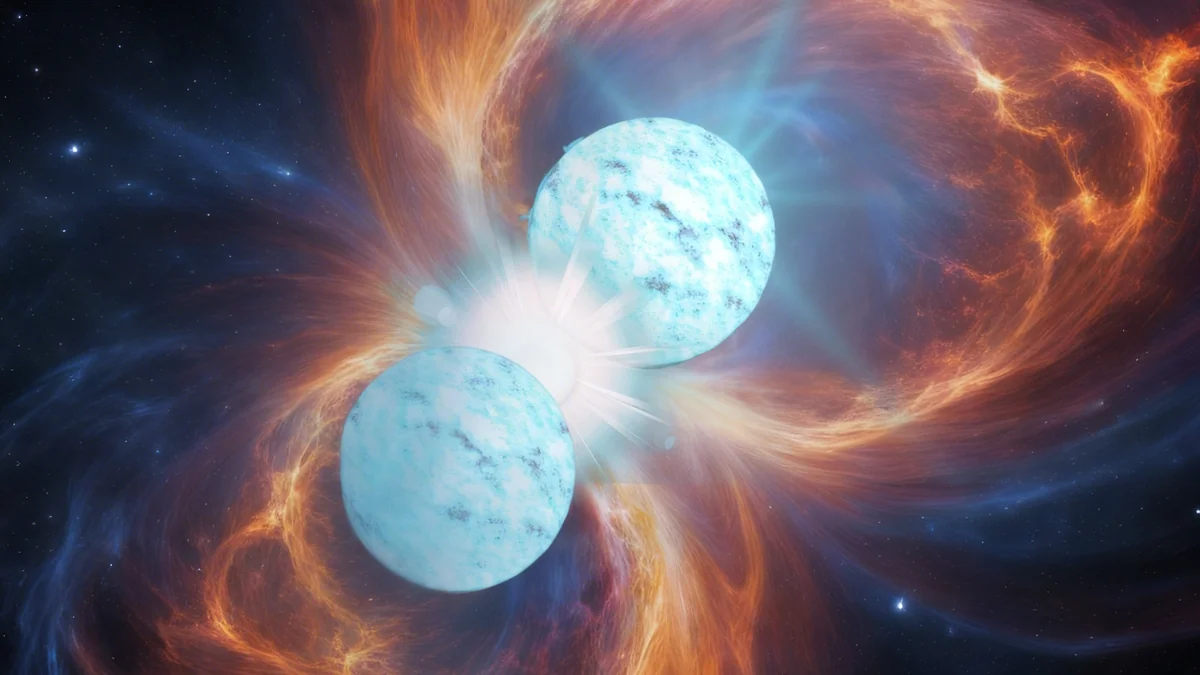
Gamma-ray bursts are brief, intense flashes of gamma radiation. They are thought to be caused by two main types of events: the collapse of massive stars (hypernovae) or the merger of neutron stars. These events produce relativistic jets that emit gamma rays as they interact with surrounding gas.
Theories Behind the Mysterious Explosion
While astronomers have gathered extensive data, the exact cause of GRB 250702B remains unclear. Several theories are currently under consideration:
- Death of a massive star: This is a common cause for long-duration GRBs, but the extreme length of GRB 250702B challenges this model.
- Star ripped apart by a black hole: A star approaching too close to a black hole can be tidally disrupted, leading to an emission of energy.
- Merger of a helium star and a black hole: In this scenario, a black hole spirals into the core of a massive helium star, triggering an explosion from within.
"But we can't yet tell which explanation is correct," Carney added. The data gathered from GRB 250702B will serve as a crucial benchmark for future discoveries. Astronomers will use its properties to compare and classify other unusual cosmic explosions, helping to refine our understanding of these extreme events.
Future Research and Benchmarks
This discovery opens new avenues for research into the most energetic processes in the universe. Scientists will continue to analyze the data from GRB 250702B, hoping to uncover more clues about its origin. The event's unique characteristics will help shape future theoretical models and observational strategies for detecting similar bursts.
The ongoing search for explanations will likely involve further observations with advanced telescopes and sophisticated computational simulations. Each new piece of information brings scientists closer to understanding the universe's most powerful and mysterious phenomena.