


NASA has announced the completion of its next-generation observatory, the Nancy Grace Roman Space Telescope. Now fully assembled, the powerful instrument is entering its final testing phases ahead of a planned launch no later than May 2027. Positioned to survey vast stretches of the cosmos, the Roman telescope is designed to tackle some of astronomy's most profound questions, including the nature of dark energy and the search for distant worlds.
Named after Nancy Grace Roman, NASA's first chief of astronomy, the telescope promises to capture images with a field of view 100 times larger than the Hubble Space Telescope, enabling it to map the universe at an unprecedented scale and speed. This capability will provide new insights into the evolution of galaxies and the mysterious forces that govern cosmic expansion.
Key Takeaways
- NASA's Nancy Grace Roman Space Telescope is physically complete and beginning final tests.
- The launch is scheduled for no later than May 2027, with a possible earlier window in late 2026.
- Its mission is to study dark energy, dark matter, and discover thousands of new exoplanets.
- The telescope features a Wide Field Instrument with a 300-megapixel camera and a Coronagraph Instrument to directly image exoplanets.
A New Eye on the Universe
The Roman Space Telescope is equipped with two primary instruments that will give astronomers a unique perspective on the universe. The centerpiece is the Wide Field Instrument (WFI), a groundbreaking 300-megapixel infrared camera. This device will capture images of the sky with a resolution and breadth that far surpasses its predecessors.
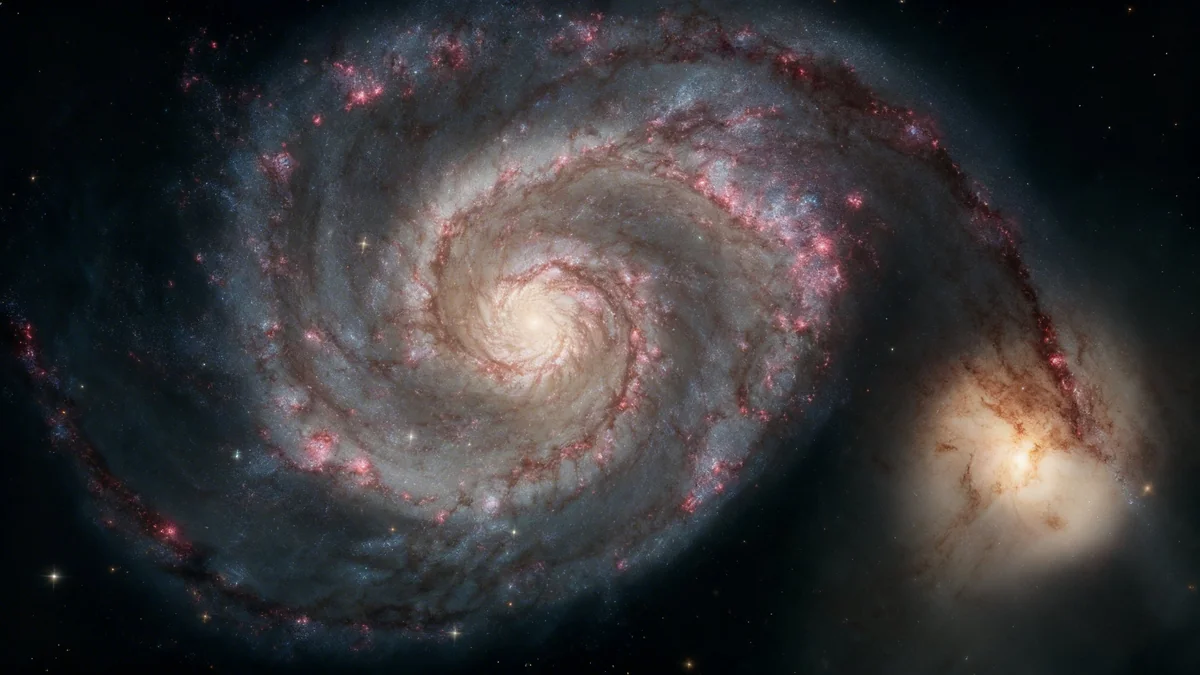
Each image from the WFI will cover a patch of the sky so large that it could contain thousands of galaxies. By stitching these images together over its five-year primary mission, Roman will create a panoramic map of the cosmos, charting the distribution of billions of galaxies and stars. This data is crucial for understanding how the universe's large-scale structure has formed and evolved over time.
Unprecedented Imaging Power
The Wide Field Instrument's 300-megapixel camera delivers a raw resolution approximately 10 times greater than a standard 8K image. This will allow it to discern fine details at the very edge of the observable universe.
This wide-angle view is essential for one of Roman's key objectives: studying dark energy. Scientists believe this mysterious force is causing the expansion of the universe to accelerate. By observing how distant galaxies are distributed and how their light has been stretched over cosmic time, Roman will provide data to test theories about the nature of dark energy.
The Hunt for Exoplanets Enters a New Phase
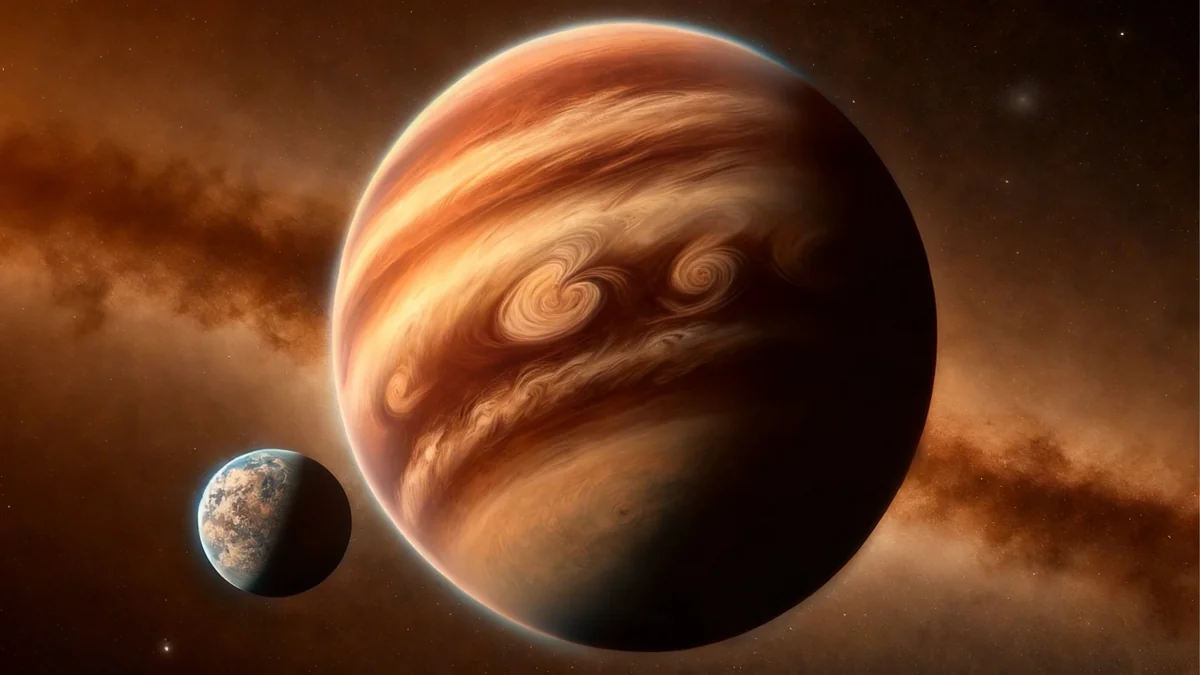
Beyond mapping galaxies, the Roman telescope is a formidable planet-hunting machine. Its second major tool, the Coronagraph Instrument, is a technology demonstration designed to block the overwhelming glare from distant stars, allowing the faint light of orbiting planets to be seen directly.
This is a significant technological step forward. While previous telescopes have detected thousands of exoplanets, most have done so indirectly, such as by observing the dimming of a star as a planet passes in front of it. The coronagraph will allow for direct imaging, a critical step toward analyzing the atmospheres of these alien worlds for signs of habitability.
"In the mission's first five years, it's expected to unveil more than 100,000 distant worlds, hundreds of millions of stars, and billions of galaxies," said Julie McEnery, Roman's senior project scientist at NASA Goddard. "We stand to learn a tremendous amount of new information about the universe very rapidly after Roman launches."
Microlensing: A Cosmic Magnifying Glass
Roman will also employ a technique called gravitational microlensing to find planets. This phenomenon occurs when a star or planet passes in front of a more distant star, and its gravity acts like a lens, briefly magnifying the background starlight. The precise way the light brightens and fades can reveal the presence of planets orbiting the foreground star.
This method is particularly effective at finding planets that are farther from their host stars, including those in the so-called "habitable zone" where liquid water could exist. It can also detect rogue planets—worlds that drift through space untethered to any star. The mission is projected to find thousands of exoplanets using this technique, including worlds similar in mass to those in our own solar system.
Who Was Nancy Grace Roman?
Known as the "Mother of Hubble," Nancy Grace Roman (1925-2018) was a pioneering astronomer and one of the first female executives at NASA. As the agency's first Chief of Astronomy, she was instrumental in planning and advocating for large-scale space-based observatories, including the Hubble Space Telescope. Naming this next-generation telescope in her honor recognizes her foundational contributions to space astrophysics.
A Strategic Position in Space
Once launched, the Roman Space Telescope will travel to a stable gravitational point nearly one million miles from Earth, known as the second Lagrange point (L2). This location, on the far side of the Earth from the Sun, is an ideal spot for astronomical observations.
At L2, the telescope can maintain a clear, unobstructed view of deep space while keeping its sensitive instruments cold and shielded from the Sun's heat and light. It will join a growing fleet of advanced observatories at this orbital location, including the James Webb Space Telescope and the European Space Agency's Euclid observatory.
With assembly complete, engineering teams will now subject the observatory to a rigorous series of tests to ensure it can withstand the harsh conditions of launch and the extreme environment of space. These tests will simulate the intense vibrations, sounds, and temperature changes it will experience on its journey to L2.
If all goes according to plan, the observatory could begin its mission as early as late 2026. Its findings are expected to reshape our understanding of the universe, providing answers to long-standing questions while undoubtedly uncovering new cosmic mysteries to explore.