
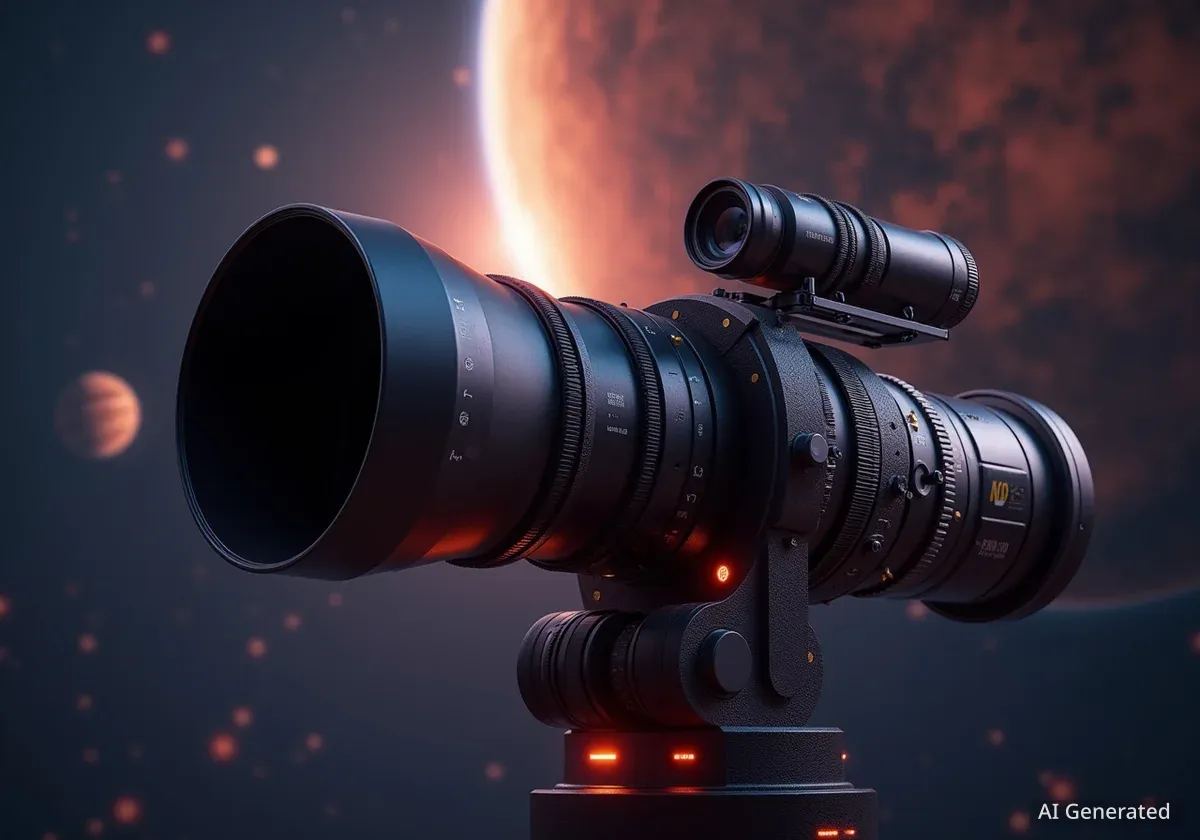
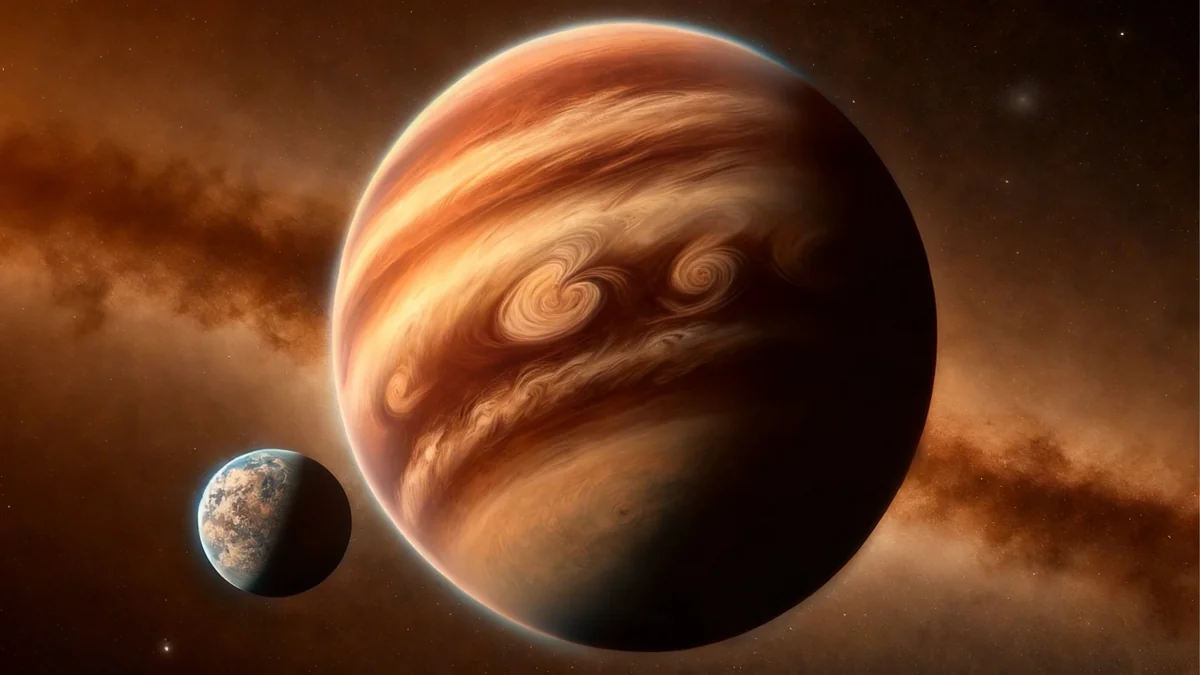

A new, compact space telescope named Pandora is preparing for a 2026 launch with a highly focused mission: to conduct an in-depth study of just 20 exoplanets. Unlike its predecessors that surveyed thousands of worlds, Pandora will dedicate extensive observation time to each target, aiming to solve a key challenge in the search for life-sustaining conditions beyond our solar system.
The mission will analyze the atmospheres of these distant planets, specifically working to distinguish the true chemical signatures from the distorting effects of their host stars. This detailed approach could provide the clearest picture yet of the atmospheric composition of alien worlds.
Key Takeaways
- NASA's Pandora mission, launching in early 2026, will study the atmospheres of 20 specific exoplanets.
- The small, cost-effective telescope will focus on untangling star activity from a planet's atmospheric data.
- Pandora will observe each target system for up to 24 hours at a time, repeating these sessions multiple times.
- The mission's primary goal is to improve the accuracy of detecting key elements like water vapor, crucial for assessing habitability.
A New Approach to Exoplanet Science
Since the first confirmed discovery of planets outside our solar system in 1992, astronomers have identified over 6,000 exoplanets. Telescopes like Kepler and the James Webb Space Telescope (JWST) have been instrumental in this boom, revealing that planets are common throughout our galaxy.
Pandora represents a strategic shift from broad surveys to deep, focused investigation. While massive observatories like JWST are in high demand and can only spend limited time on any single target, Pandora's entire one-year primary mission is devoted to its 20 pre-selected systems.
This allows for prolonged observation sessions, a critical factor in understanding the complex interplay between a star and its orbiting planets. Elisa Quintana, Pandora’s principal investigator, explained the mission's goal is to map out stellar contamination to better isolate the planetary signals.
The Challenge of Starlight
Detecting an exoplanet's atmosphere is an indirect process. Scientists use the "transit method," observing the slight dimming of a star's light as a planet passes in front of it. A fraction of that starlight filters through the planet's atmosphere, carrying clues about its chemical makeup.
However, stars are not perfect, steady light sources. They have dark spots similar to sunspots and brighter, hotter regions called faculae. As the star rotates, these features can alter the light in ways that mimic or mask the very elements scientists are looking for, such as water vapor.
"Variations in the light of the star can mimic or erase the signal of water," explained Ben Hord, a NASA postdoctoral program fellow at the Goddard Space Flight Center.
Pandora's mission is designed to tackle this problem head-on. By repeatedly observing a star system as it rotates, the telescope will create a detailed map of its surface activity. This data will allow scientists to effectively subtract the star's interference from the atmospheric readings, revealing a clearer picture of the exoplanet's environment.
A Small but Mighty Observatory
Compared to its famous counterparts, Pandora is a remarkably compact and efficient spacecraft. It weighs just 716 pounds (about 325 kg) and measures only 17 inches across, excluding its solar panels. This is a fraction of the size of the James Webb telescope, which is as large as a tennis court and weighs 13,000 pounds.
Pandora vs. Webb: A Tale of Two Telescopes
- Cost: Pandora is budgeted at $20 million, while the James Webb Space Telescope's cost exceeded $10 billion.
- Size: Pandora weighs 716 lbs, while JWST weighs 13,000 lbs.
- Mission Focus: Pandora will conduct long-duration studies of 20 targets. JWST observes a wide range of cosmic objects with limited time per target due to high demand.
This smaller scale comes with a significant cost advantage. The entire Pandora mission is projected to cost around $20 million, a stark contrast to the multi-billion dollar price tags of larger flagships. This makes it a prime example of a cost-effective, specialized scientific instrument.
"The special power of Pandora will be these many revisits and extended monitoring of the star to build up a comprehensive picture," said Daniel Apai, a professor at the University of Arizona who oversees Pandora's mission operations center.
Selecting the Perfect Targets
With thousands of known exoplanets, the team faced the difficult task of narrowing the list down to just 20. The final selection was a carefully curated list designed to provide a diverse range of test cases for Pandora's capabilities.
How Exoplanets Are Found
Astronomers primarily use two methods to find planets around other stars:
- The Transit Method: This involves watching for a tiny, periodic dip in a star's brightness, which indicates a planet is passing in front of it. Pandora and Kepler use this method.
- The Radial Velocity Method: This technique looks for a slight "wobble" in a star's position caused by the gravitational pull of an orbiting planet.
The team started with about 100 interesting candidates and made cuts based on extensive research. According to Apai, the process involved a deliberate effort to include a variety of planetary and stellar types.
A Diverse Cosmic Portfolio
The final list of 20 targets includes:
- Planets orbiting hotter stars and cooler stars.
- Large gas giants and smaller sub-Neptune worlds.
- Systems where water vapor has already been detected, allowing for focused study.
- Systems where hydrogen appears to be escaping, suggesting a planet is being intensely heated by its star.
This variety will allow the Pandora team to test their methods across different scenarios, ultimately refining the techniques used by all telescopes to study exoplanet atmospheres. "We're going to map out to see where the stellar contamination really starts to impact you," Quintana stated.
Launch and Future Prospects
Pandora is scheduled to launch aboard a SpaceX Falcon 9 rocket from the Kennedy Space Center sometime in the first quarter of 2026. After reaching low-Earth orbit, it will begin its year-long primary mission.
The science team is hopeful that the mission's success could lead to an extension. "If things all go well, we plan to propose an extended mission to use the telescope for another year," Apai mentioned. An extended mission would allow Pandora to gather even more data or potentially expand its target list.
While Pandora will not be searching for life directly, its work is a crucial step in that direction. By refining our ability to accurately read the atmospheres of distant worlds, the mission will provide the foundational data needed to one day identify a planet with the right ingredients for life as we know it.