AI and VR to Chart Chaotic Paths for Future Space Missions
Researchers are using a $200,000 NSF grant to combine AI, augmented reality, and knot theory to revolutionize spacecraft navigation in the chaotic space between Earth and the Moon.
11 articles tagged

Researchers are using a $200,000 NSF grant to combine AI, augmented reality, and knot theory to revolutionize spacecraft navigation in the chaotic space between Earth and the Moon.

The University of Central Florida is launching a first-of-its-kind hypersonic wind tunnel, inspiring its new "Space Game" football uniform with scientific designs.

A team of Durham University students, mentored by a Lockheed Martin engineer, has successfully built and tested an advanced 3D-printed liquid-propellant rocket engine.

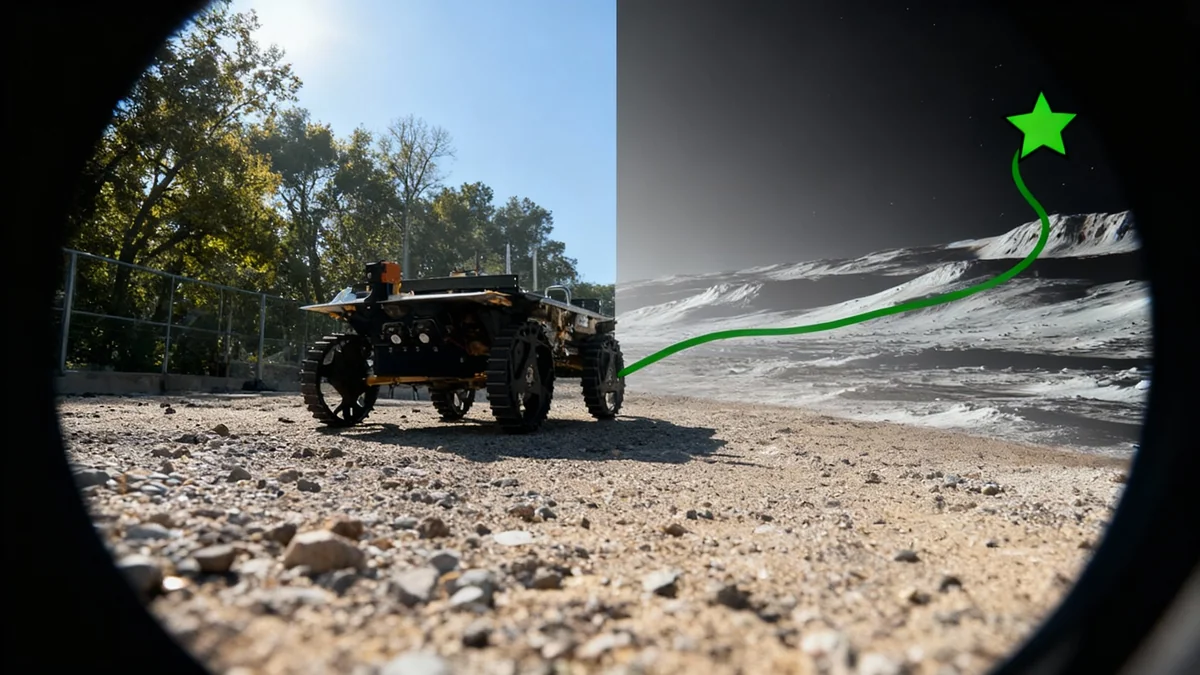
The University of Southern California is advancing autonomous robotics for missions on the Moon and in space, focusing on self-navigating systems.

Industry leaders are drawing lessons from aerospace engineering to build trust in AI, arguing it's essential for business growth and security.

Researchers are developing a new satellite network to track objects in the crowded space between Earth and the Moon, funded by a $1 million military grant.

NASA is funding a joint university project in Louisiana to research vitrimers, a new class of polymers that could revolutionize space construction.

Embry-Riddle Aeronautical University welcomes a new class of innovators, with women making up over 25% of students at its residential campuses.

The University of Texas at Austin is at the forefront of space research, with projects ranging from lunar landing guidance to deep space discovery with the JWST.

Researchers have designed a partial space elevator that uses an electrodynamic tether to move cargo without propellant, leveraging Earth's magnetic field for thrust.

Japanese researchers have developed a new plasma engine that uses dual streams to deorbit space junk without contact, solving a key stability issue.