


NASA has reached a major milestone in its next great cosmic observatory, completing the full assembly of the Nancy Grace Roman Space Telescope. Technicians at the Goddard Space Flight Center in Maryland successfully joined the final components on November 25, moving the powerful telescope one step closer to its mission of unraveling the universe's deepest mysteries.
The observatory is now scheduled to begin its final phase of rigorous testing before being transported to the Kennedy Space Center in Florida. While the official launch window extends to May 2027, the project team is currently on track for a potential launch as early as the fall of 2026 aboard a SpaceX Falcon Heavy rocket.
Key Takeaways
- The Nancy Grace Roman Space Telescope is now fully assembled at NASA's Goddard Space Flight Center.
- The mission is on track for a potential launch in fall 2026, ahead of its May 2027 deadline.
- Roman's primary goals include studying dark energy, dark matter, and discovering thousands of new exoplanets.
- Its Wide Field Instrument will capture images hundreds of times faster than the Hubble Space Telescope.
A New Era of Cosmic Discovery
With its construction complete, the Roman Space Telescope is poised to revolutionize several fields of astronomy. Its primary mission, scheduled for five years, is expected to generate an unprecedented amount of data that will keep scientists busy for decades.
Julie McEnery, Roman’s senior project scientist at NASA Goddard, highlighted the mission's transformative potential. "In the mission’s first five years, it’s expected to unveil more than 100,000 distant worlds, hundreds of millions of stars, and billions of galaxies," she said. The sheer volume of information will allow for rapid advancements in our understanding of the cosmos.
The telescope will be positioned a million miles from Earth, far from the atmospheric interference that limits ground-based observatories. This vantage point gives it a clear, unobstructed view of the universe in infrared light, which is crucial for observing the most distant and ancient cosmic objects.
"Within our lifetimes, a great mystery has arisen about the cosmos: why the expansion of the universe seems to be accelerating. There is something fundamental about space and time we don’t yet understand, and Roman was built to discover what it is."
Dual Instruments for a Dual Purpose
At the heart of the Roman observatory are two powerful scientific instruments, each designed for a unique and ambitious task. Together, they will provide a comprehensive view of the universe, from nearby planetary systems to the edge of observable space.
The Wide Field Instrument
The primary tool for Roman's surveys is its Wide Field Instrument (WFI), a 288-megapixel camera capable of capturing vast swaths of the sky. Each image taken by the WFI will cover an area larger than the apparent size of a full moon, but with the resolution and detail that has become a hallmark of space telescopes.
This remarkable capability allows Roman to gather data at a rate hundreds of times faster than the Hubble Space Telescope. Over its initial five-year mission, it is projected to collect approximately 20,000 terabytes of data, a treasure trove for the global scientific community.
A Data Deluge
The 20 petabytes (20,000 terabytes) of data Roman is expected to collect is an enormous volume. To put it in perspective, this is equivalent to roughly 40,000 years of continuously playing HD video.
The Coronagraph Instrument
Roman's second instrument is a technology demonstration known as the Coronagraph Instrument. Its purpose is to test new methods for directly imaging exoplanets—planets orbiting other stars. This is an incredibly difficult task, as the faint light from a planet is easily overwhelmed by the brilliant glare of its host star.
The coronagraph works by blocking the starlight, allowing the much dimmer light reflected by orbiting planets to be seen. According to Feng Zhao, the instrument manager at NASA’s Jet Propulsion Laboratory, this technology will bring us "one step closer" to answering the question of whether we are alone in the universe.
Three Ambitious Surveys
About 75% of Roman's primary mission will be dedicated to three core surveys designed to address some of the biggest questions in cosmology and astrophysics.
The remaining 25% of its time will be open to proposals from the wider scientific community, ensuring a broad range of investigations can be pursued.
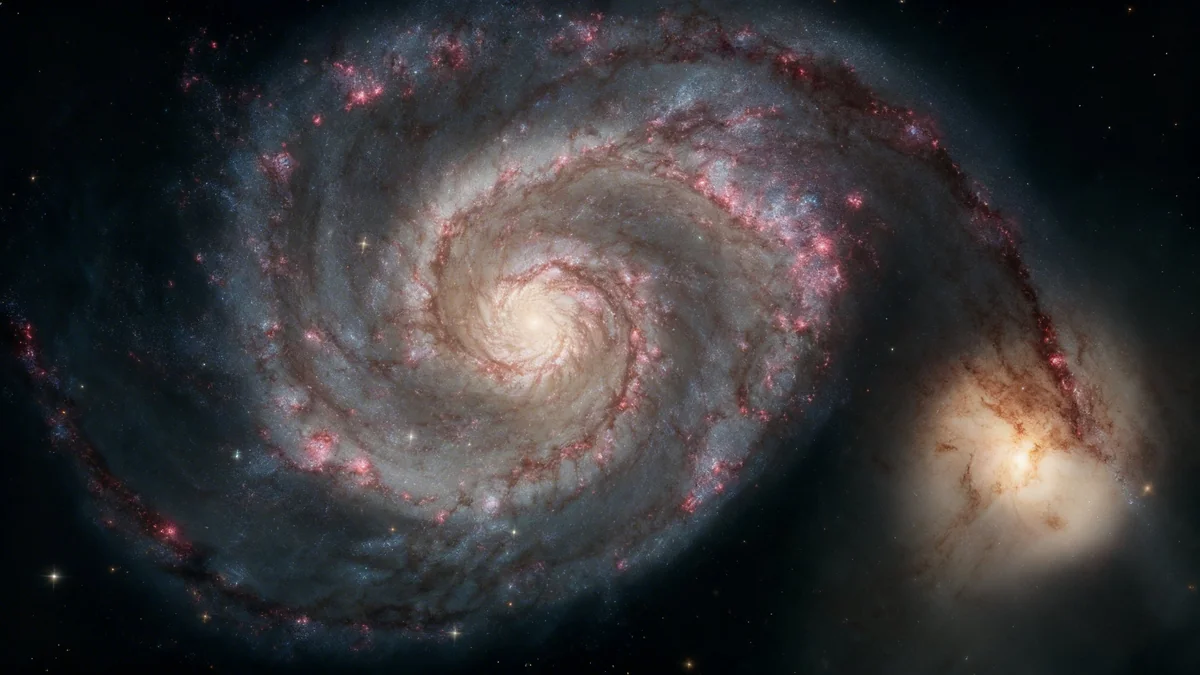
- High-Latitude Wide-Area Survey: This survey will map the distribution of over a billion galaxies through space and time. By studying how these large-scale structures have evolved, scientists will be able to trace the influence of dark matter, the invisible substance that makes up most of the universe's mass.
- High-Latitude Time-Domain Survey: By repeatedly observing the same patch of sky, Roman will create cosmic movies. This will allow astronomers to study phenomena that change over time, such as supernovae. These observations are key to measuring the expansion of the universe and probing the nature of dark energy.
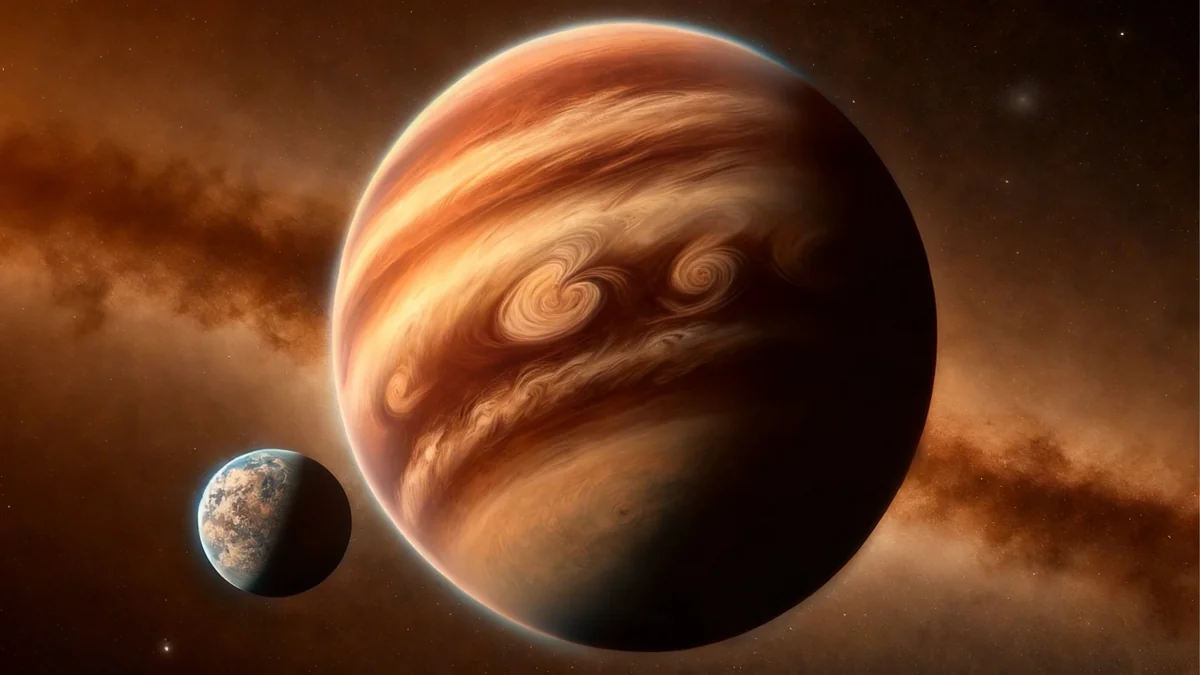
- Galactic Bulge Time-Domain Survey: This survey will provide an unprecedentedly deep look at the dense, star-filled center of our own Milky Way galaxy. It will search for tiny, temporary brightening events caused by gravitational microlensing, a phenomenon that can reveal the presence of planets, including rogue planets that drift through space untethered to a star.
Honoring a Pioneer
The telescope is named after Dr. Nancy Grace Roman, NASA's first chief astronomer. Dr. Roman was a tireless advocate for space-based astronomy and is often called the "Mother of Hubble" for her foundational role in making the Hubble Space Telescope a reality. Her legacy is one of making the cosmos accessible to all, a principle this mission continues by making all its data publicly available without delay.
The Path to Launch
The assembly of the Roman Space Telescope marks the end of its construction phase and the beginning of its final testing. Over the coming months, the observatory will undergo a series of tests to ensure it can withstand the harsh conditions of launch and the vacuum of space.
These tests include intense vibration, acoustic, and thermal vacuum trials that simulate the entire journey from the launchpad to its final orbit. Once these are complete, the telescope will be carefully packed and shipped to Florida in the summer of 2026 for final launch preparations.
As the final checks are made, the scientific community eagerly awaits the flood of data Roman will provide. Jackie Townsend, Roman’s deputy project manager, noted that the mission will acquire imagery that will "permit scientists to make groundbreaking discoveries for decades to come," honoring the legacy of its namesake.