
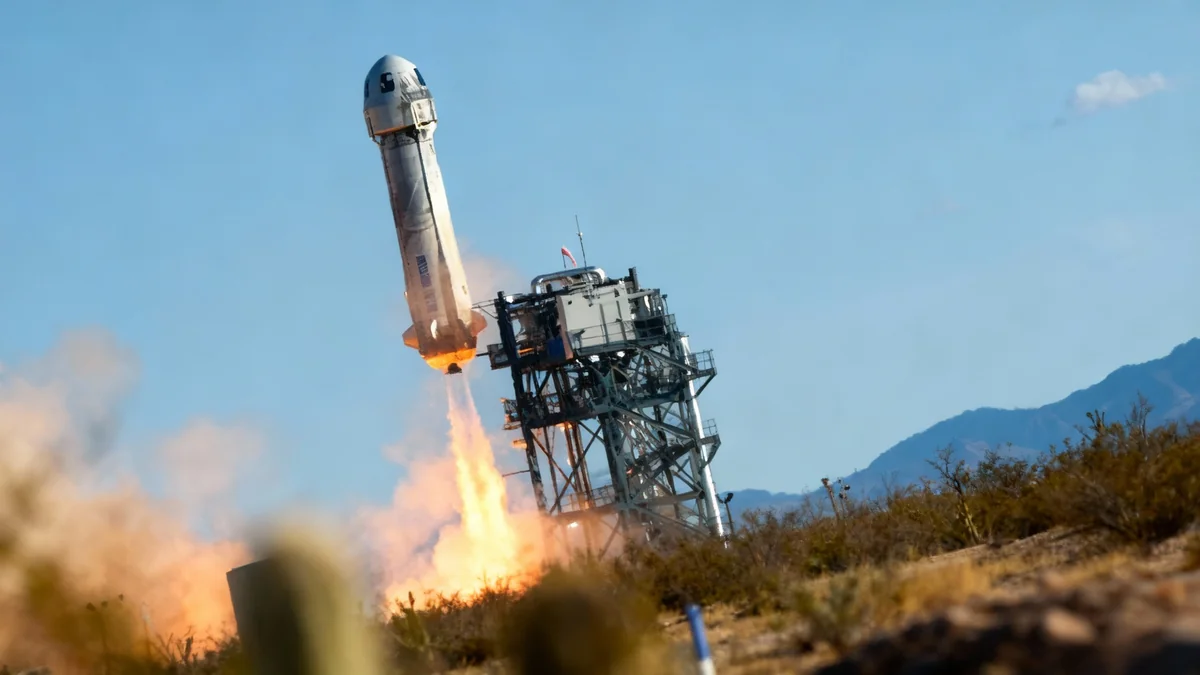



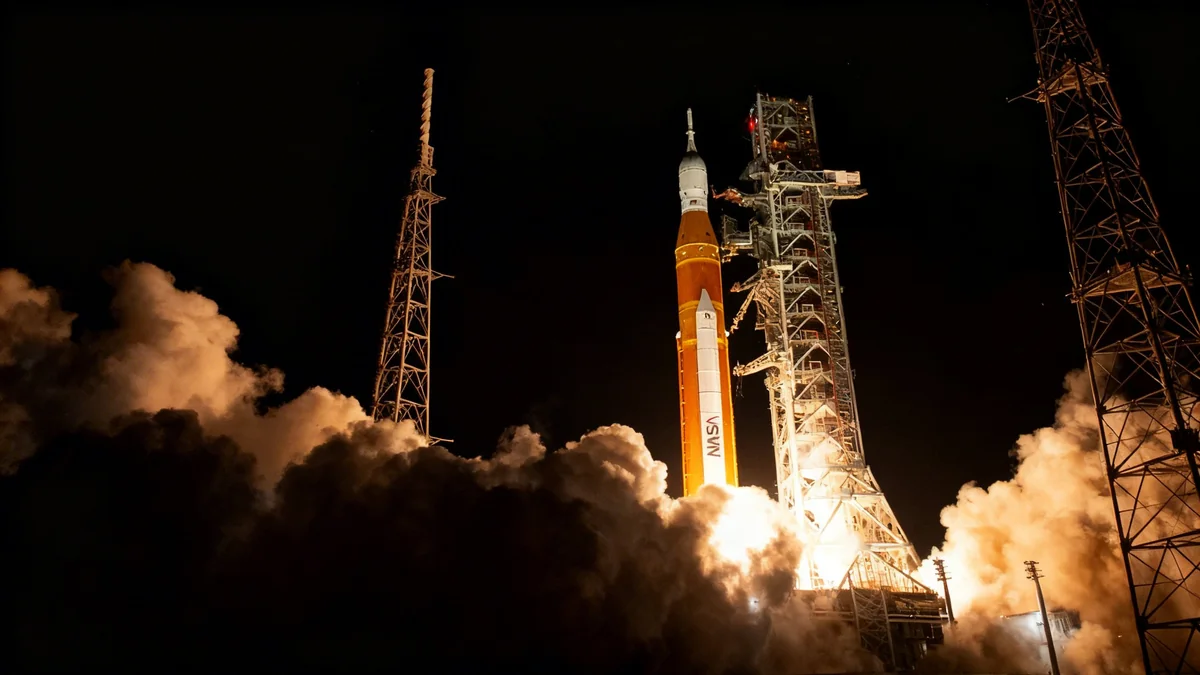
Blue Origin, the space company founded by Amazon billionaire Jeff Bezos, has announced a pause in its suborbital space tourism flights aboard the New Shepard rocket. The company stated on Friday that it will redirect resources to accelerate the development of its lunar lander capabilities. This decision marks a significant shift for the company, which has offered 10-minute trips to the edge of space for paying customers and special guests since 2021.
Key Takeaways
- Blue Origin has paused New Shepard suborbital tourism flights for at least two years.
- Resources are being reallocated to accelerate lunar lander development.
- Blue Origin holds a NASA contract for human lunar capabilities.
- NASA's Artemis III mission aims to return astronauts to the Moon by 2028.
- The decision underscores a renewed focus on the lunar space race against China.
Focus Shifts to Lunar Ambitions
The immediate cessation of New Shepard flights is a direct result of Blue Origin's commitment to national space goals. The company confirmed its intention to "further accelerate development of the company’s human lunar capabilities." This move directly impacts its suborbital tourism program, which has seen 98 people travel past the Kármán line since its first crewed flight in 2021.
The Kármán line, located 62 miles (100 kilometers) above sea level, is widely recognized as the boundary of outer space. Notable passengers on New Shepard flights have included actor William Shatner, NFL star Michael Strahan, journalist Gayle King, and singer Katy Perry.
New Shepard's Impact
- 98 people have flown on New Shepard missions.
- Flights reach 62 miles (100 kilometers) above sea level.
- The first crewed flight took place in 2021.
NASA's Artemis Program and Lunar Lander Contracts
Blue Origin is a key player in NASA’s Artemis program, which aims to return humans to the Moon for the first time in over five decades. Both Blue Origin and Elon Musk’s SpaceX hold contracts with NASA to develop vehicles capable of transporting astronauts from deep space to the lunar surface.
Currently, SpaceX is slated to provide the lunar lander for Artemis III, the mission intended to facilitate NASA’s first Moon landing since the Apollo era. Artemis III is provisionally scheduled for launch by 2028, though potential delays remain a concern.
"If SpaceX is behind, but Blue Origin can do it before them, good on Blue Origin. But … we’re not going to wait for one company. We’re going to push this forward and win the second space race against the Chinese."
Artemis III Mission
The Artemis III mission is crucial for NASA's lunar ambitions. It represents the first crewed lunar landing since Apollo 17 in 1972. The mission's success relies heavily on the timely development and readiness of the lunar lander.
The New Space Race and Geopolitical Pressures
The decision by Blue Origin also reflects heightened geopolitical pressures. Lawmakers in Washington have increasingly emphasized the importance of NASA returning astronauts to the Moon before China does. China plans to send its Taikonauts to the lunar surface for the first time by 2030, intensifying the competition.
Transportation Secretary Sean Duffy, who previously served as NASA’s acting administrator, issued warnings to both SpaceX and Blue Origin in October. He suggested that NASA might consider Blue Origin’s lander for Artemis III if SpaceX's development faced significant delays. This highlights the strategic importance of rapid progress in lunar capabilities.
Uncertainties for Future Space Tourists
The pause in New Shepard flights creates uncertainty for individuals who have already purchased tickets for future suborbital journeys. Blue Origin does not publicly disclose the price of its tickets or the number of people holding reservations. These ticket holders will now face a wait of at least two years, with no clear timeline for when tourism flights might resume.
The first crewed flight of the Artemis program, a mission designed to circumnavigate the Moon without landing, is set to launch as early as February 8. NASA's newly appointed administrator, Jared Isaacman, a billionaire entrepreneur who has flown to space twice with SpaceX, met with both companies in January. He stated his goal was to "understand the latest plans to accelerate NASA’s Artemis timeline."
Lunar Race Timelines
- NASA Artemis III: Scheduled by 2028.
- China's Lunar Mission: Aiming for 2030.
- Artemis I (uncrewed): Launched in November 2022.
- Artemis II (crewed circumnavigation): Slated for early 2025.
Blue Origin's strategic pivot underlines the growing national and international focus on lunar exploration. The company's decision to prioritize its lunar lander development over its burgeoning space tourism business signals a critical phase in the renewed race to the Moon.