


A Beijing-based startup named InterstellOr is aiming to launch its first commercial suborbital space flights by 2028, entering a field currently dominated by Western companies. The company has already begun taking reservations and recently signed a prominent Chinese actor for an early mission, signaling a new front in the commercial space industry.
The venture, founded just last year, is developing a reusable capsule designed to carry passengers above the Kármán line, the internationally recognized boundary of space. This move highlights China's rapidly growing private space sector and its ambition to compete in the high-stakes market of space tourism.
Key Takeaways
- Beijing-based InterstellOr plans to start commercial space tourism flights in 2028.
- Tickets are priced at approximately $430,000 USD, with reservations requiring a 10% deposit.
- Chinese actor Johnny Huang Jingyu has been announced as an early passenger, a strategy similar to that of Western competitors.
- The company recently unveiled and tested a full-scale prototype of its CYZ1 crew capsule.
- InterstellOr is one of several Chinese firms, including CAS Space, competing to offer suborbital flights.
The Mission and the Technology
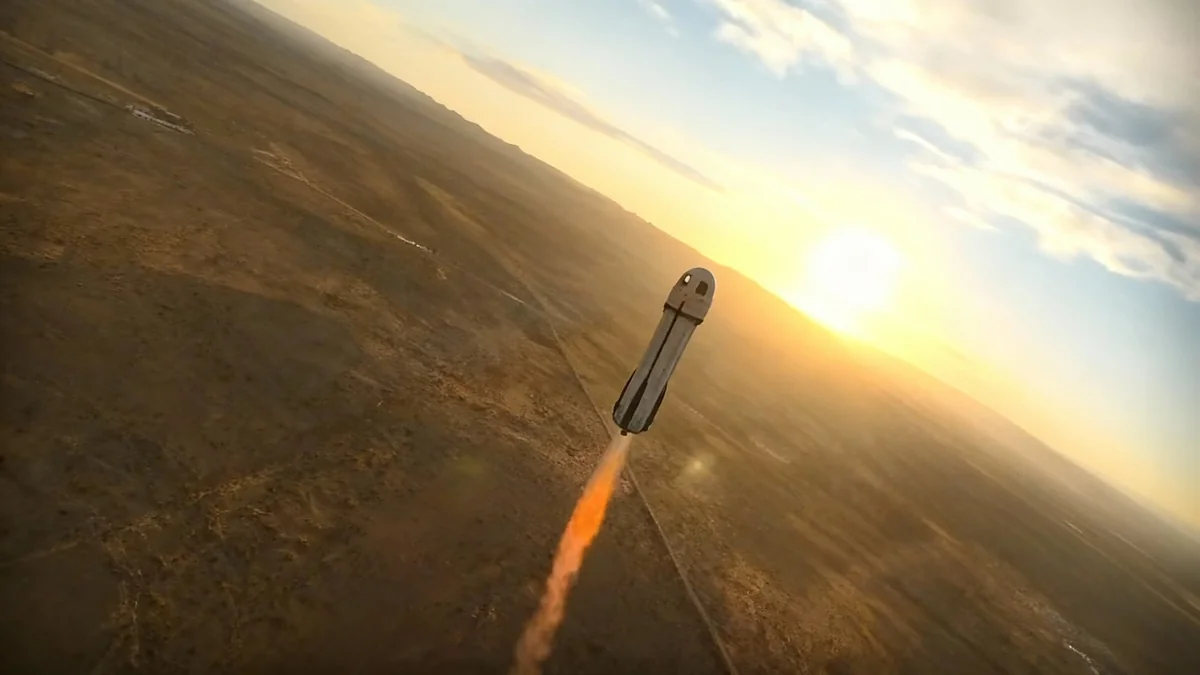
InterstellOr's primary goal is to provide tourists with a brief but authentic spaceflight experience. Passengers will travel in the company's CYZ1 crew capsule, which is designed to take them more than 62 miles (100 kilometers) above Earth's surface.
At this altitude, travelers will experience several minutes of weightlessness and witness the curvature of the Earth against the blackness of space. The company recently reached a significant milestone by unveiling a full-scale experimental version of the CYZ1 capsule on January 22, where it also conducted a successful landing buffer test.
The technical team behind the project includes veterans from China's state-run human spaceflight program. This connection provides the young company with a deep well of expertise and experience, potentially accelerating its development timeline.
What is Suborbital Flight?
Suborbital spaceflight involves reaching space but not achieving the velocity needed to complete an orbit around the Earth. A vehicle flies on a trajectory up into space and then comes back down, allowing passengers to experience weightlessness and see the planet from above without the duration or cost of an orbital mission.
A Growing Market and a Celebrity Endorsement
To generate interest and credibility, InterstellOr is already accepting flight reservations. A seat on one of its initial flights costs around 3 million Chinese yuan, which is equivalent to approximately $430,000 USD. Prospective passengers are required to place a 10% deposit to secure their spot.
In a move that mirrors the marketing strategies of Western firms like Blue Origin and Virgin Galactic, InterstellOr has enlisted a celebrity for one of its first flights. The company announced that popular Chinese actor Johnny Huang Jingyu has signed on as passenger 009.
This approach of using high-profile individuals helps build public excitement and normalizes the concept of commercial space travel. Blue Origin famously flew actor William Shatner and TV host Michael Strahan on its New Shepard rocket.
InterstellOr also announced that Lin Xiaoyan, a Chinese-American poet, is slated to become the first overseas Chinese woman to fly with the company, demonstrating an effort to attract an international clientele.
By the Numbers: The Flight Plan
- Target Year for First Flight: 2028
- Ticket Price: ~$430,000 USD (3 million yuan)
- Reservation Deposit: 10%
- Altitude: Above 100 km (62 miles)
- Passenger Experience: Several minutes of microgravity
China's Competitive Commercial Space Scene
InterstellOr, founded in January 2023, is not operating in a vacuum. It is part of a burgeoning private space industry within China, with several companies vying for a piece of the suborbital tourism market. This domestic competition is fostering rapid innovation.
Key Competitors
Several other firms are developing similar capabilities:
- CAS Space: A spin-off from the state-owned Chinese Academy of Sciences, this company is a major contender. It recently performed a successful launch test of an uncrewed capsule designed for microgravity experiments, a direct step toward human spaceflight.
- Deep Blue Aerospace: Another commercial entity, Deep Blue Aerospace has also stated its intentions to enter the suborbital tourism sector using reusable rocket technology.
The emergence of these companies indicates a strategic shift in China's space ambitions, which have historically been dominated by state-led programs. The government now appears to be encouraging private enterprise to develop commercial applications for space technology, from satellite launches to tourism.
While the 2028 target is ambitious and depends on rigorous testing and certification, InterstellOr's progress and high-profile passenger bookings signal that the race for commercial spaceflight in Asia is officially underway.