

China's ambitious space program experienced a significant and unusual setback on Friday, with two separate rocket launches failing within a 12-hour period. The incidents involved both the established state-run Long March 3B rocket and the inaugural flight of the new commercial Ceres-2 launcher, resulting in the loss of multiple satellites.
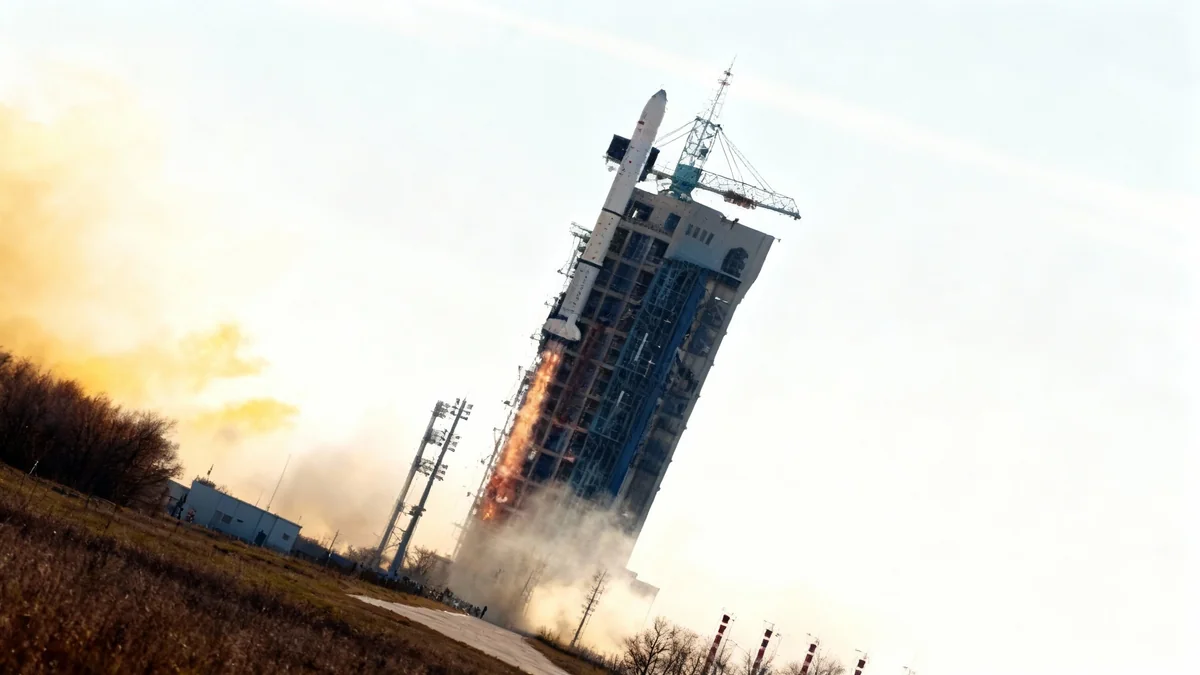
The first failure occurred with the launch of a Long March 3B rocket from the Xichang Satellite Launch Center, which was carrying the classified Shijian-32 satellite. Hours later, the debut mission of Galactic Energy's Ceres-2 rocket also ended in failure after lifting off from the Jiuquan Satellite Launch Center.
Key Takeaways
- China experienced two rocket launch failures within 12 hours on Friday, January 16.
- A Long March 3B rocket failed due to a third-stage anomaly, losing the classified Shijian-32 satellite.
- The debut flight of Galactic Energy's commercial Ceres-2 rocket also failed, losing an estimated six satellites.
- These failures mark a rare setback for China's space program, which aims for over 100 launches in 2026.
- The incidents could impact the launch schedules for both state and commercial missions as investigations begin.
State-Run Long March 3B Fails
The first incident involved one of China's most utilized launch vehicles. The Long March 3B lifted off from Xichang at 11:55 a.m. Eastern Time on Friday. While initial amateur footage confirmed the launch occurred as scheduled, official channels remained silent for an extended period.
Nearly 12 hours later, the China Aerospace Science and Technology Corporation (CASC), the nation's primary space contractor, confirmed the mission had failed. In a brief statement, CASC attributed the failure to an anomaly that occurred during the operation of the rocket's third stage. The payload, a satellite designated Shijian-32, was lost as a result.
The Shijian Satellite Program
The Shijian series, which translates to "Practice," is a broad program of Chinese satellites used for a variety of purposes. Missions often involve testing new technologies, conducting scientific experiments, and verifying on-orbit operational procedures. Due to their experimental nature, specific details about individual Shijian satellites, including the lost Shijian-32, are rarely disclosed publicly.
This event marks the first complete failure of a Long March 3B since April 2020, when a similar third-stage issue led to the loss of an Indonesian communications satellite. The Long March 3B is a workhorse for China, primarily used to deliver satellites to geostationary transfer orbit.
Potential Ripple Effects
The investigation into the third-stage malfunction could have broader implications for China's launch schedule. The Long March 7A, a newer rocket, uses a hydrolox upper stage that was inherited from the Long March 3B's predecessor. Any systemic issue discovered could potentially ground or delay missions for both rocket families.
Launches that may be affected include those for the experimental TJS satellite series and the Tianlian data relay satellites, which are crucial for communication with China's crewed space station and other orbital assets. While CASC has not announced any immediate schedule changes, a thorough investigation is expected before the rocket returns to flight.
Commercial Setback for Galactic Energy
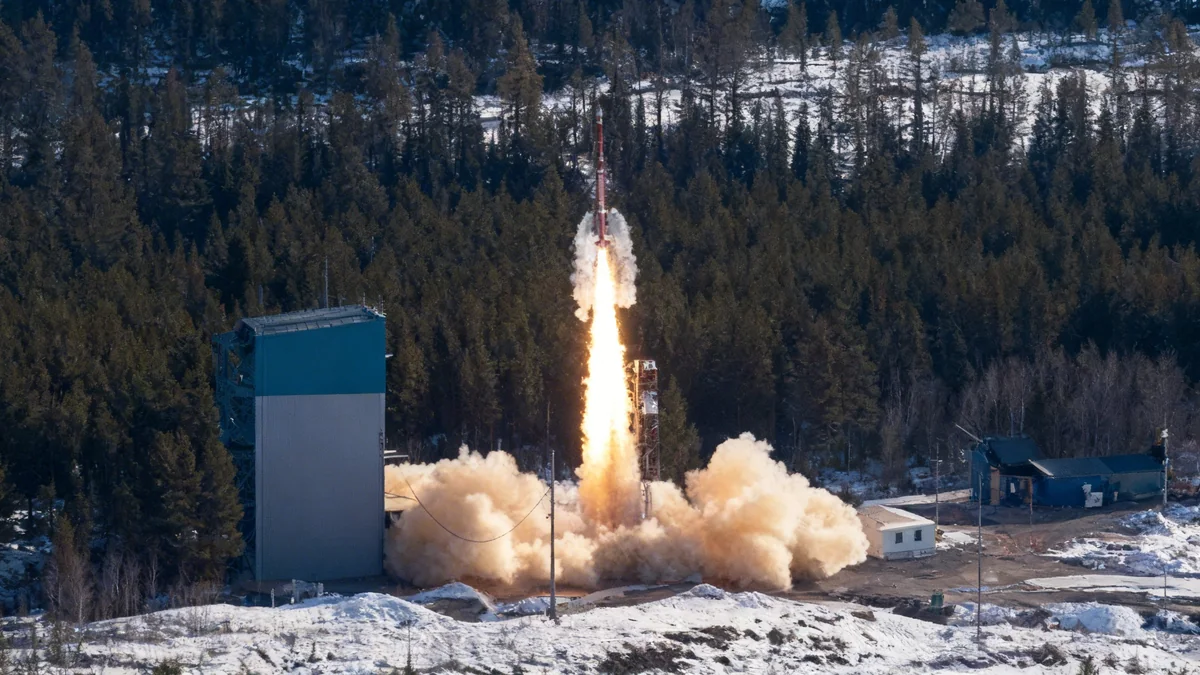
Less than 12 hours after the Long March failure, China's burgeoning commercial space sector suffered a blow of its own. Galactic Energy, a leading private launch provider, conducted the highly anticipated debut flight of its Ceres-2 rocket from Jiuquan at 11:08 p.m. Eastern Time.
However, the mission did not reach orbit. The company later confirmed that an anomaly occurred during the flight and that the mission was lost. In a statement, Galactic Energy apologized to its customers and partners, confirming that the specific cause of the failure is now under investigation.
Ceres-2 Capabilities
- Payload to LEO: 1,600 kilograms to a 500-kilometer orbit.
- Comparison: This is four times the capacity of its smaller predecessor, the Ceres-1 (400 kg to LEO).
- Purpose: Designed to capture a larger share of the commercial satellite launch market.
The rocket was reportedly carrying around six small satellites, including the Lilac-3, an ultra-flat disk satellite developed by the Harbin Institute of Technology. The failure is a significant setback for Galactic Energy, which had planned to use the more powerful Ceres-2 to increase its launch cadence and compete for larger payloads.
The incident occurred just a day after the company's smaller Ceres-1 rocket made a successful return to flight following a failure in November 2025. Galactic Energy is also developing its first liquid-propellant rocket, the Pallas-1, and has been preparing for a potential IPO.
Context of China's Space Ambitions
These back-to-back failures stand in stark contrast to China's recent record of success. In 2025, the country conducted 92 orbital launches with only two failures, setting a national record and leading the world in launch activity. For 2026, China has stated its goal is to conduct more than 100 launches for the first time.
Friday's missions were the country's fifth and sixth of the new year. The first four were successful, including launches for the Yaogan and Guowang satellite constellations, as well as a mission carrying the AlSat-3A satellite for Algeria.
"The specific cause is under further analysis and investigation," state media reported regarding the Long March 3B failure, a sentiment echoed by Galactic Energy for its Ceres-2 rocket.
While two failures in a single day are notable, they represent a small fraction of the country's overall launch activity. The focus will now shift to the investigation teams tasked with identifying the root causes of each anomaly. The speed and transparency of these investigations will be critical in determining how quickly both the state-owned and commercial launch sectors can recover and resume their ambitious schedules.