
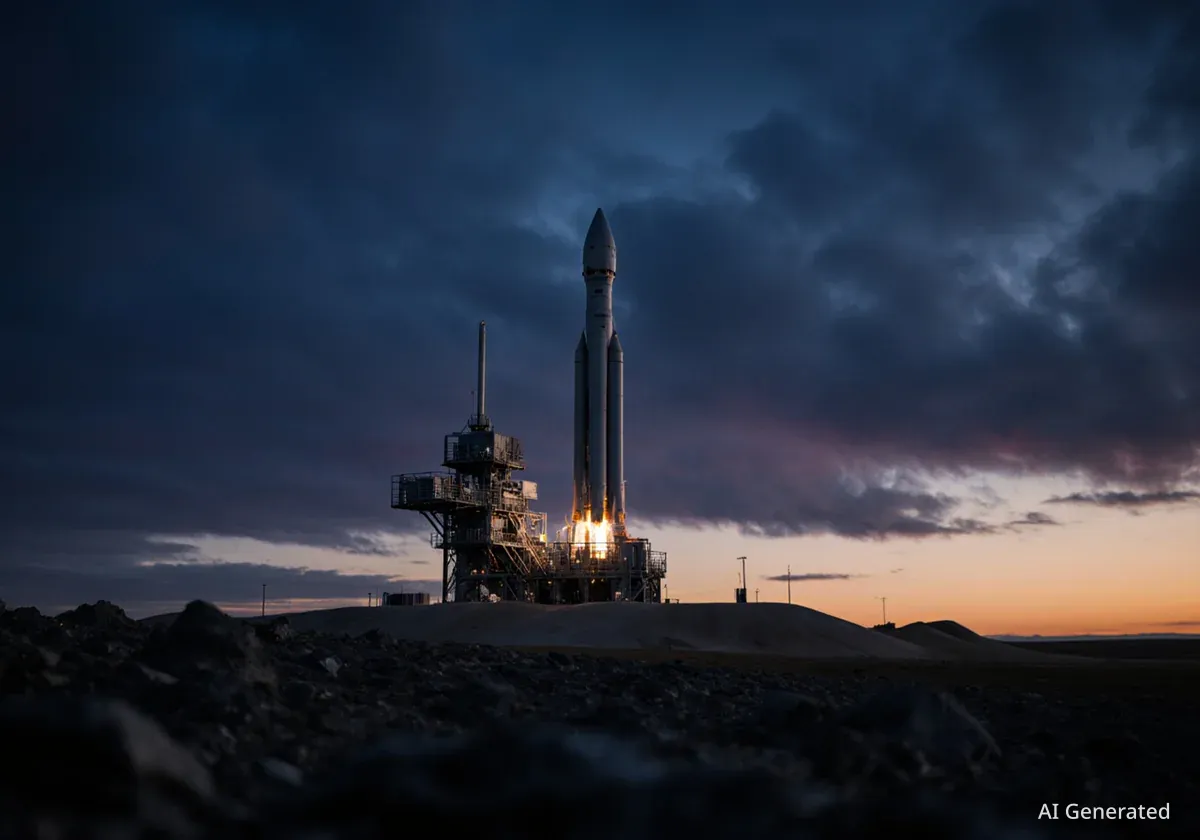
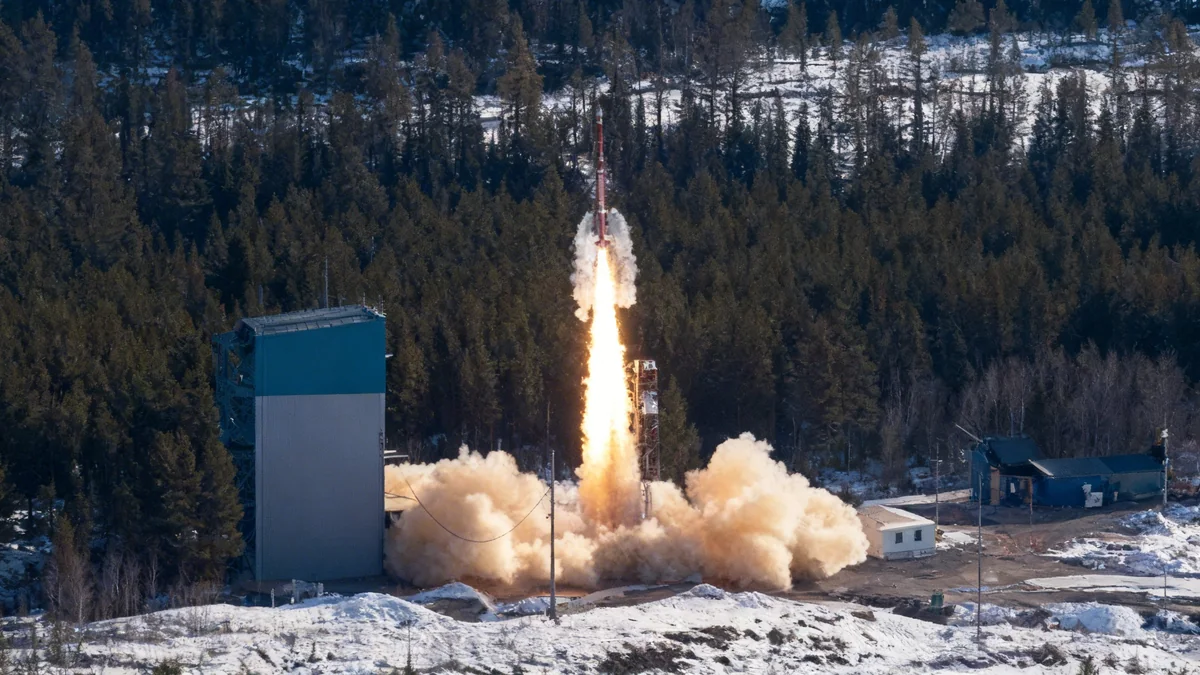


A German aerospace startup is on the verge of making history at the Andøya Space Center in Norway. Isar Aerospace is in the final stages of preparation for a rocket launch that, if successful, will mark the first time a satellite has been placed into orbit from a launchpad in continental Europe.
The mission represents a significant step forward for Europe's independent access to space, a capability that has become a strategic priority for the continent. The launch, which has been delayed due to technical checks, is now anticipated to occur in the coming days, pending favorable conditions.
Key Takeaways
- German company Isar Aerospace is preparing for an orbital rocket launch from the Andøya Space Center in Norway.
- This would be the first orbital launch from a spaceport on the European mainland.
- The mission is a critical test for Europe's growing private space industry and its goal of sovereign space access.
- The launch was initially scheduled for January 21, 2026, but has been postponed for technical reviews.
A New Gateway to Space for Europe
In a remote location in northern Norway, set against a backdrop of fjords and the potential spectacle of the aurora borealis, engineers from Isar Aerospace are conducting final countdown procedures. The company's Spectrum rocket is poised for its inaugural orbital flight, a mission that carries the hopes of an entire continent's space industry.
For decades, European orbital launches have been conducted from the Guiana Space Centre in French Guiana, South America. While effective, its location presented logistical and geopolitical dependencies. The activation of the Andøya launch site for orbital missions signals a major shift, providing Europe with a domestic and more accessible path to space.
Why a Continental Launch Site Matters
Having a launchpad on the European mainland provides several strategic advantages. It reduces reliance on facilities outside the continent, streamlines logistics for European satellite manufacturers, and enhances the continent's autonomy in space operations. This is particularly important for deploying small satellite constellations for communications, Earth observation, and national security.
The Rise of Private European Spaceflight
Isar Aerospace is one of several private companies leading Europe's "New Space" movement. These startups are developing smaller, more cost-effective rockets designed to serve the booming market for small satellite deployments. A successful launch would validate Isar Aerospace's technology and business model, positioning it as a key player in the global launch market.
The success of this mission is seen as a crucial proof-of-concept for the viability of private launch services originating from Europe. It aims to create a competitive alternative to established American companies and national space agencies, fostering innovation and driving down the cost of accessing orbit.
The Global Small Satellite Market is projected to grow significantly in the next decade, with thousands of new satellites planned for launch. European launch providers like Isar Aerospace are aiming to capture a substantial share of this expanding market.
Technical Hurdles and Final Preparations
Rocket science is notoriously difficult, and delays are a common part of the process. The initial launch date of January 21 was postponed to allow teams to conduct further technical evaluations and ensure all systems are performing as expected. Safety and mission success are the top priorities.
Launch operators must contend with numerous variables, including weather conditions, system performance, and range safety. The teams at Andøya are working meticulously through their checklists to clear the rocket for flight.
"Every component, every line of code, and every procedure must be checked and double-checked. In the launch business, patience and precision are paramount. A successful first flight is built on a foundation of rigorous testing."
The Strategic Importance of Andøya
The Andøya Space Center has a long history of suborbital rocket launches, but this mission marks its debut as an orbital spaceport. Its high-latitude location is ideal for placing satellites into polar and sun-synchronous orbits, which are highly valuable for Earth observation and weather monitoring.
The development of Andøya into an orbital launch facility is a strategic investment by Norway and its European partners. It establishes a critical piece of infrastructure that will support a new generation of space activities on the continent.
- Ideal Location: Perfect for polar orbit launches.
- Reduced Dependencies: Less reliance on non-European launch sites.
- Economic Growth: Aims to attract business and foster a local aerospace ecosystem.
What a Successful Launch Means
If Isar Aerospace successfully places its payload into orbit, the achievement will resonate across the global space industry. It would demonstrate that Europe can foster a competitive private space sector capable of providing reliable and sovereign launch services.
This single launch could unlock further investment in European space startups and solidify the continent's position as a comprehensive space power, capable of not only building satellites but also launching them from its own soil. As the world watches the Norwegian coast, the countdown continues for what could be a landmark moment for European spaceflight.