

A 33-year-old German aerospace engineer has made history, becoming the first wheelchair user to travel to the edge of space. Michaela Benthaus, who works for the European Space Agency, was part of a six-person crew that completed a suborbital flight aboard a Blue Origin New Shepard rocket.
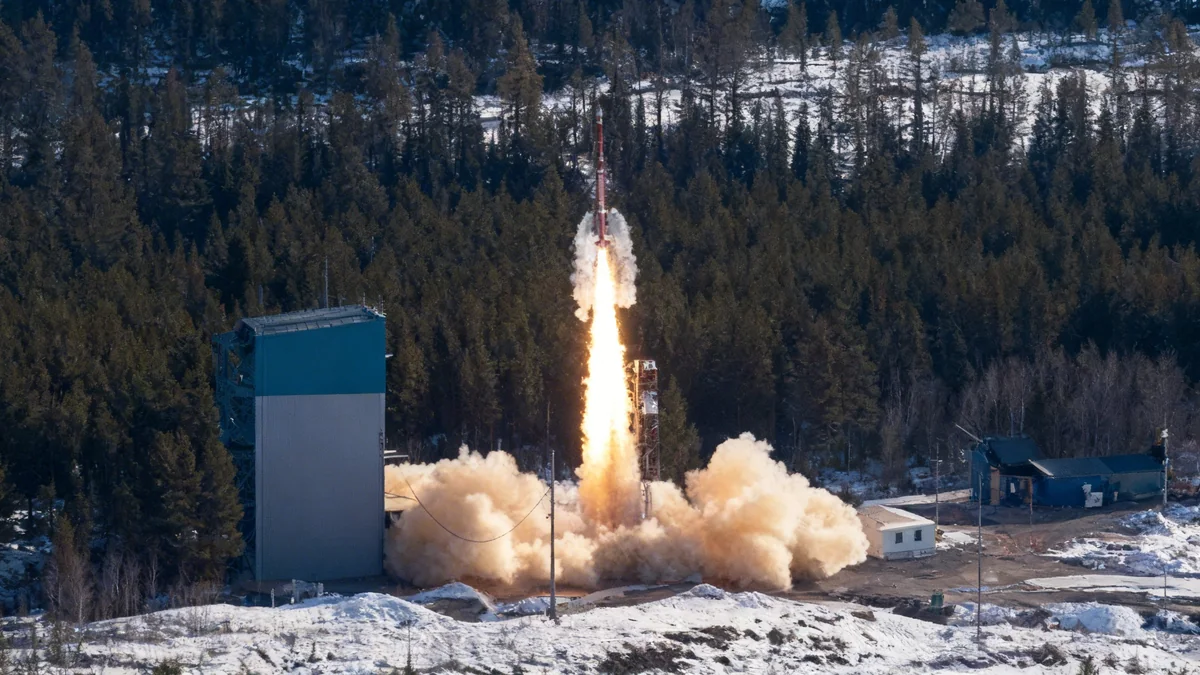
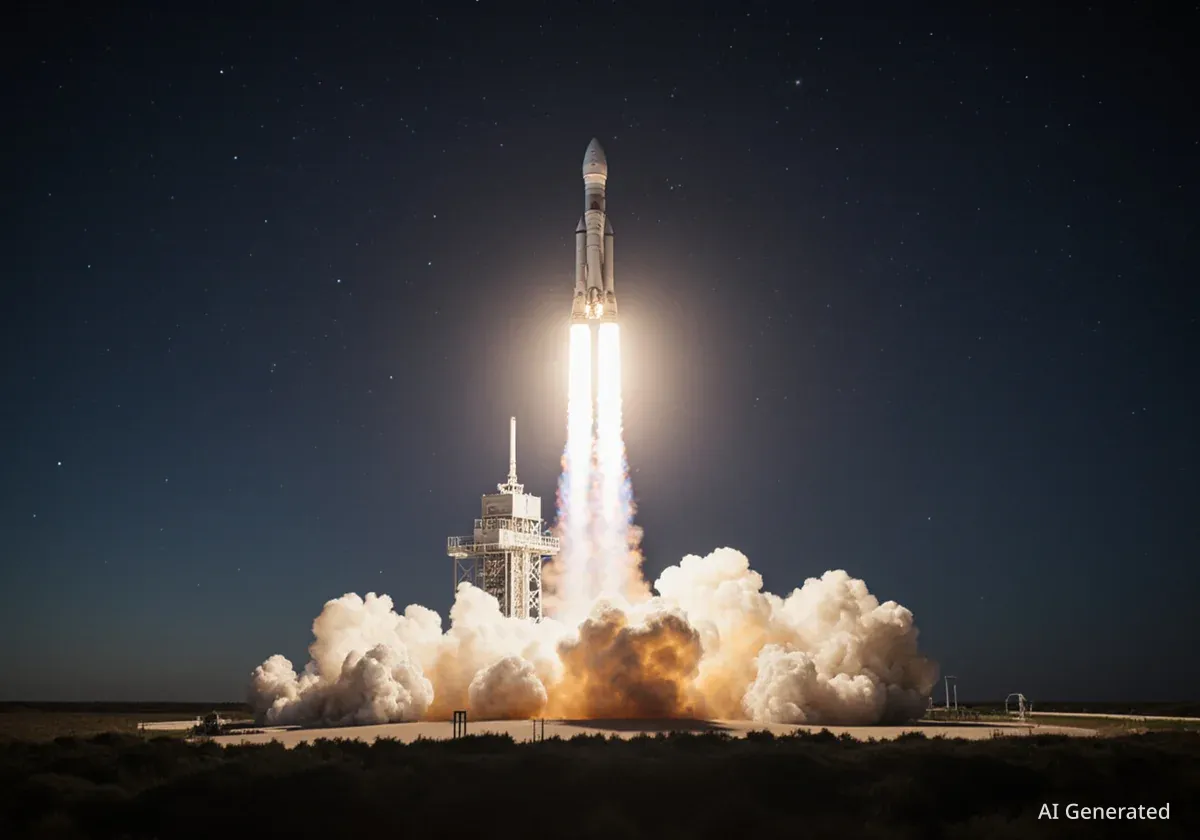
The fully automated capsule launched from West Texas on Saturday morning, carrying its passengers on a brief journey that allowed them to experience several minutes of weightlessness before returning to Earth. The flight marks a significant moment for accessibility in the rapidly growing field of commercial space travel.
Key Takeaways
- Michaela Benthaus, a 33-year-old paraplegic engineer, is the first wheelchair user to fly to space.
- The suborbital flight was conducted by Blue Origin using its New Shepard rocket from a launch site in West Texas.
- The mission highlights a growing movement to make space travel more inclusive and accessible for individuals with physical disabilities.
- Benthaus, an engineer at the European Space Agency, sustained a spinal cord injury in a 2018 mountain biking accident.
A Milestone Launch from West Texas
The New Shepard rocket lifted off at 8:15 a.m. local time, ascending quickly to pass the Kármán line, the internationally recognized boundary of space. Onboard, Benthaus and five other passengers were able to unbuckle from their seats and float freely inside the capsule, viewing Earth through the craft's large windows.
The entire mission, from launch to landing, lasted approximately 11 minutes. This type of suborbital flight is designed to provide a brief but profound experience of space travel and weightlessness without entering a full orbit around the planet. After reaching its peak altitude, the capsule detached from its booster and descended under parachutes, landing softly in the Texas desert. The booster rocket performed a separate, powered vertical landing for reuse on future missions.
What is a Suborbital Flight?
Suborbital spaceflight involves a spacecraft reaching an altitude above 100 kilometers (about 62 miles) but at a speed insufficient to achieve a stable orbit around the Earth. Passengers experience a few minutes of weightlessness at the apex of the flight path before the vehicle returns to the ground. Companies like Blue Origin and Virgin Galactic specialize in these short, tourist-focused space experiences.
Breaking Barriers in Space Exploration
Michaela Benthaus's journey is more than just a personal achievement; it represents a crucial step forward for inclusive spaceflight. An accomplished aerospace engineer at the European Space Agency (ESA), Benthaus became a paraplegic following a mountain biking accident in 2018. Her participation in this flight challenges traditional astronaut selection criteria, which have historically excluded individuals with significant physical disabilities.
Her background as an engineer provides her with a unique perspective on the mission. While the flight was for tourism purposes, her presence underscores the potential for highly qualified professionals with disabilities to contribute to space missions. This event is seen by many as a catalyst for re-evaluating the physical requirements for future astronauts, especially as space travel becomes more automated and less physically demanding.
A New Era of Astronauts
The European Space Agency has been a pioneer in this area. In 2022, ESA selected former British Paralympic sprinter John McFall as the first member of its "parastronaut" feasibility project. This initiative aims to study the adaptations needed for astronauts with physical disabilities to work and live in space, potentially opening the door for their inclusion in future long-duration missions to the International Space Station and beyond.
The Role of Commercial Spaceflight
This historic flight was made possible by Blue Origin, the private space company founded by Jeff Bezos. The New Shepard program is specifically designed for space tourism, featuring a fully autonomous system that does not require a pilot. This automation is a key factor in expanding access to space, as it simplifies the operational requirements for passengers.
Commercial companies are playing an increasingly vital role in opening up the final frontier. By developing reusable rockets and focusing on passenger experience, firms like Blue Origin are lowering the cost and complexity of space travel. This shift is creating opportunities that were once the exclusive domain of government space agencies and their rigorously selected astronaut corps.
"The involvement of private companies is fundamentally changing who gets to go to space. By creating new vehicles and new mission profiles, they are inadvertently—and sometimes intentionally—designing a more accessible future for human spaceflight."
This new commercial paradigm allows for a wider range of individuals to participate, from tourists and researchers to, now, individuals who are breaking physical barriers. Benthaus's flight serves as a powerful demonstration that physical limitations on Earth do not necessarily preclude participation in the space economy.
Looking to an Inclusive Future in Orbit
While Benthaus's suborbital flight was brief, its impact is expected to be long-lasting. The data and experience gathered from her journey will be invaluable for engineers and mission planners working to design more accessible spacecraft and habitats for future missions.
Key considerations for accommodating astronauts with disabilities include:
- Vehicle Accessibility: Designing hatches, seats, and interior layouts that can be used by individuals with limited mobility.
- Suit Design: Adapting spacesuits for different body types and physical needs.
- Microgravity Operations: Studying how the absence of gravity affects individuals with specific physical conditions and developing new procedures for movement and work.
As humanity sets its sights on returning to the Moon and eventually traveling to Mars, ensuring that these missions are open to the widest possible pool of talent will be essential. The flight of Michaela Benthaus is a powerful reminder that the journey to space is, above all, a human endeavor—one that should be open to everyone with the skill and determination to participate.