
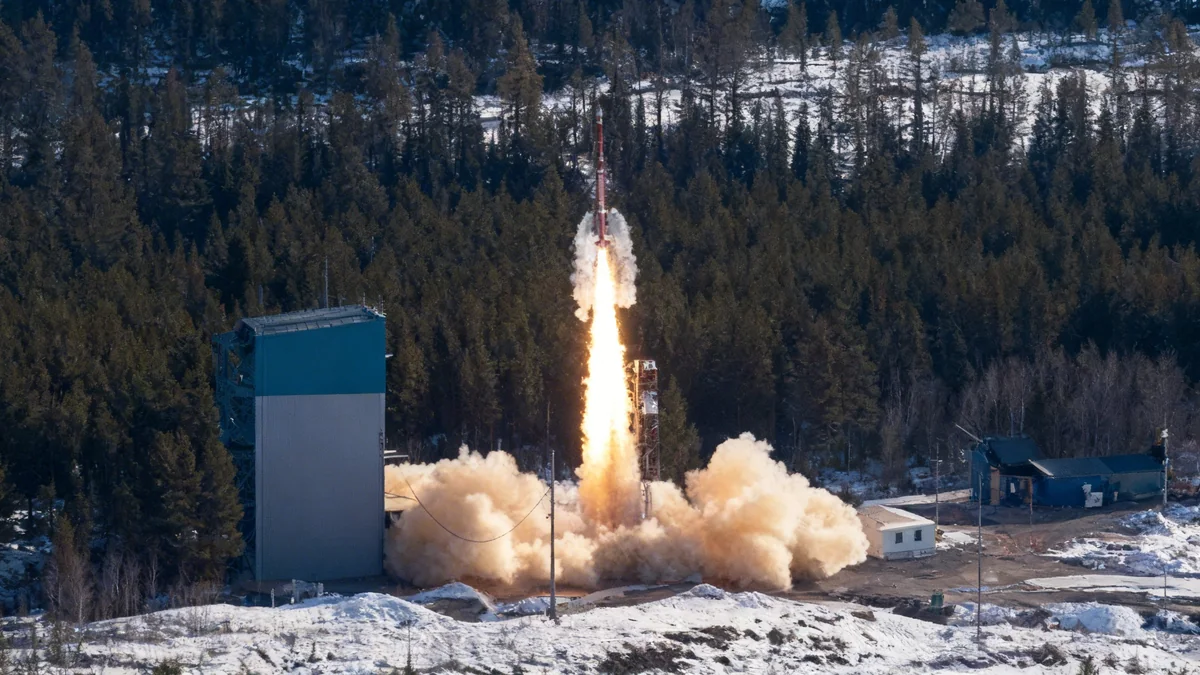
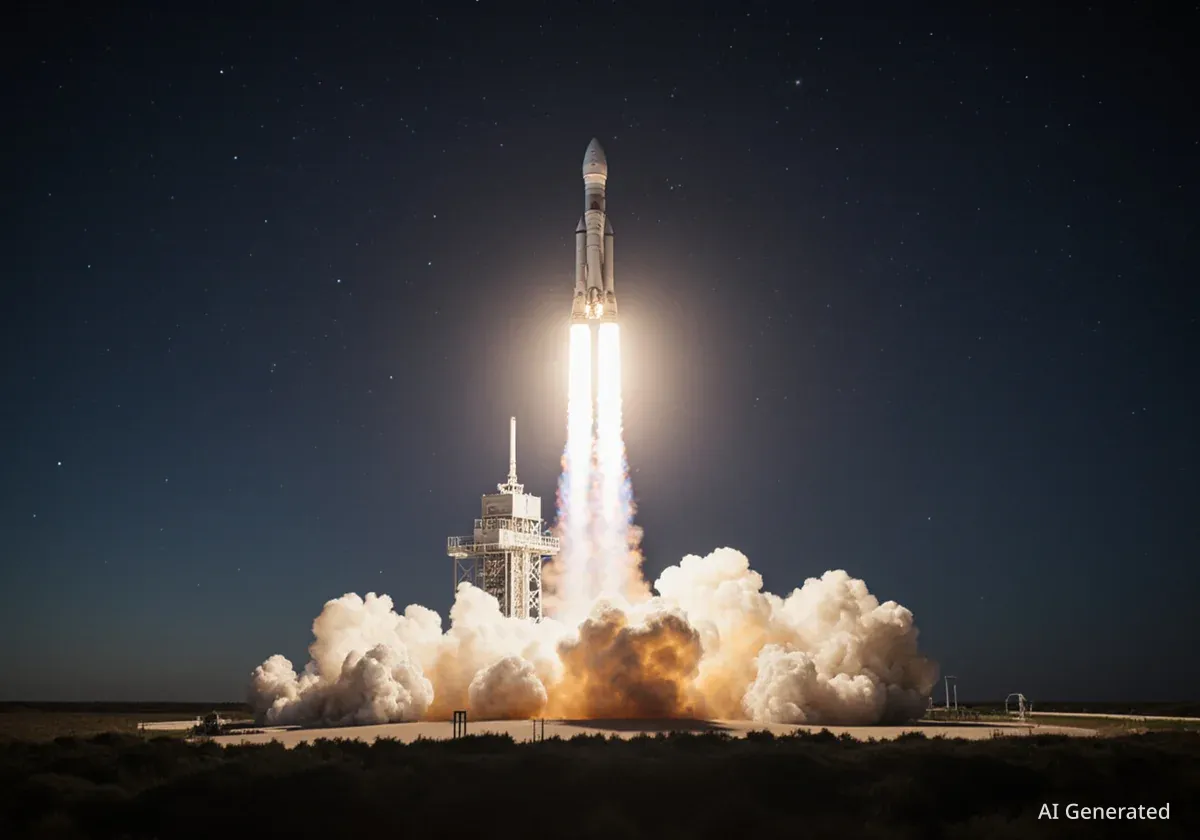

High above the Arctic Circle, the Esrange Space Centre in northern Sweden is transforming from a long-standing hub for scientific rockets into a key player in Europe's race to launch satellites into orbit. The facility, operated by the state-owned Swedish Space Corporation (SSC), is expanding its infrastructure to accommodate commercial partners and establish a new gateway to space from the European mainland.
The push comes amid soaring global demand for satellite deployment, driven by the expansion of internet and communication networks. With tens of thousands of new satellites planned for launch in the coming years, multiple European nations are competing to develop their own sovereign launch capabilities, a goal that has gained strategic importance in a shifting geopolitical landscape.
Key Takeaways
- Sweden's Esrange Space Centre is preparing for its first orbital satellite launch within the next few years.
- The facility is building new infrastructure to support commercial partners, including American company Firefly Aerospace and South Korea's Perigee.
- The expansion is part of a wider European effort to achieve independent access to space, reducing reliance on foreign launch providers.
- Global satellite numbers are projected to increase from around 10,000 today to over 40,000 in the near future, creating a significant market for new spaceports.
A New Era for a Veteran Spaceport
For more than 60 years, the remote Esrange facility near Kiruna has been a site for sub-orbital rocket launches. These missions, which enter space briefly without completing an orbit, are primarily used for scientific research in micro-gravity environments. Over 600 such rockets have been launched from the site.
Now, Esrange is undergoing a major evolution. A new launchpad, inaugurated in early 2023, is the centerpiece of its orbital ambitions. According to Mattias Abrahamsson, a business development director at SSC, the first satellite launch from the site is expected "within a couple of years."
This transition is attracting international partners. The American firm Firefly Aerospace, which recently achieved a successful lunar landing, is one of two clients preparing for orbital launches from Sweden. "We are now building out more infrastructure that is specific to Firefly's Alpha rocket," explained Katarina Lahti of SSC's orbital launch division. This includes specialized fueling and safety systems.
A Key International Agreement
A recent technology safeguard agreement between the United States and Sweden has been a critical step forward. This agreement permits American companies like Firefly to transfer advanced space technology to Sweden for launch operations, removing a significant regulatory barrier and paving the way for deeper collaboration.
Beyond orbital launches, Esrange is also a hub for next-generation rocket technology. It hosts ground tests for Themis, Europe's first prototype for a reusable rocket, and conducts engine tests for the German startup Isar Aerospace.
The Booming Satellite Market Fuels Competition
The driving force behind this new space race is the explosive growth of the satellite industry. The number of active satellites orbiting Earth has grown rapidly, from a few thousand to approximately 10,000 today.
Projections indicate a massive increase in the near future. "The plan is to go to about 40-50,000 satellites in just some years," Abrahamsson noted, with some reports suggesting the number could reach half a million by the end of the 2030s.
This demand for launching services has spurred the development of multiple spaceports across Europe. Each location offers unique geographical advantages:
- Norway: Andøya Spaceport, also located in the Arctic, is considered a frontrunner and has already hosted a launch attempt by Isar Aerospace.
- United Kingdom: SaxaVord, on Scotland's Shetland Islands, is the UK's first licensed vertical spaceport and is working with companies like Rocket Factory Augsburg.
- Portugal: The Atlantic Spaceport Consortium operates from the Azores islands, offering a different orbital inclination capability.
- Denmark: A startup plans to launch rockets from a ship anchored in the North Sea.
Despite the competitive landscape, officials at Esrange believe there is room for multiple players. "This is a big market and there's room for all of us," said Lahti, pointing to SSC's long history and favorable location for polar orbits as key advantages.
The Strategic Push for European Autonomy
The development of launch sites on European soil is not just a commercial endeavor; it is also a matter of strategic priority. For years, Europe has relied heavily on other nations for access to space. European missions frequently used Russia's Baikonur Cosmodrome in Kazakhstan, a practice that has ceased amid geopolitical tensions. The European Space Agency (ESA) also depends on its facility in Kourou, French Guiana, and on American partners like SpaceX.
"We need to have the capacity in Europe to do it on our own," stated Abrahamsson, emphasizing the strategic importance of sovereign launch capabilities.
Having domestic launch sites "enables rapid deployment or replacement of critical systems if you have a crisis or a threat," added Lahti. This capability is seen as essential for strengthening European defense and security autonomy, allowing for the quick launch of surveillance, communication, or navigation satellites without depending on international partners.
Challenges and a Crowded Field
While the ambition is high, the path to orbit is challenging and expensive. The commercial space industry has already seen high-profile setbacks. Sir Richard Branson's Virgin Orbit ceased operations following a failed launch from Cornwall, UK, in 2023. More recently, the Scottish rocket manufacturer Orbex, which planned to launch from SaxaVord, entered administration.
Hermann Ludwig Moeller of the European Space Policy Institute suggests that the market will ultimately determine the winners. "Spaceports will be like seaports, and you will need multiple for the amount of traffic, but also for resilience," he commented. However, he predicts consolidation, stating, "You will have winners and losers... It is really the market."
As of 2025, out of 319 successful orbital launches globally, only seven originated from Europe (all from Kourou). This pales in comparison to the 189 from the United States and 90 from China. Closing this gap is the primary motivation for facilities like Esrange, which are now working to turn decades of experience into a competitive advantage in the new orbital age.