



A new analysis of astronomical photographs from the 1950s has uncovered a strange pattern: mysterious flashes of light that appeared in the sky with surprising frequency one day after atmospheric nuclear weapons tests. Researchers now suggest these unexplained events could be connected to unidentified anomalous phenomena, or UAPs, from the height of the Cold War.
The findings, detailed in two recent studies, emerge from a project scrutinizing archival photographic plates taken at California's Palomar Observatory. The data reveals that these transient lights were 68% more likely to be recorded in the 24 hours following a nuclear detonation, raising new questions about activity in Earth's upper atmosphere and orbit before the Space Age officially began.
Key Takeaways
- Researchers found 106,000 mysterious light flashes on astronomical plates from 1951-1957.
- The appearance of these flashes was 68% more likely to occur the day after a nuclear weapons test.
- The studies also found an 8.5% increase in these light transients for each reported UAP (UFO) sighting at the time.
- One leading hypothesis is that the flashes are solar reflections from unknown flat, metallic objects in high-Earth orbit.
The Palomar Mystery
For decades, countless glass photographic plates from the Palomar Observatory have been stored away, preserving a view of the night sky as it appeared before the launch of the first satellites. A project known as Vanishing and Appearing Sources during a Century of Observations (VASCO) has been digitizing and analyzing these records to search for astronomical events, such as stars that suddenly disappear.
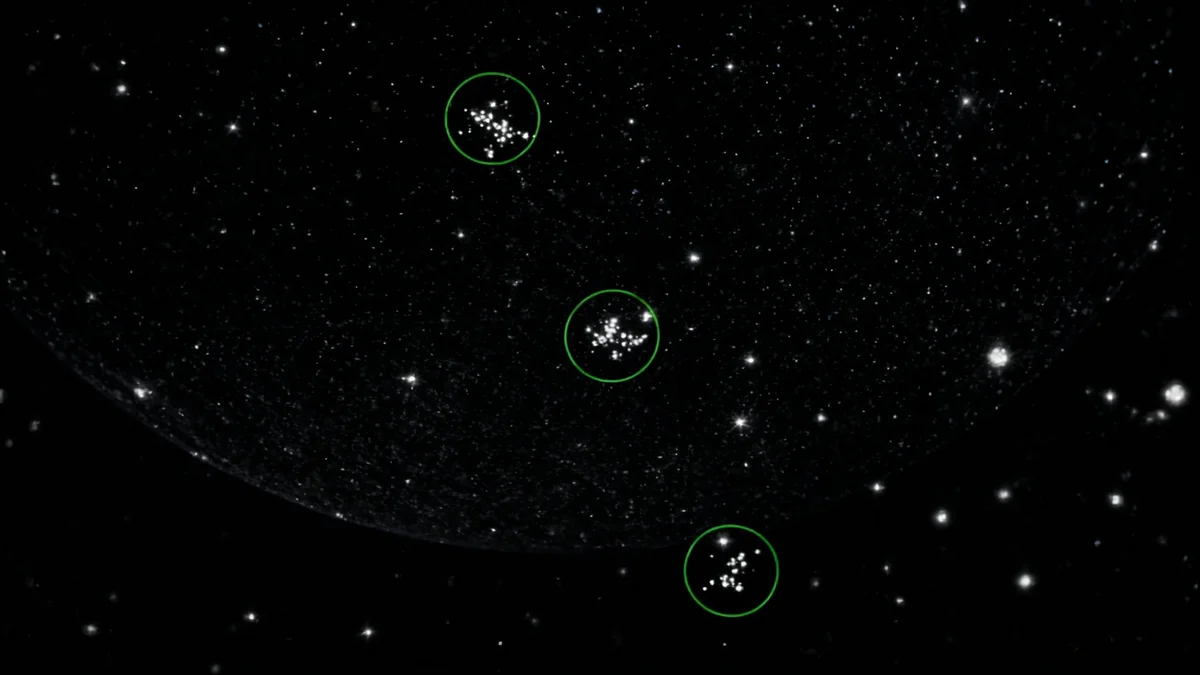
However, the project has uncovered something else entirely. A team led by Beatriz Villarroel of Stockholm University identified over 100,000 instances of point-like sources of light that appeared in a single exposure and were gone in the next. These are not streaks left by meteors or asteroids, but sharp, star-like flashes.
"Today we know that short flashes of light are often solar reflections from flat, highly reflective objects in orbit around the Earth, such as satellites and space debris," Villarroel noted. The puzzle, she explained, is that the photographic plates being analyzed were taken before humans had launched any satellites into space.
Before the Space Age
The period under investigation, 1951 to 1957, predates the launch of Sputnik 1 in October 1957, which is widely considered the start of the Space Age. The presence of reflective, manufactured objects in orbit during this time would challenge the accepted historical timeline of space activity.
A Nuclear Connection
The investigation took a surprising turn when researchers cross-referenced the dates of the light flashes with other historical events. Stephen Bruehl, a professor at Vanderbilt University and co-author of the studies, identified a strong statistical correlation with the era's frequent atmospheric nuclear weapons tests.
"The magnitude of the association between these flashes of light and nuclear tests was surprising," Bruehl stated. He highlighted the specific timing as most significant, with the flashes predominantly occurring the day after a test. Between 1951 and 1957, at least 124 nuclear devices were detonated above ground.
The researchers considered several explanations. One possibility is that the nuclear blasts triggered some previously unknown atmospheric phenomenon. However, they question how such a phenomenon could remain stationary over California for a full day after a test conducted elsewhere.
They also ruled out direct contamination of the photographic plates by nuclear fallout. Such particles would create foggy or diffuse spots, not the sharp, pinpoint sources of light observed in the images.
By the Numbers
- 106,000: The number of unexplained transient light flashes studied.
- 68%: The increased likelihood of a flash appearing the day after a nuclear test.
- 8.5%: The average increase in transients for each reported UAP sighting.
- 1952: A transient on July 27 coincided with a famous cluster of UAP sightings over Washington, D.C.
Unidentified Phenomena or Photographic Flaws?
The studies also explored a link to public reports of UAPs, more commonly known as UFOs. The 1950s were a peak period for such sightings, and the researchers found that the number of light transients on the plates increased by an average of 8.5% with each new UAP report.
One particularly compelling case occurred on July 27, 1952, when a transient was recorded at the same time as a well-documented series of UAP sightings over Washington, D.C. In this and other instances, the plates showed multiple flashes along a narrow band, which Villarroel suggests is consistent with a flat, reflective object moving through space and catching the sun's rays.
"You don’t get those kinds of solar reflections from round objects like asteroids or dust grains in space... but only if something is very flat and very reflective and reflects the sunlight with a short flash," said Villarroel.
This hypothesis is further supported by the observation that fewer flashes were detected in parts of the sky that would have been in Earth's shadow, where direct sunlight could not reach an orbiting object.
Correlation vs. Causation
Despite the intriguing correlations, the research team acknowledges the significant caveats. The connection between the flashes and UAP sightings relies on the credibility of decades-old reports, which are often difficult to verify. Furthermore, critics suggest the anomalies on the plates could simply be photographic defects or chemical contamination that occurred over the many years they were in storage.
The core scientific principle that correlation does not necessarily mean causation is central here. While the statistical links are strong, they do not prove that nuclear tests caused UAPs to appear or that the flashes are definitive evidence of pre-Sputnik technology in orbit.
The researchers maintain that they have exhausted many conventional explanations. The next step, they propose, is to use modern equipment to see if known satellites in geosynchronous orbit produce similar flash patterns on digital sensors. If they do, it would strengthen the case that the 1950s objects were indeed metallic and reflective, leaving their ultimate origin an open and compelling question.