


As the demand for artificial intelligence skyrockets, so does its immense energy consumption on Earth. In response, Google has proposed Project Suncatcher, an ambitious plan to launch AI data centers into space powered by constant sunlight. This initiative aims to move the energy-intensive processing off-planet, but it is set to collide with a growing and dangerous problem: a crowded, debris-filled low Earth orbit.
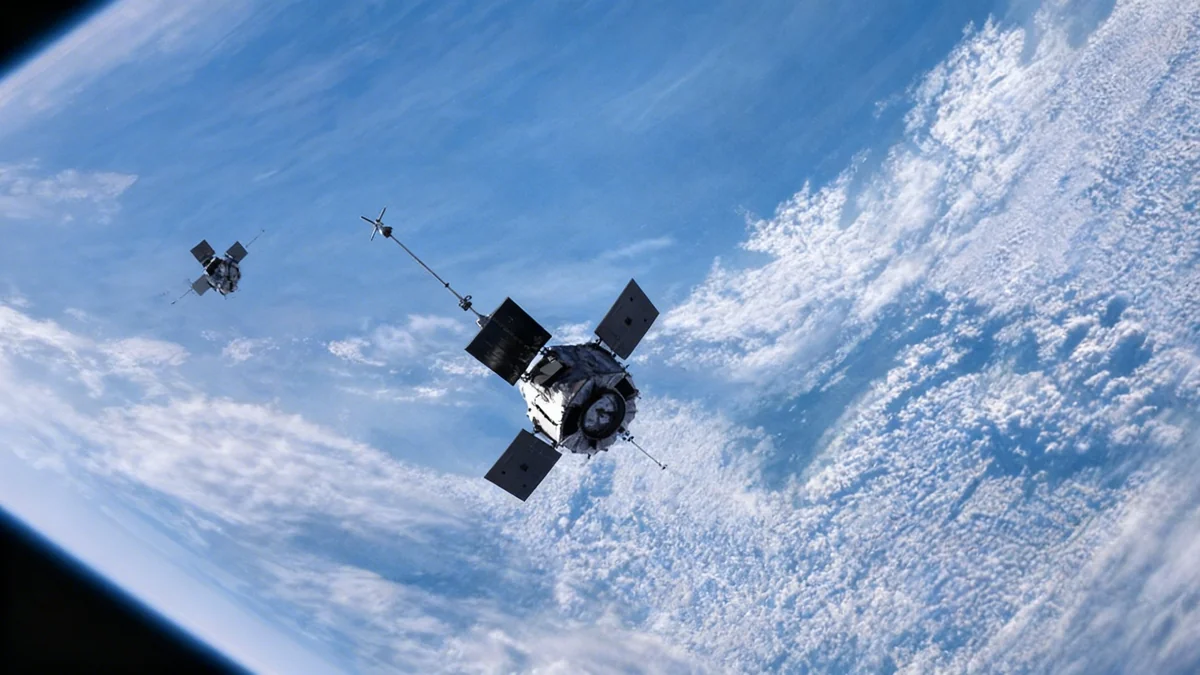
The project envisions an 81-satellite constellation operating as a single, distributed AI brain. However, this dense formation must navigate an environment where millions of untracked objects travel at hypersonic speeds, posing a significant risk to the future of space-based infrastructure.
Key Takeaways
- Google's Project Suncatcher plans to put AI data centers in orbit to leverage constant solar power, addressing the high energy needs of AI on Earth.
- The proposed 81-satellite constellation would operate in a dense formation, making it vulnerable to catastrophic collisions with space debris.
- Low Earth orbit is already congested, with over 40,000 tracked objects and millions of smaller, lethal but untrackable fragments.
- Experts warn that without advanced collision avoidance systems and new policies, such projects could worsen the space debris problem, potentially leading to a cascade of collisions known as the Kessler syndrome.
The Soaring Energy Cost of AI
The rapid advancement of artificial intelligence has created an unprecedented demand for computing power. On the ground, this translates to massive data centers that consume vast amounts of electricity. A single medium-sized data center can require enough power for over 16,000 homes, with larger facilities drawing as much energy as a small city.
This enormous energy footprint is a growing concern for tech companies and environmental analysts alike. To solve this, some industry leaders are looking skyward. In space, solar energy is an abundant and reliable resource, free from weather interruptions or the day-night cycle that limits terrestrial solar farms.
What is Project Suncatcher?
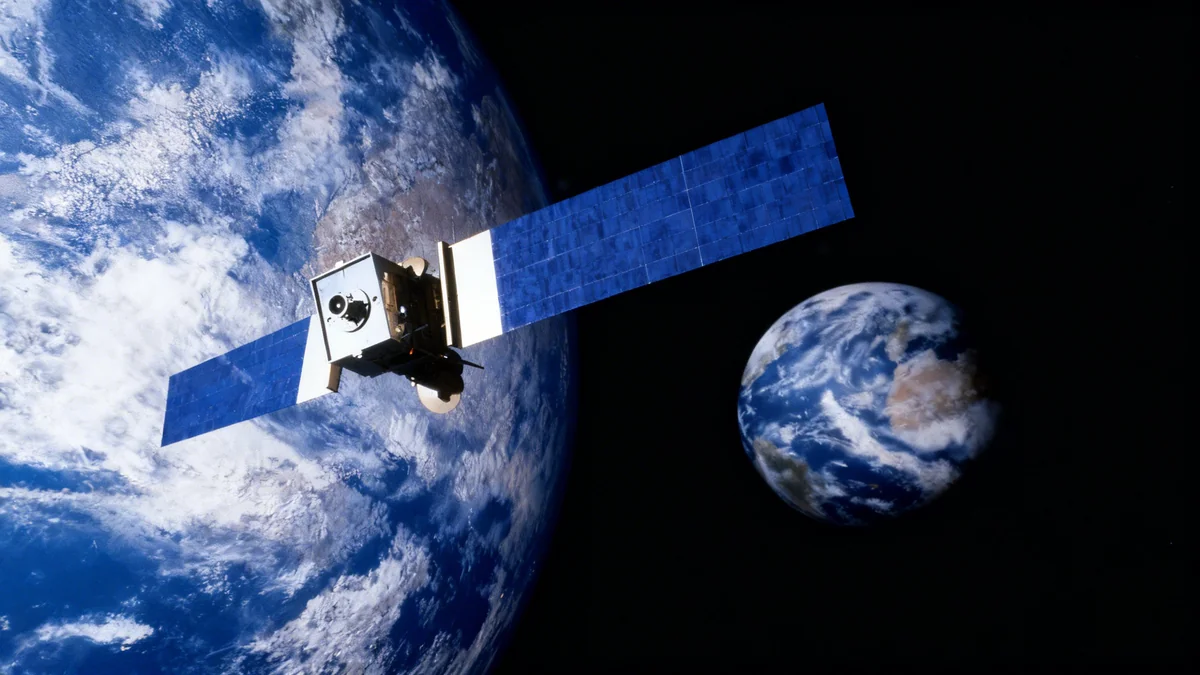
Announced on November 4, 2025, Google's Project Suncatcher is a proposal to launch a constellation of 81 satellites into a Sun-synchronous orbit. Instead of beaming power back to Earth, these satellites would house AI processing chips powered directly by onboard solar panels. When a user makes a query, it would be sent to the orbital data center, processed using solar energy, and the result would be beamed back down. This process would leave the immense heat generated by computation in the cold vacuum of space.
The project is targeting an orbit approximately 400 miles (650 kilometers) above Earth, a location that ensures the satellites' solar arrays are almost always in direct sunshine. This constant power source is ideal for running the next generation of AI workloads.
A Highway Littered with Hazards
While the concept of space-based data centers is innovative, it faces a harsh reality. The very orbit that provides uninterrupted sunlight is also one of the most congested regions in space. Low Earth orbit is cluttered with 'space debris'—a collection of defunct satellites, spent rocket stages, and fragments from past collisions.
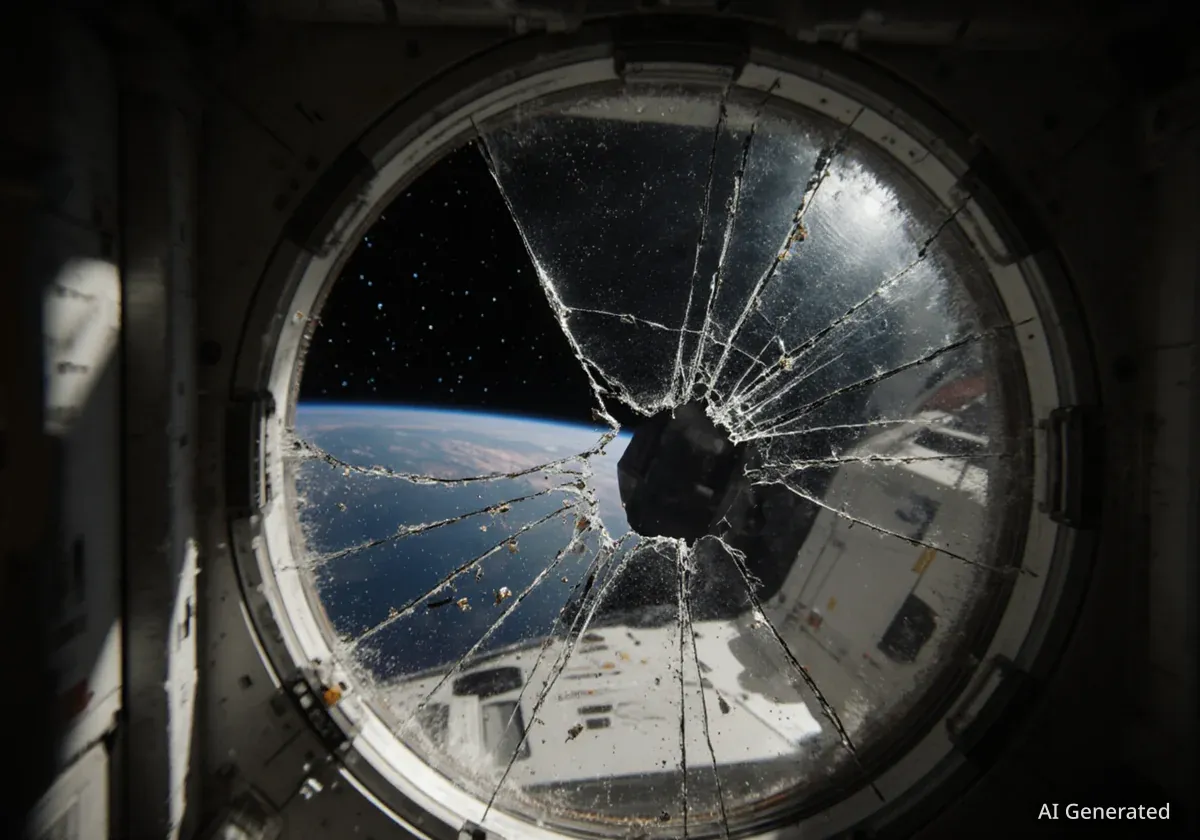
Objects in low Earth orbit travel at approximately 17,500 miles per hour (28,000 km/h). At this velocity, a collision with an object the size of a blueberry has the impact force of a falling anvil.
The U.S. Space Force is actively tracking more than 40,000 objects larger than a softball. However, this represents less than 1% of the dangerous objects in orbit. Millions of smaller fragments, from paint flecks to tiny bolts, are too small to be reliably tracked from the ground but are large enough to cause catastrophic damage to a satellite.
The problem is worsening. The rapid deployment of commercial satellite constellations, like SpaceX's Starlink network of over 7,500 satellites, is dramatically increasing orbital traffic. This growing congestion heightens the risk of a scenario known as the Kessler syndrome, a theory in which the density of objects becomes so great that collisions create a cascade of new debris, eventually rendering certain orbits unusable.
The Fragility of a Flying Supercomputer
Project Suncatcher's design presents unique vulnerabilities in this hazardous environment. The 81 satellites are intended to fly in an ultra-dense formation, with individual nodes spaced less than 200 meters apart within a one-kilometer radius. This tight configuration is essential for the satellites to communicate and distribute complex AI tasks, functioning as a single, massive brain.
"Imagine a racetrack roughly the size of the Daytona International Speedway, where 81 cars race at 17,500 miles per hour – while separated by gaps about the distance you need to safely brake on the highway," explained Mojtaba Akhavan-Tafti, an Associate Research Scientist at the University of Michigan.
Maintaining this formation is a constant battle against physics. Even the thin atmosphere in low Earth orbit creates drag, slowing satellites down and causing their altitude to drop. This effect is magnified for satellites with large solar panels, which act like sails. Furthermore, unpredictable space weather, driven by solar activity, can alter atmospheric density and affect orbital drag, making precise positioning even more difficult.
In such a tightly packed cluster, the margin for error is virtually zero. A single impact from a piece of debris could destroy one satellite, sending shrapnel into its neighbors and triggering a chain reaction that could obliterate the entire constellation. Such an event would not only be a total loss for the project but would also release millions of new debris fragments into an already crowded orbit.
The Need for a Cleaner Orbit
To mitigate these risks, experts argue that new satellite constellations must incorporate advanced safety measures. For a project as dense as Suncatcher, this would likely require autonomous collision avoidance systems capable of detecting and reacting to threats in real-time.
Current tracking systems are limited to larger objects, leaving satellites blind to the millions of smaller, lethal fragments. Onboard detection systems would be necessary to spot these threats and maneuver the entire constellation as a coordinated flock to avoid them.
In the first six months of 2025, SpaceX's Starlink satellites performed 144,404 collision-avoidance maneuvers to dodge debris and other spacecraft. A dense constellation like Suncatcher would face an even greater number of potential threats.
Beyond technology, policy changes are also seen as crucial. In September 2022, the Federal Communications Commission (FCC) implemented a rule requiring operators to de-orbit their satellites within five years of mission completion. This 'leave no trace' approach involves using reserved fuel to guide the spacecraft to burn up in Earth's atmosphere.
However, this rule does not address the debris already in orbit. Some policymakers have proposed an 'orbital-use fee,' a tax on satellite operators based on the congestion their constellations create. The revenue could fund active debris removal missions to capture and eliminate the most dangerous pieces of existing junk. As companies push the boundaries of technology into space, ensuring the long-term sustainability of Earth's orbits is becoming a critical challenge for the entire industry.