

The European Space Agency (ESA) has successfully adjusted the orbits of two aging satellites, setting them up for a unique scientific observation as they reenter Earth's atmosphere in 2026. The maneuvers are part of a critical mission to gather data on how spacecraft break apart, a key step toward designing safer and more sustainable satellites for the future.
Key Takeaways
- ESA maneuvered its final two Cluster satellites, Samba and Tango, for a coordinated reentry over the South Pacific.
- The reentries are scheduled for August 31 and September 1, 2026, and will be observed by an aircraft.
- The goal is to collect data on how satellites disintegrate to help develop future spacecraft that burn up completely.
- This project builds on a previous observation in 2024 and serves as preparation for the dedicated Draco reentry mission in 2027.
Orchestrating a Celestial Encounter
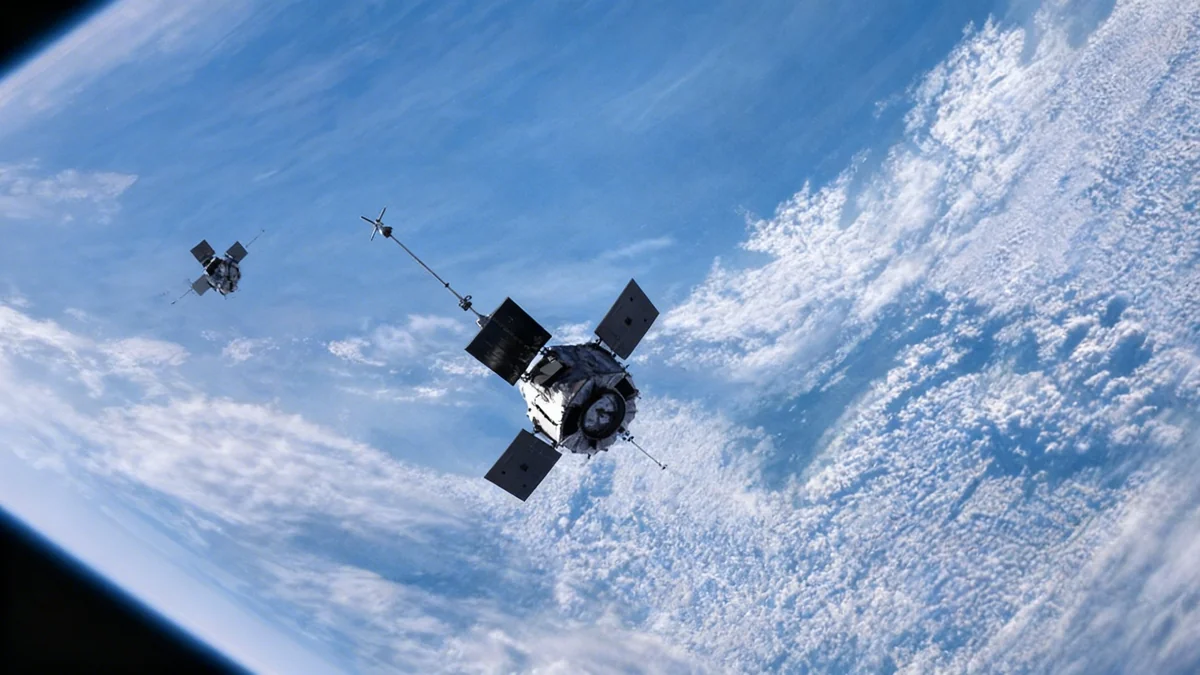
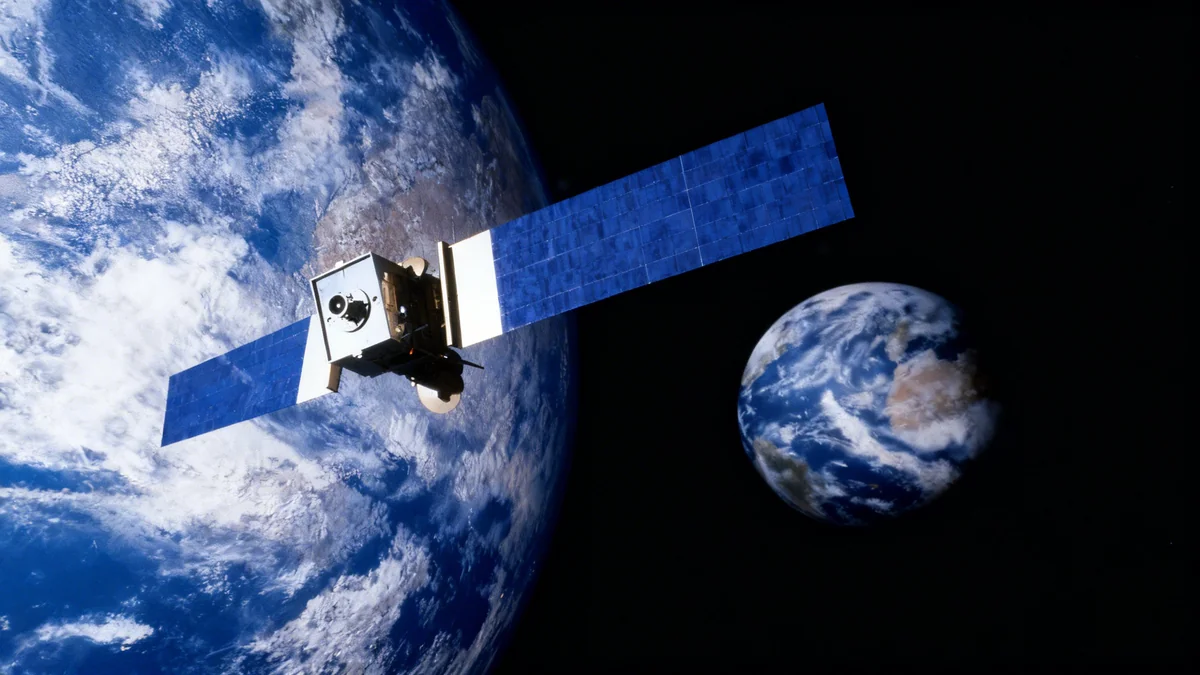
In a carefully planned operation, ESA engineers recently sent commands to the Cluster 3 (Samba) and Cluster 4 (Tango) satellites, initiating small engine burns on January 19 and 20. These adjustments tweaked their trajectories, ensuring they will reenter the atmosphere over a remote stretch of the South Pacific Ocean just 24 hours apart.
This timing is crucial. An airborne observation team will fly out to monitor the first satellite's fiery demise, then return to land to refuel, rest, and fly out again for the second event. Without the trajectory change, the reentries would have been too far apart to be observed by the same team and aircraft.
“Moving two satellites to meet a plane sounds extreme, but the unique reentry data we’ll collect is worth orchestrating the challenging encounter over a remote stretch of ocean,” said Beatriz Jilete, a space debris systems engineer at ESA.
The Urgent Need for Reentry Data
As thousands of satellites orbit Earth, managing what happens to them at the end of their lives has become a major focus for space agencies. Most satellites burn up upon reentry due to intense friction with the atmosphere, but the exact process is not fully understood.
Why This Data Matters
Understanding the breakup process allows engineers to create satellites using materials and designs that ensure complete disintegration. This concept, known as "design-for-demise," is essential for preventing satellite fragments from surviving reentry and posing a risk to people or property on the ground.
Collecting this data is exceptionally difficult. Reentries occur around 80 kilometers in altitude—too high for balloons and too low for most orbiting satellites to observe in detail. Furthermore, uncontrolled reentries are often unpredictable, making it nearly impossible to position observation equipment in the right place at the right time.
“With better data on exactly when and how they heat up, break up, and which materials survive, engineers can design satellites that burn up completely,” explained Stijn Lemmens, Draco project manager at ESA.
A Unique Experimental Opportunity
The Cluster mission, originally a quartet of identical spacecraft launched to study Earth's magnetosphere, provides a rare chance for a controlled experiment. The first of the four, Cluster 2 (Salsa), was successfully observed during its reentry on September 8, 2024, providing valuable initial data and operational experience for the team.
By observing the breakup of identical spacecraft under slightly different conditions, scientists can compare the results and build more accurate models.
Potential for Bonus Science
The solar panels on Samba and Tango have degraded less than those on the first two satellites. ESA's operations team is hopeful the spacecraft may remain active longer during their final descent, potentially transmitting temperature data from as low as 110 km altitude before they break apart.
“The first two to reenter went into safe mode when passing through their last perigee before the reentry, because their solar panels overheated,” noted Bruno Sousa, Cluster operations manager at ESA. “If they remain active... maybe we can collect valuable data on the satellites’ temperatures as they dip.”
Paving the Way for Future Missions
The experience gained from the Cluster reentries is a stepping stone for an even more ambitious project: the Draco mission. Scheduled for launch in 2027, Draco is a satellite built for the sole purpose of being destroyed.
Draco: An Inside Look at Disintegration
Unlike the Cluster satellites, Draco will be a flying laboratory designed to document its own demise. Its mission is to provide an unprecedented inside view of the reentry process. Key features of the Draco mission include:
- Over 200 sensors to record temperature, pressure, and other forces.
- Four internal cameras to visually document the breakup from within.
- An indestructible data capsule designed to survive the reentry and transmit the collected information.
The same airborne team that will observe the Cluster reentries will also be on station for Draco's final moments. “With three practice runs under their belt, the team will be able to link the observations made from the plane to what's happening within Draco at exactly that time,” Lemmens added.
The combined data from both the Cluster and Draco missions will significantly improve reentry models. This will lead to better predictions for where debris might fall and help engineers build the next generation of spacecraft designed to leave no trace, ensuring space remains a sustainable resource for the future.