

Researchers have developed a novel method to track hazardous space debris as it reenters Earth's atmosphere by listening for its sonic boom with earthquake detectors. This new approach could significantly improve the ability to locate and recover potentially toxic materials from defunct satellites and rocket parts.
The technique, detailed in a new study, repurposes the global network of seismometers to pinpoint the trajectory of falling objects traveling at speeds up to 18,000 miles per hour. This offers a potential solution to the growing problem of space junk, with objects reentering the atmosphere more than three times each day.
Key Takeaways
- A new method uses seismometers, traditionally for earthquakes, to detect sonic booms from reentering space debris.
- The technique was successfully tested during the reentry of a Chinese spacecraft module over California in April 2024.
- It aims to provide faster, more accurate location data to help recover hazardous materials and mitigate environmental contamination.
- Experts view it as a low-cost, scalable tool that complements existing radar and optical tracking systems.
A New Way to Listen for Falling Debris
As thousands of satellites orbit Earth, the issue of what happens when they fall is becoming increasingly urgent. Current tracking methods, which rely on radar and optical sensors, often struggle to predict the exact landing area of debris, especially as it breaks apart during its fiery descent.
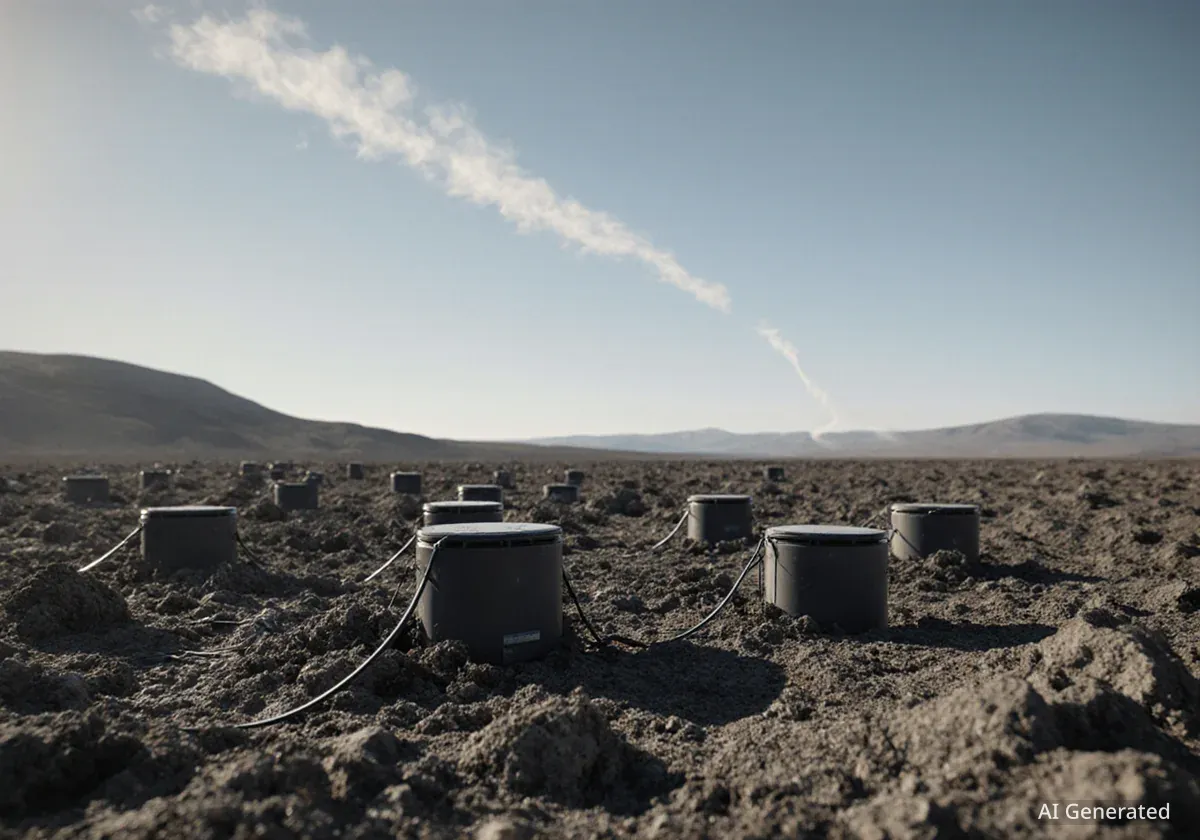
A team from Johns Hopkins University and Imperial College London has pioneered an alternative. Their method uses seismometers to detect the powerful shock waves, or sonic booms, that objects create when they travel faster than the speed of sound through the atmosphere. These sound waves travel to the ground and create subtle vibrations that the sensitive instruments can record.
Benjamin Fernando, a postdoctoral research fellow at Johns Hopkins and a coauthor of the study, explained the core concept. "We’ve known for a long time that space debris reentering the atmosphere produces sonic booms, exactly the same way as natural meteoroids or supersonic aircraft produce sonic booms," he stated.
Inspired by Mars Missions
The technique was adapted from work on NASA's InSight mission to Mars. The InSight lander used its single seismometer to "hear" the shock waves from meteoroids entering the thin Martian atmosphere, successfully pinpointing their impact sites. Researchers realized a similar principle could be applied on Earth using its vast, pre-existing network of seismic sensors.
While the physics are similar, space debris behaves differently from natural meteors. "It tends to enter the atmosphere more slowly and at a much shallower angle," Fernando added. "It also tends to break up in a much more complicated fashion as well and indeed pose a much bigger risk to people on the ground."
Testing the Theory with a Real Reentry
The research team put their method to the test in April 2024 during the uncontrolled reentry of an orbital module from China’s Shenzhou-15 mission. The component, weighing over 1.5 tons and measuring about 3.5 feet wide, broke up over California.
As it descended, the sonic booms it generated were detected by 125 seismic stations across the state. By analyzing the timing and intensity of these ground vibrations, the scientists reconstructed the debris's flight path.
The path calculated using the seismic data was approximately 25 miles (40 kilometers) farther south than the trajectory predicted by the U.S. Space Force using conventional radar data. Without recovered fragments, it is impossible to confirm which prediction was more accurate, but the difference highlights the potential of the new method.
"Our end goal is to produce a tool that we can integrate into a civil monitoring pipeline," Fernando said. He envisions a system that could automatically detect these events using publicly available seismic data, allowing authorities to track falling debris in near real-time.
The Growing Environmental Threat of Space Junk
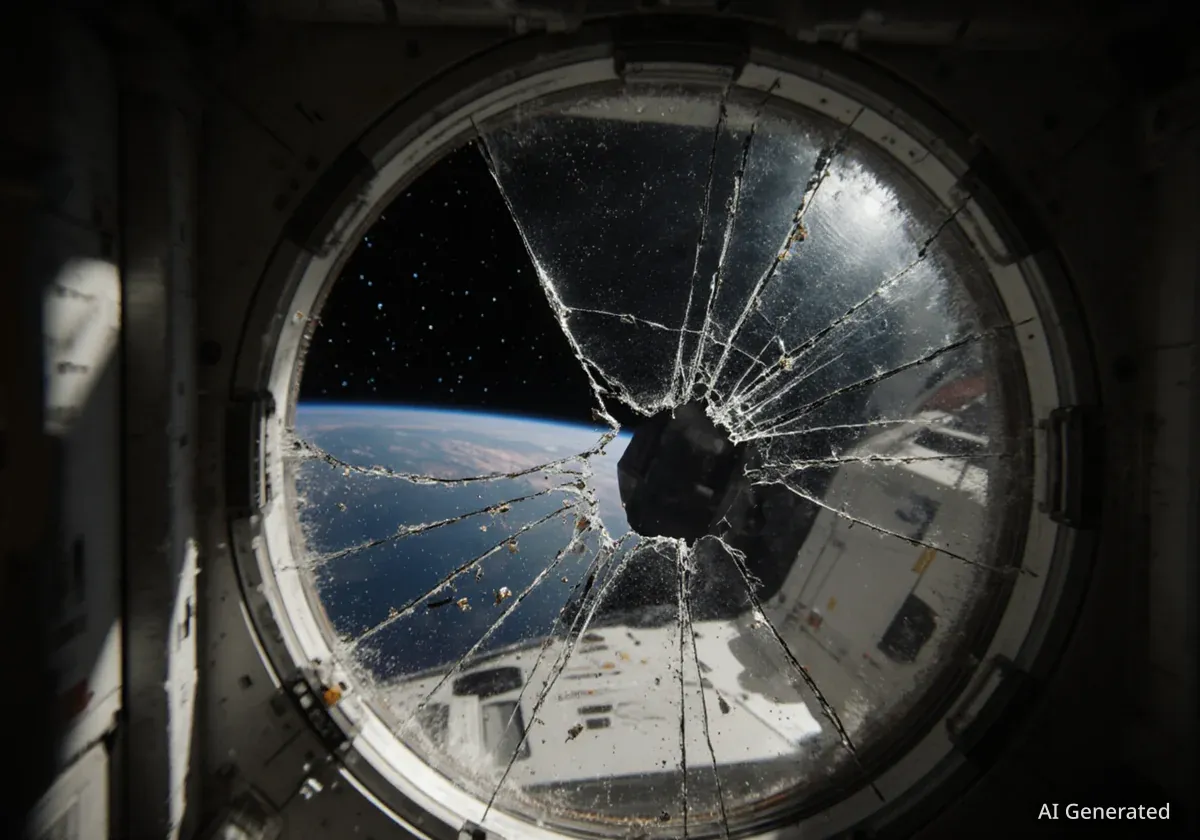
The need for better tracking is not just about avoiding impacts with buildings or infrastructure. Falling space debris poses a significant environmental risk. Many spacecraft contain toxic chemicals, heavy metals, and other hazardous materials that can contaminate soil and water upon landing.
History provides cautionary tales. In 1978, the Soviet satellite Kosmos 954 scattered radioactive debris across a large area of northern Canada, much of which was never recovered. More recently, debris from rocket launches has scattered materials over residential areas and marine environments.
"Another thing that we’re becoming more aware of is that all of these reentries are beginning to change the composition of the atmosphere. A lot of the chemicals contained within spacecraft are quite toxic. Some of them have a clear ozone-depleting potential. So it’s pretty serious stuff." - Benjamin Fernando, Johns Hopkins University
Quickly locating impact sites would allow for rapid response and cleanup operations, minimizing long-term environmental damage.
A Complementary Tool for a Complex Problem
Experts not involved in the study have reacted positively to the development, emphasizing its potential as a supplementary tool.
Hugh Lewis, a professor of astronautics at the University of Birmingham, described the approach as a "scalable, low-cost, and exciting new development." He noted that it helps scientists understand the reentry process, which has historically been difficult to observe.
However, the method has its limitations. Moriba Jah, a professor of aerospace engineering at the University of Texas at Austin, pointed out that it relies on strong shock waves. "Many reentering objects are too small or disintegrate too high in the atmosphere to produce signals like this at all," he explained. Therefore, it won't detect all debris.
Another challenge will be distinguishing the seismic signature of space junk from other sources like aircraft or natural phenomena. Despite these hurdles, experts agree that when integrated with existing radar and optical systems, this seismic approach could become a valuable part of the global effort to manage the growing problem of space debris.
Davide Guzzetti, an aerospace engineering professor at Auburn University, noted another fascinating possibility. He suggested that the data could provide insights into how objects break apart during reentry, not just where they are headed. This could even lead to citizen-science projects where the public helps track debris by detecting sonic booms.