Starlab Space Station Fully Books Payload Capacity
Starlab commercial space station has fully booked its payload capacity, securing early revenue and strong commercial demand, with German biotech Yuri reserving year-round access.

44 articles tagged

Starlab commercial space station has fully booked its payload capacity, securing early revenue and strong commercial demand, with German biotech Yuri reserving year-round access.

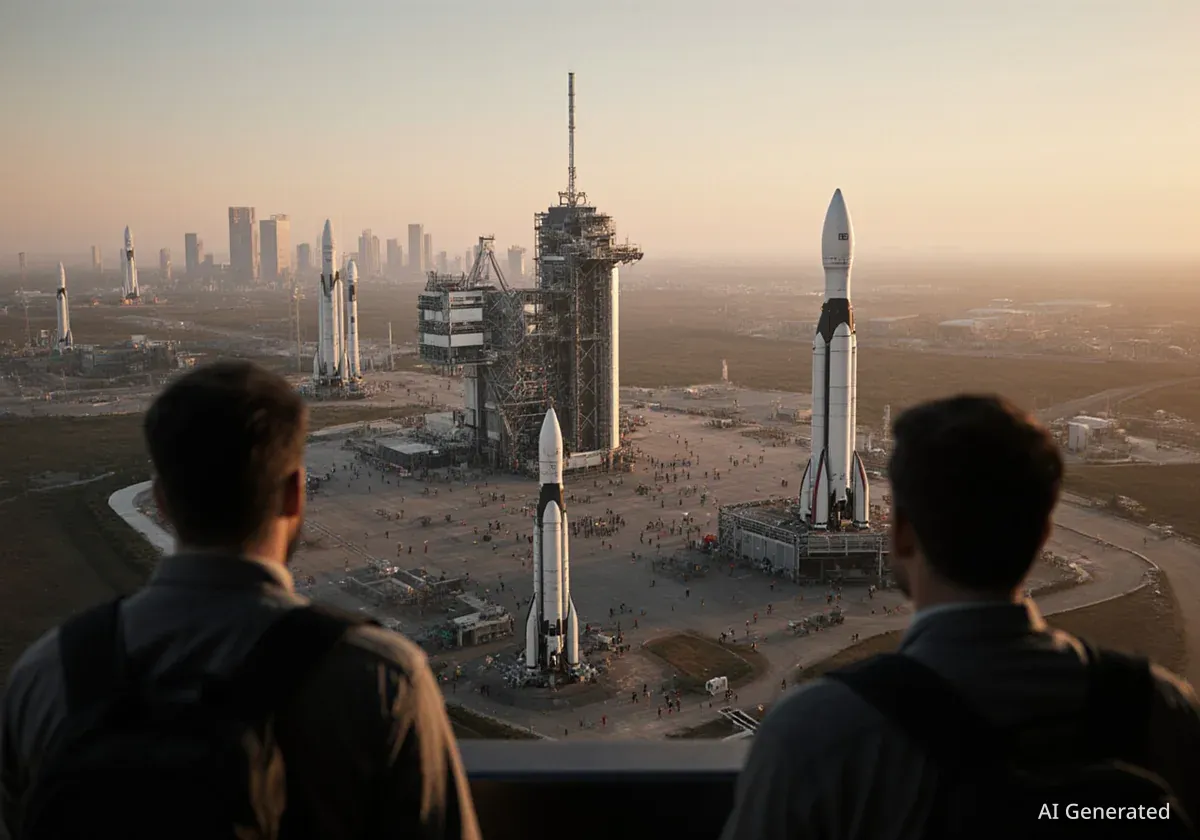
Private companies have taken the lead in space, conducting 70% of global launches in 2024. This commercial surge is driving the space economy toward a projected $1 trillion valuation by 2032.

The space economy is set to expand significantly by 2026, driven by non-aerospace industries and new technologies like AI and direct-to-device satellite communication.

The space economy is projected to triple to $1.8 trillion, sparking a high-stakes race between the US and China for financial and industrial control of this new frontier.

The space economy's projected growth of over $300 billion is largely concentrated, with giants like SpaceX set to capture over 80% of the launch market.

A parliamentary committee warns the UK is failing to deliver on its 2021 National Space Strategy, risking its 5% share of the global space economy.

The global space economy is booming, with projections nearing $800 billion by 2027. However, this rapid expansion faces critical hurdles, including orbital debris, outdated regulations, and geopolitic

Space industry leaders discussed the future of Martian commerce, the critical need for lunar power, and the rising influence of China's space program at a recent summit.

Former NASA executive Ezinne Uzo-Okoro says the space economy is becoming a reliable asset class as SpaceX prepares a Starship launch amid a US government shutdown.

Solstar Space and Momentus have formed a strategic partnership to integrate in-space communications with logistics, backed by a $15 million services agreement.

Hong Kong is positioned to become a key player in the trillion-dollar space economy, with a Chinese 'SpaceX-like' company expected to emerge in 2-3 years.

Sławosz Uznański-Wiśniewski, Poland's second astronaut, urges the nation to increase its investment in the European Space Agency to boost its economy and retain talent.