


A concept once confined to science fiction is now being seriously developed as a solution to the world's energy crisis. Space-based solar power, the idea of collecting the sun's energy in orbit and beaming it back to Earth, is gaining momentum as a viable technology to provide continuous, clean electricity and drastically reduce reliance on fossil fuels.
Recent studies and government-backed initiatives suggest that this ambitious technology could become cost-competitive with traditional power sources within the next two decades, offering a potential path toward achieving global net-zero targets. However, significant financial, logistical, and security hurdles must be overcome before orbital power stations become a reality.
Key Takeaways
- Space-based solar power (SBSP) involves satellites collecting constant solar energy in orbit and beaming it to Earth.
- The technology aims to solve the intermittency problem of ground-based renewables like wind and solar.
- A UK government study suggests small-scale SBSP could be cost-competitive by 2040.
- Major challenges include high initial costs, orbital debris, and significant national security risks.
What is Space-Based Solar Power?
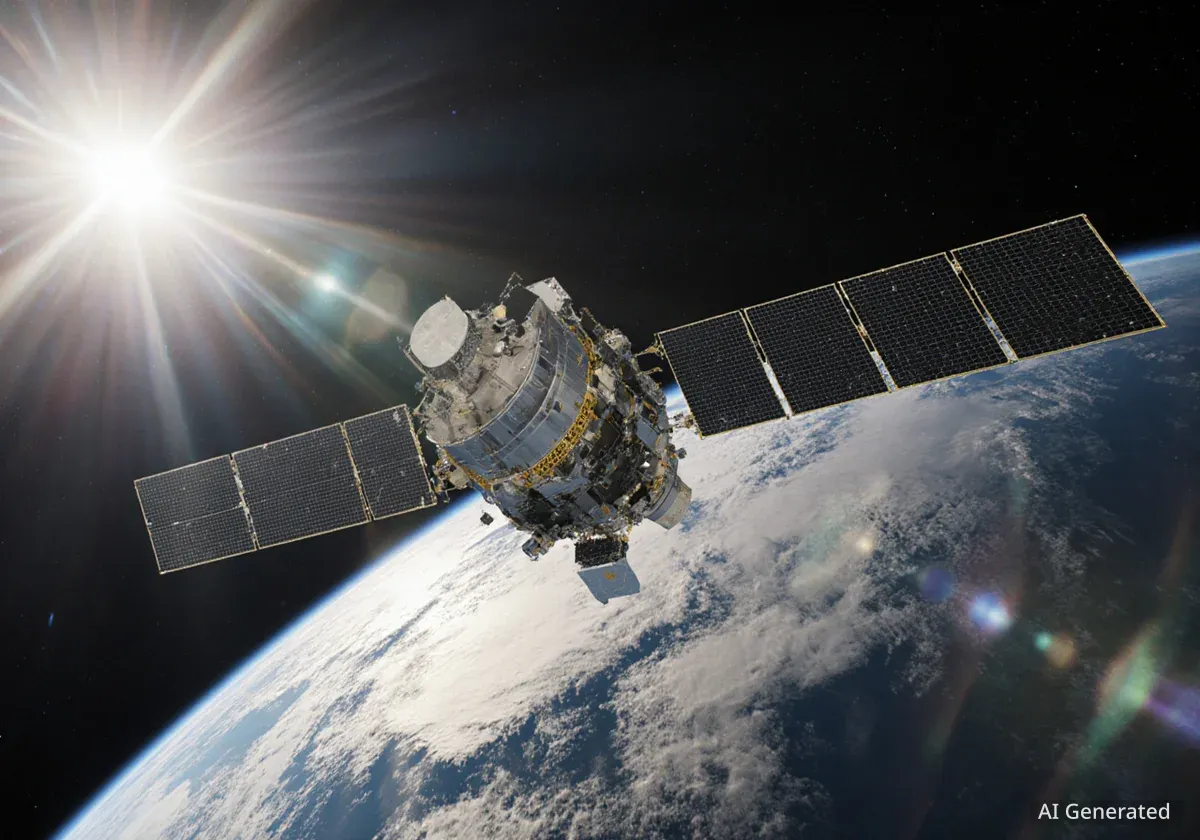
The fundamental concept of space-based solar power (SBSP) involves deploying large satellites into a high-earth orbit. In this position, the satellites are exposed to sunlight more than 99% of the time, unaffected by weather, nighttime, or seasons that limit ground-based solar panels.
These orbital platforms would use vast, mirror-like reflectors to collect solar energy. This energy would then be converted and wirelessly transmitted as a microwave beam to a specific, secure receiving station on Earth. At this ground station, known as a rectenna, the microwave energy is converted back into electricity and fed directly into the national power grid for distribution to homes and businesses.
From Fiction to Feasibility
The idea of harvesting solar power in space was popularized by science fiction author Isaac Asimov in his 1941 short story 'Reason'. For decades, it remained a futuristic fantasy. However, with advancements in rocketry and solar cell technology, scientists and engineers are now developing concrete plans to make it a functional part of our energy infrastructure.
A Solution to Renewable Energy's Biggest Flaw
The global transition away from fossil fuels is accelerating, but conventional renewable sources like wind and solar have a significant limitation: intermittency. Power generation stops when the sun isn't shining or the wind isn't blowing, creating grid instability and continued reliance on fossil fuel plants for backup power.
SBSP offers a direct solution to this problem by providing a constant, predictable stream of energy. According to Dr. Adam Law, a research associate at Loughborough University's Centre for Renewable Energy Systems Technology, this is the technology's primary advantage.
"SBSP can provide a dispatchable baseload of potentially limitless power that avoids the problem of intermittency," Dr. Law explains.
The amount of available sunlight in space is also far greater. "SBSP benefits from there being a lot more sunlight available in space – 1,367 W/m2 of uninterrupted sunlight, compared to a maximum of 1,000 W/m2 at the equator and an average of about 100 W/m2 in the UK," he adds.
A Future of Growing Demand
Global energy demand is projected to double by 2050. Experts believe that a diverse portfolio of renewable technologies will be necessary to meet this demand while also tackling climate change. SBSP could play a crucial role in providing the reliable baseload power currently supplied by fossil fuels.
The Colossal Cost and Technical Hurdles
While solar power on the ground has become the world's cheapest energy source in many regions, launching the technology into space presents enormous financial challenges. Initial estimates suggest that developing the first gigawatt-scale prototype in orbit will require approximately €15.8 billion in research and development funding.
Dr. Law acknowledges these high initial costs. "The scale of launching and building these structures in space is immense," he notes. However, a key factor is making the concept more viable than ever is the falling cost of space launches, largely driven by private companies like SpaceX and their development of reusable rockets.
Key Obstacles to Overcome:
- Launch Costs: While decreasing, the cost of lifting the massive components into orbit remains a primary economic barrier. "Driving these costs down is key to realising SBSP," says Dr. Law.
- Maintenance and Debris: Operating and maintaining complex structures in space is difficult. The systems must be highly modular and designed to withstand the harsh orbital environment, including the growing threat of space debris.
- Component Technology: Developing solar cells that are not only affordable but also highly efficient and resistant to space radiation is another critical area of research.
Despite the difficulties, numerous startups, including Space Solar in the UK and Virtus Solis in the US, are actively developing SBSP systems with the support of government and private investment.
Addressing Safety and Security Risks
Any proposal to beam energy from space naturally raises questions about safety. Researchers have stressed that the power beam's intensity would be low enough to pose no harm to humans, wildlife, or aircraft that might pass through it.
A more pressing concern is the system's vulnerability. Like other critical national infrastructure such as power grids and communication lines, an orbital solar power station could become a high-value target for hostile states or cybercriminals. A 2023 report from consultancy company Frazer-Nash highlighted these security challenges.
"Like other critical national infrastructure, it is a tempting target for cybercriminals, state-sponsored actors, and hacktivists seeking to cause disruption or gain geopolitical advantage," the report states.
Experts argue that security cannot be an afterthought. The report emphasizes that solar power satellites must be designed with "inherent security and comprehensive risk mitigation strategies" from the very beginning. This includes building multinational partnerships, ensuring robust cybersecurity throughout the supply chain, and continuous threat monitoring.
Ultimately, while the path to harnessing solar power from space is filled with challenges, its potential to provide clean, constant, and abundant energy is too significant to ignore. As Dr. Law concludes, bringing SBSP to life "will be difficult, but that doesn’t mean it’s not worth doing.”