


British space media company Sen has launched a service providing continuous, ultra-high-definition live video of Earth from the International Space Station (ISS). The feed, called Space Live, is now accessible to the public on various online platforms, including ITVX, offering an astronaut's perspective of our planet from orbit.
Key Takeaways
- Sen is streaming live 4K video of Earth from a camera system mounted on the International Space Station.
- The service, named Space Live, is available on platforms like ITVX and YouTube, with a goal of making space views widely accessible.
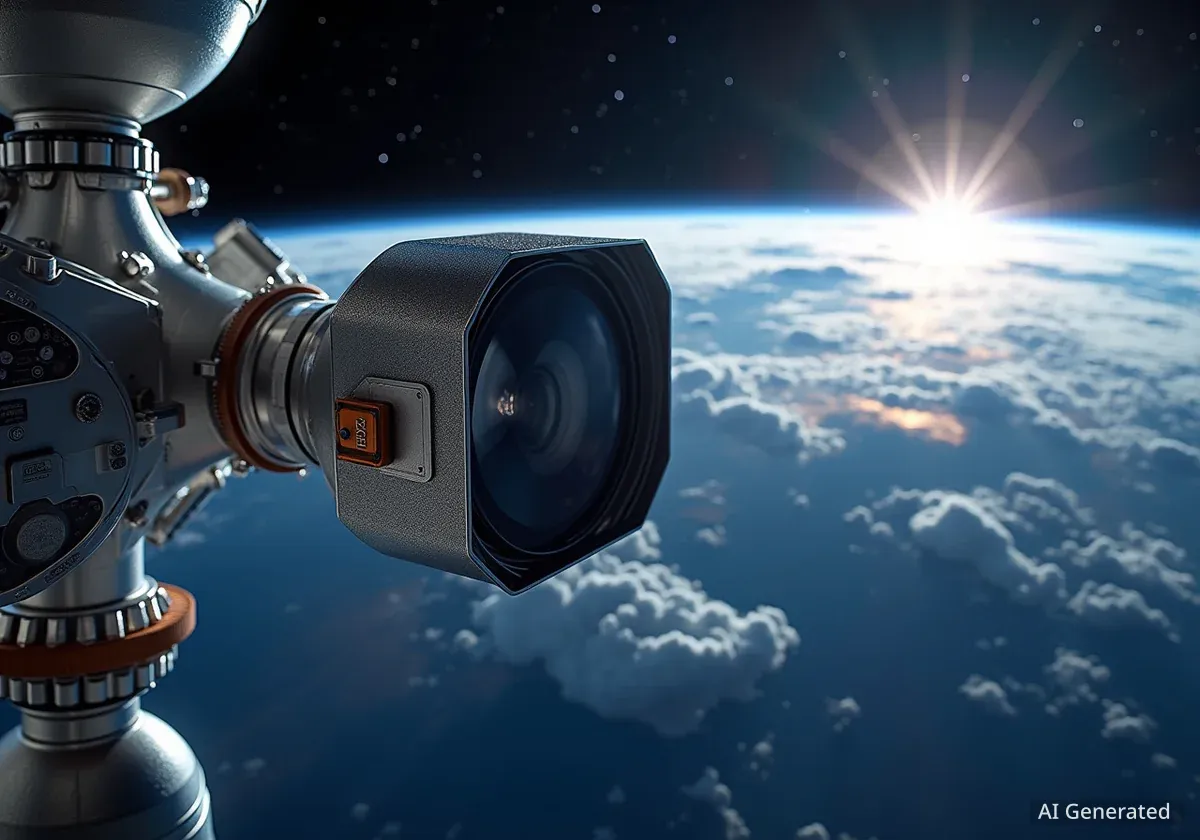
- The technology includes three cameras providing panoramic, downward, and forward-facing views from the ISS, which orbits 240 kilometers above Earth.
- Founded by entrepreneur Charles Black, Sen plans to expand its network of cameras into geostationary orbit and eventually to the Moon.
A New Perspective from Orbit
Sen is offering the public a unique opportunity to see Earth from space in real time. The company's Space Live service delivers a continuous stream of video footage captured in ultra-high definition, making the view previously reserved for astronauts available to a global audience.
The video feed is distributed through multiple channels, including the company's website, sen.com, and its official YouTube channel. A significant partnership with ITV Studios has also brought the stream to the ITVX platform, expanding its reach to millions of viewers.
Democratizing Space Views
The core mission of Sen is to make the experience of viewing Earth from space accessible to everyone. The company aims to use video to inform, educate, and inspire people about space and our home planet. This initiative aligns with a growing trend of commercial space ventures focused on public engagement.
The Technology Aboard the ISS
The live feed originates from a sophisticated payload installed on the Columbus module, a component of the International Space Station operated by the European Space Agency (ESA). The ISS orbits the Earth at an altitude of approximately 240 kilometers (about 150 miles), providing a dynamic and constantly changing view of the planet below.
Multiple Camera Angles
The camera system is composed of three distinct units, each offering a different perspective:
- A wide-angle camera: This provides a panoramic view of Earth's horizon, capturing the curvature of the planet and the vastness of space.
- A nadir camera: Pointing straight down, this camera offers detailed views of the land, oceans, and weather patterns passing beneath the space station.
- A forward-facing camera: This unit looks toward the front of the ISS, capturing views of the Harmony Module's docking port and approaching spacecraft.
Project Timeline
The mission to install the cameras began in March 2024 with the launch of the payload. The system became operational in September 2024. The public livestream was first launched on Sen's website in December 2024, followed by its debut on YouTube in January 2025.
Bringing Space to the Public
Sen is pursuing a freemium business model for its content. While the live streams are available for free, the company plans to offer premium subscription options that will include features like high-quality video downloads. This approach allows for broad public access while creating a sustainable model for future growth.
The collaboration with ITV Studios is a key part of Sen's strategy to reach a mainstream audience. Charles Black, the founder and CEO of Sen, highlighted the importance of this partnership.
“Sen was founded to democratise space through video. Partnering with ITV Studios brings our vision to life — giving millions of people the chance to see Earth exactly as astronauts see it.”
The Vision of Sen's Founder
Charles Black's journey to founding Sen began with an idea he conceived in 1991 at the age of 19. His entrepreneurial career started with an internet business he launched from his bedroom, initially called Space Internet. This company evolved into Nasstar, which was listed on the London Stock Exchange in 2005.
Nasstar was later acquired by a private equity firm for £80 million. After leaving Nasstar, Black turned his full attention to his long-held space media concept. He had acquired the sen.com domain name in 2008 and officially began developing the company in 2016.
A Long-Term Entrepreneurial Journey
The story of Sen's founding reflects a decades-long commitment by Charles Black. From his early interest in space and the internet to building and selling a successful tech company, his career provided the foundation and capital to pursue his ultimate goal of sharing the view from orbit with the world.
Future Expansion Plans
The camera system on the ISS is just the first step in Sen's ambitious plans. The company intends to build out a comprehensive network of video cameras in space to provide diverse and continuous coverage of Earth and beyond.
Future plans include deploying more camera systems in low Earth orbit (LEO). Sen also aims to scale its operations to geostationary orbit, which would provide a fixed view of a specific region of the planet. Ultimately, the company has set its sights on placing cameras on the Moon.
To achieve this, Sen will deploy cameras on its own satellites and as hosted payloads on spacecraft operated by other companies. This flexible strategy allows the company to expand its network efficiently as the commercial space industry grows.