


Startup Sophia Space has secured $10 million in funding to develop a new type of computing platform for orbit, inspired by solar sail technology. The company aims to solve one of the biggest challenges for space-based data centers: keeping powerful processors cool in the vacuum of space.
With backing from investors including Alpha Funds and KDDI Green Partners Fund, Sophia Space is moving forward with a plan to test its technology on the ground before launching a demonstration mission by late 2027. The company's approach could fundamentally change how data is processed beyond Earth's atmosphere.
Key Takeaways
- Sophia Space raised $10 million to build a new passive cooling system for computers in space.
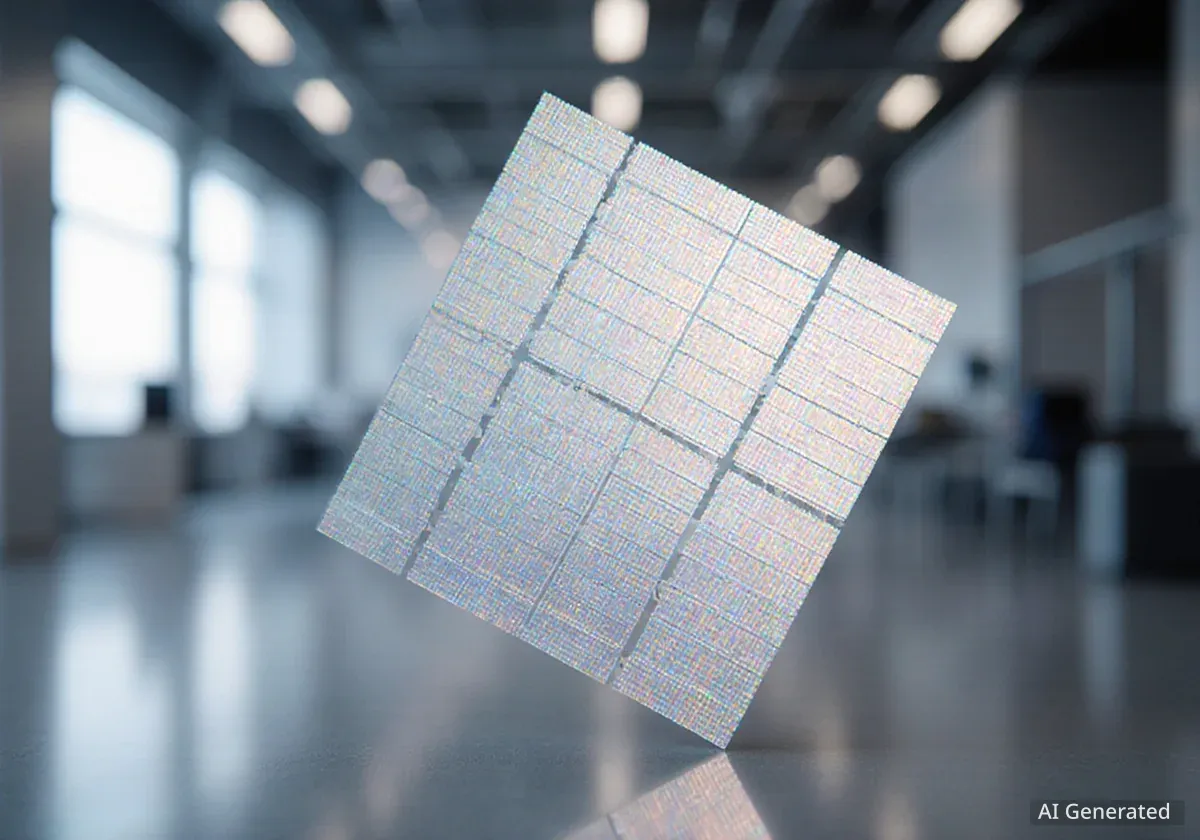
- The company's design uses thin, modular "TILEs" that combine solar panels, processors, and a heat spreader.
- This approach aims for 92% power efficiency for processing, a major leap over traditional satellite designs.
- An in-orbit demonstration is planned for late 2027 or early 2028 using a satellite bus from Apex Space.
The Cooling Conundrum in Space
As the demand for in-orbit computing grows, engineers face a persistent obstacle. While space is intensely cold, the lack of air means there is no convection to carry heat away from electronics. Heat can only be dissipated through conduction and radiation, a much slower process.
"It’s cold in space … [but] there’s no airflow, and so the only way to dissipate is through conduction," Nvidia CEO Jensen Huang noted during a recent company earnings call. This thermal management issue has limited the power of processors that can be reliably operated in orbit.
Most current proposals for space data centers, from companies like SpaceX and Google, rely on traditional box-shaped satellites equipped with large, heavy radiators. These systems add mass and complexity, and a significant portion of the satellite's power is spent on thermal management rather than computation.
A Solution Inspired by Solar Power
Sophia Space is taking a different path. The company’s core technology originates from a $100 million Caltech program initially intended to develop orbital solar power plants that could beam energy to Earth. Researchers on that project developed a thin, flexible, sail-like structure to maximize surface area.
From Solar Beams to Data Streams
The original Caltech project faced significant technical and regulatory hurdles for power transmission. However, Sophia Space CTO Leon Alkalai, a fellow at the Caltech-managed Jet Propulsion Laboratory, recognized the design's potential for a different application: efficiently powering and cooling space-based processors.
The company has adapted this concept into modular units it calls TILES. Each TILE is a one-meter-by-one-meter square, just a few centimeters thick. It integrates solar panels for power generation directly with processors and a passive heat spreader on the other side.
By making the structure incredibly thin, processors can be placed directly against the heat-dissipating surface. This design eliminates the need for complex and power-hungry active cooling systems like pumps and fluid loops. According to CEO Rob DeMillo, this will allow an estimated 92% of the power generated to be used for computation, a dramatic increase in efficiency.
The Challenge of Managing a Distributed System
While the hardware design is innovative, it creates a new software challenge. To prevent overheating in any single area, the computational workload must be intelligently balanced across the entire array of processors. Sophia Space is developing a sophisticated software management system to orchestrate this process.
This system will constantly monitor temperatures and processing loads, shifting tasks between TILEs to maintain optimal thermal conditions. It's a distributed computing problem unique to this architecture, requiring a seamless blend of hardware and software engineering.
Long-Term Vision: By the 2030s, Sophia Space envisions building massive data centers from thousands of TILEs. A 50-meter by 50-meter structure, for example, could deliver an estimated 1 megawatt of computing power in orbit.
Unlocking On-Orbit Data Processing
Before building massive data centers, Sophia Space plans to offer its TILEs to satellite operators who need powerful onboard computing. Many modern satellites, especially those used for Earth observation, generate enormous amounts of data that cannot be sent back to Earth in its entirety due to bandwidth limitations.
"The dirty little secret of the satellite industry is we’ve got all these amazing sensors up there that produce terabytes, or even petabytes, of data every few minutes, and they throw most of it out because they can’t do the computing on board and they can’t get round trip back and forth to the surface fast enough," DeMillo explained.
By enabling high-performance processing directly on the satellite, Sophia's technology could allow operators to analyze data in real-time. Potential applications include:
- Earth-Observation Satellites: Analyzing sensor data to identify specific events like wildfires or floods and transmitting only the relevant insights.
- Defense Systems: Powering the Pentagon's next-generation missile warning and tracking systems, which require immense computational power for on-orbit analysis.
- Communications Networks: Managing increasingly complex and dynamic satellite communication constellations.
With its new funding and a clear roadmap, Sophia Space is poised to test whether its radical, sail-inspired design can solve the heat problem and unlock the full potential of computing in the final frontier.