
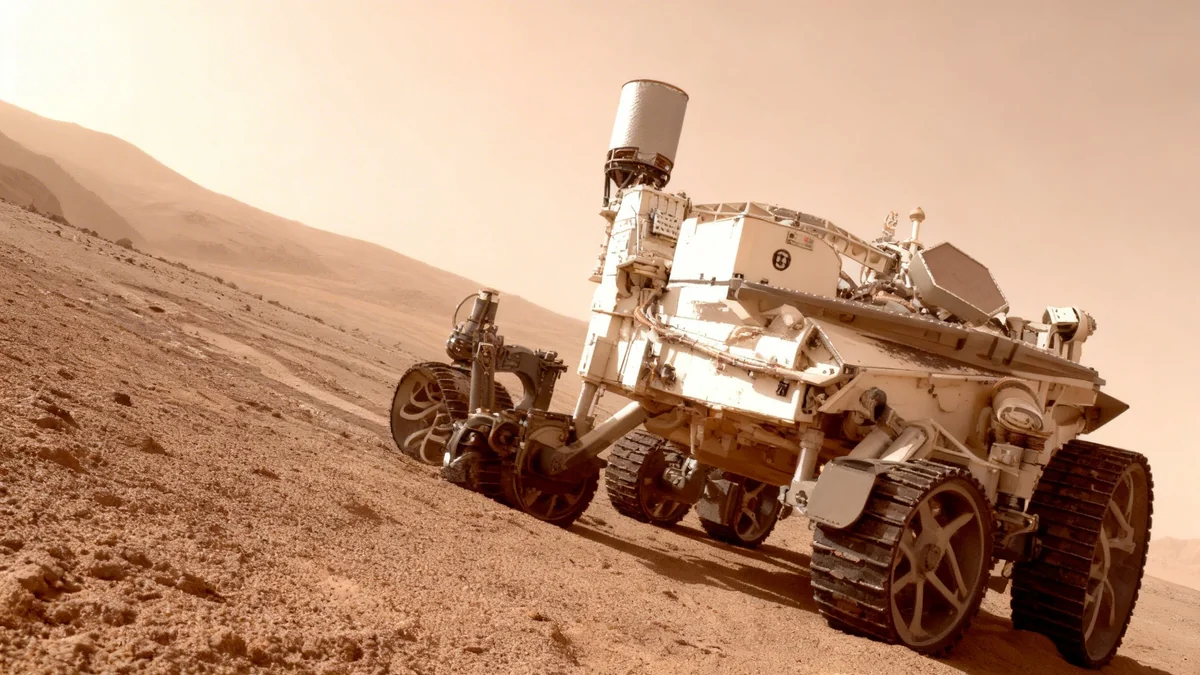


NASA engineers have equipped the Perseverance rover with a sophisticated new navigation system, allowing it to determine its precise location on Mars without human guidance from Earth. This upgrade, known as Mars Global Localization, effectively gives the robotic explorer its own version of GPS, overcoming significant communication delays and paving the way for faster, more extensive exploration of the Red Planet.
The new capability allows the rover to operate with greater autonomy, reducing its reliance on mission controllers and increasing the distance it can safely travel each day. By matching images from its own cameras to onboard orbital maps, Perseverance can now pinpoint its position with remarkable accuracy, a critical step forward for robotic missions on other worlds.
Key Takeaways
- NASA's Perseverance rover now uses an autonomous navigation system called Mars Global Localization.
- The system allows the rover to find its location within 10 inches (25 cm) by comparing its camera images to onboard orbital maps.
- This eliminates the need to wait for instructions from Earth, which can take a full Martian day due to communication delays.
- The upgrade is expected to significantly increase the rover's daily travel distance and scientific output.
A New Era of Martian Exploration
For years, navigating on Mars has been a slow, methodical process. Mission controllers on Earth would carefully analyze data to determine a rover's position, a task made challenging by the vast distances involved. A signal from Earth to Mars can take anywhere from 5 to 20 minutes to arrive, making real-time control impossible.
Previously, Perseverance estimated its position by tracking its wheel rotations and analyzing images of the terrain. However, this method led to cumulative errors. Over long drives, the rover's perceived location could be off by more than 100 feet (35 meters). This uncertainty often forced the rover to halt its journey prematurely if it calculated a potential risk of nearing hazardous terrain, awaiting confirmation from its human team millions of miles away.
"Imagine you're alone in a vast desert, with no roads and no maps, and you only get one phone call a day to ask, 'Where am I?' That's what NASA's Perseverance rover has had to do on Mars," explained Vandi Verma, a space roboticist at NASA's Jet Propulsion Laboratory (JPL).
This dependency created a bottleneck, limiting how much ground the rover could cover. The new Mars Global Localization system directly addresses this challenge, transforming the rover from a remotely guided vehicle into a more independent explorer.
How the Martian 'GPS' Works
The Mars Global Localization system is an elegant solution to a long-standing robotics problem. Instead of relying on a satellite network like Earth's GPS, it uses the planet's own landscape as a reference map.
Here’s how the process unfolds:
- The rover stops and captures a panoramic image of its surroundings using its navigation cameras.
- An onboard algorithm then compares features in this new image—such as craters, rocks, and ridges—to a detailed orbital map of the Jezero Crater region stored in its memory.
- By matching these landmarks, the system triangulates the rover's exact position on the Martian surface.
This entire calculation takes approximately two minutes to complete. The result is a location fix with an accuracy of about 10 inches (25 centimeters), a dramatic improvement over the previous method. This precision gives the rover the confidence to proceed with its planned route without waiting for a check-in from Earth.
From Hours to Minutes
The communication round-trip between Earth and Mars can take up to 40 minutes, and the process of confirming a rover's location and sending new commands can consume an entire Martian day (a sol). The new onboard system reduces this positioning task to just two minutes, freeing up valuable time for scientific investigation.
"We've given the rover a new ability," said Jeremy Nash, a robotics engineer at JPL who led the project. "This has been an open problem in robotics research for decades, and it's been super exciting to deploy this solution in space for the first time."
Rigorous Testing and Deployment
Before entrusting the multi-billion-dollar rover to the new system, the engineering team at JPL conducted extensive testing. The project, which began in 2023, involved running the localization algorithm against a backlog of images from 264 previous locations where Perseverance had stopped.
According to NASA, the software correctly identified the rover's position in every single test case. Following this successful validation, the system was activated for routine operations in early February. Its performance has already demonstrated its value, allowing Perseverance to navigate more efficiently and confidently across the challenging Martian terrain.
Building on AI Advancements
This navigation upgrade comes shortly after another milestone in Martian autonomy. Recently, Perseverance completed its first drive that was entirely planned by generative artificial intelligence. In that test, AI software analyzed orbital and rover data to identify hazards and plot a safe and efficient path, which was then validated by engineers before execution. Together, these technologies are making Martian rovers smarter and more self-sufficient.
The Future of Planetary Robotics
The success of Mars Global Localization is more than just an upgrade for a single rover; it represents a fundamental shift in how we can explore other worlds. With this technology, future missions can be designed to be faster, cover more ground, and venture into more complex environments.
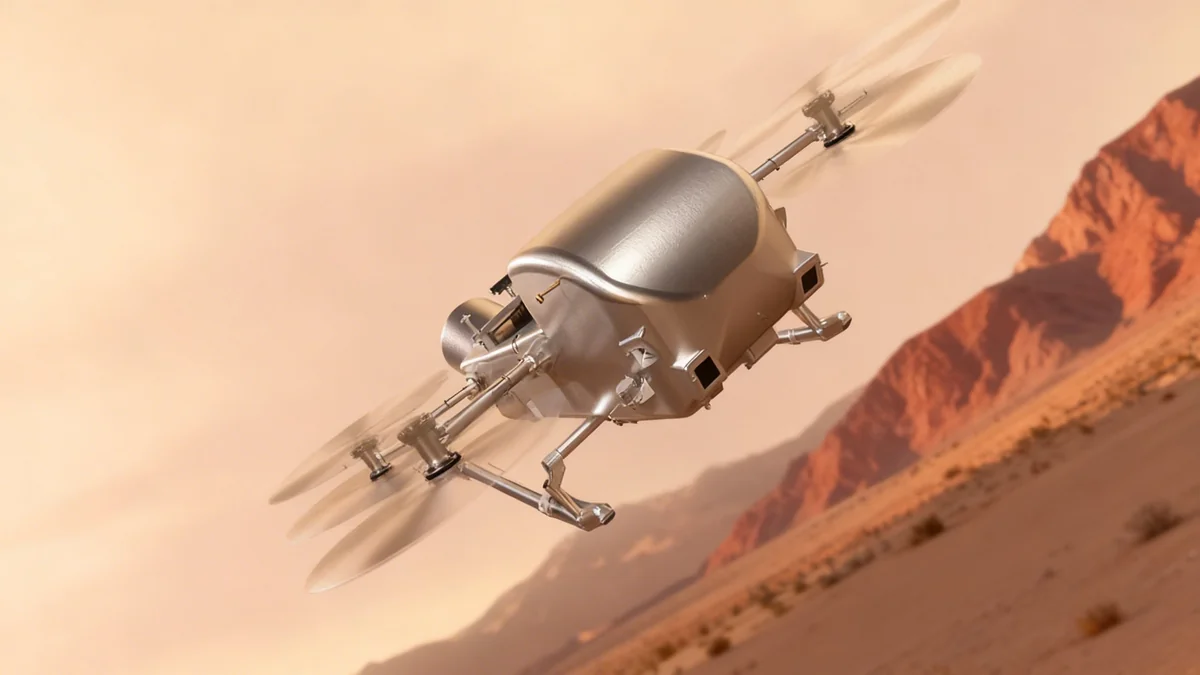
The ability to navigate autonomously is crucial for exploring planets and moons farther from Earth, where communication delays are even greater. It also opens the door for missions that involve multiple robotic assets working together, such as rovers and aerial drones like the Ingenuity helicopter.
As Vandi Verma noted, the technology has broad applications. "It could be used by almost any other rover traveling fast and far," she stated, suggesting a future where robotic explorers across the solar system can navigate their alien landscapes with unprecedented independence. For Perseverance, it means more time spent doing what it was sent to Mars to do: searching for signs of ancient life and collecting samples for a future return to Earth.