
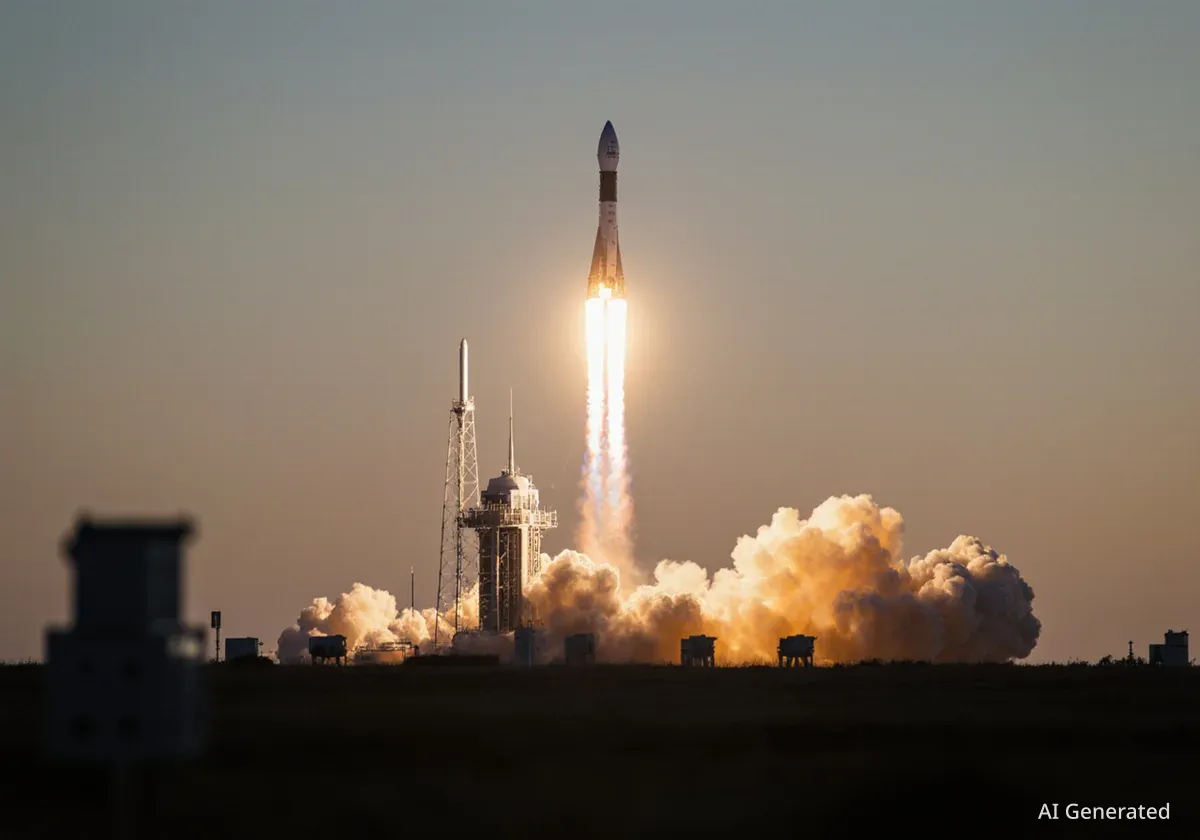


Florida's Space Coast is preparing for another celestial display this weekend as SpaceX targets Sunday evening for its next Starlink mission. A Falcon 9 rocket is scheduled to lift off from Cape Canaveral Space Force Station, carrying another batch of internet satellites into low-Earth orbit.
The launch window opens at 7:07 p.m. ET on Sunday, March 1, providing a four-hour opportunity for liftoff. If conditions are clear, the nighttime launch could be visible across a wide portion of the state, creating a spectacular sight against the dark sky.
Key Takeaways
- Mission: A SpaceX Falcon 9 rocket will launch 29 Starlink satellites.
- Launch Date: Sunday, March 1, 2026.
- Launch Window: 7:07 p.m. to 11:07 p.m. Eastern Time.
- Location: Launch Complex 40 at Cape Canaveral Space Force Station, Florida.
- Viewing Potential: The rocket will follow a northeast trajectory, potentially making it visible from Jacksonville to West Palm Beach, depending on weather.
Mission Overview: Expanding the Starlink Constellation
SpaceX continues the steady expansion of its Starlink satellite internet network with the upcoming Starlink 10-41 mission. The primary goal is to deploy 29 more satellites, adding to the thousands already in orbit that provide high-speed internet service to locations around the globe.
The launch will utilize a flight-proven Falcon 9 rocket, a cornerstone of SpaceX's reusable launch system. These missions have become a regular occurrence on the Space Coast, but night launches remain a particularly popular event for residents and tourists alike, as the rocket's fiery plume offers a dramatic visual experience.
What is Starlink?
Starlink is a satellite internet constellation operated by SpaceX. It aims to provide global broadband internet coverage, especially to rural and underserved areas. The system relies on a large number of small satellites in low-Earth orbit, which communicate with ground-based transceivers.
The mission will lift off from Launch Complex 40 and head northeast over the Atlantic Ocean. This trajectory is common for Starlink missions, as it allows the satellites to be placed into the correct orbital plane. Because the first-stage booster will land on a droneship at sea, there will be no sonic booms expected over Central Florida for this particular mission.
Your Guide to Viewing the Launch
Watching a rocket launch is a unique experience, and Brevard County offers numerous vantage points for the public. Visibility is highly dependent on weather, with cloud cover being the most significant factor. For a nighttime launch, clear skies are essential to see the rocket ascend and arc across the sky.
Spectators should plan to arrive early, as traffic can become congested near popular viewing sites. It is also important to respect private property and follow all posted rules at public parks and beaches, ensuring not to block roadways or access points.
Did You Know?
A nighttime rocket launch can sometimes create a phenomenon known as a "space jellyfish." This occurs when the rocket's exhaust plume, high in the atmosphere, is illuminated by sunlight that hasn't yet reached the ground, creating a spectacular, jellyfish-like shape in the twilight sky.
Top Viewing Locations in North Brevard
The areas around Titusville offer some of the most direct and unobstructed views of launches from Cape Canaveral Space Force Station.
- Max Brewer Bridge and Parrish Park: Located in Titusville, this area provides an excellent vantage point looking east across the Indian River. Parking is available, but it fills up quickly.
- Space View Park: Also in Titusville, this park is dedicated to space exploration and offers a clear view of the launch pads. It is a popular and often crowded spot.
- Playalinda Beach: Part of the Canaveral National Seashore, this is one of the closest possible viewing locations for the public. There is an entrance fee, and access can be restricted based on launch operations, time of day, or park capacity.
Central Brevard and the Beaches
Further south, the beaches and parks in Cocoa Beach and surrounding areas provide fantastic sightlines, especially for launches with a southern or eastern trajectory. For this northeast launch, the view will still be impressive.
- Jetty Park: Located at Port Canaveral, this spot offers a close view, though a parking fee is required. Its pier extends into the ocean, providing a unique perspective.
- Cocoa Beach Pier: A classic location that combines launch viewing with entertainment and dining options. Parking fees apply.
- Alan Shepard Park & Lori Wilson Park: These public beach parks in Cocoa Beach offer wide-open views of the sky over the Atlantic. They are family-friendly locations with amenities, though some may have parking costs.
South Brevard Viewing Spots
Even farther south, residents can still catch a good glimpse of the launch, though the rocket will appear smaller and lower on the horizon.
"Anywhere along the beach in Brevard County will give you a good view of the launch," a local official often advises. "The key is to find a spot with a clear view of the northeastern horizon and be patient."
Locations like the Pineda, Eau Gallie, and Melbourne causeways can serve as elevated viewing platforms. Parks along the Indian River in Melbourne and Palm Bay, such as Front Street Park, also offer good vantage points. For those on the barrier islands, beachside parks like Paradise Beach Park in Melbourne or Sebastian Inlet Park to the south are excellent choices, though the latter requires an entry fee.
How to Watch from Home
For those unable to view the launch in person, SpaceX will provide a live webcast of the mission. The broadcast typically begins about 15 minutes before liftoff and includes live views of the rocket, commentary on the mission, and details about the deployment of the Starlink satellites.
The live feed will be available on the company's website and its official X (formerly Twitter) account. Many local news outlets and space-focused publications also provide live coverage and up-to-the-minute updates, often starting 90 minutes before the scheduled launch time.