
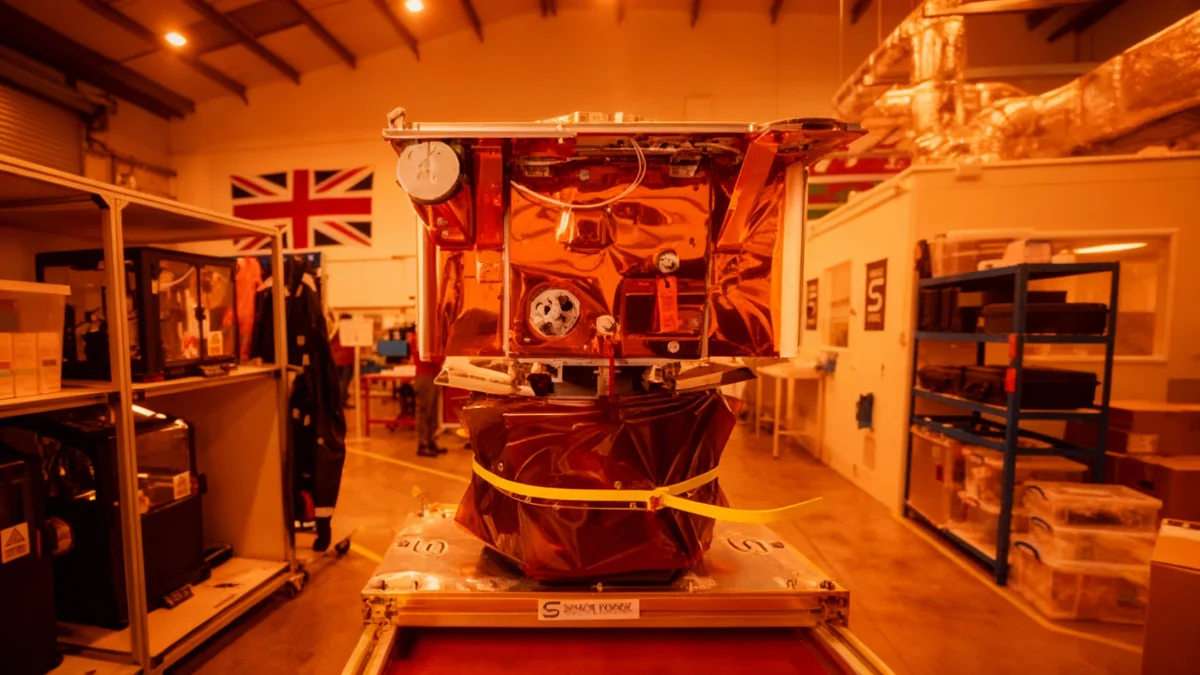
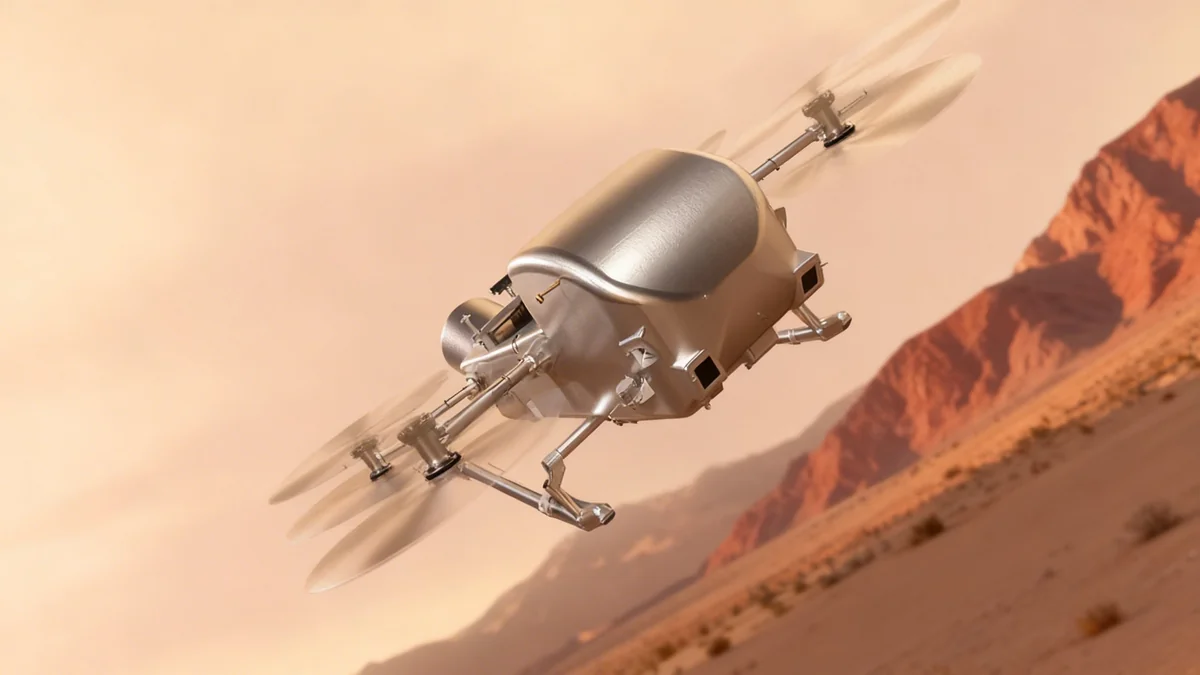


A Cardiff-based technology firm has successfully demonstrated a key component of its plan to manufacture materials in orbit. Space Forge confirmed it has activated a furnace aboard its mini-factory satellite, reaching temperatures necessary for producing high-purity semiconductors hundreds of kilometres above Earth.
Key Takeaways
- Space Forge successfully heated its orbital furnace to approximately 1,000°C, a critical step for in-space manufacturing.
- The company aims to produce semiconductors that are up to 4,000 times purer than those made on Earth.
- Manufacturing in the microgravity and vacuum of space allows for nearly perfect crystal structures, improving electronic performance.
- Future plans include building a larger factory and testing a heat shield for returning materials safely to Earth.
A Milestone in Orbit
The concept of manufacturing goods in space has moved from science fiction to a tangible reality. Space Forge, a startup operating from Cardiff, has achieved a significant operational milestone with its orbiting test platform. The company's microwave-sized satellite, which launched aboard a SpaceX rocket earlier this year, has successfully powered on its furnace.
From their mission control center, engineers have been methodically testing the satellite's systems. The crucial test involved heating the furnace to around 1,000°C, the temperature required to create specialized materials. This achievement was verified through data and images sent back from the spacecraft.
Veronica Viera, the company's payload operations lead, described the moment the team received an image from inside the furnace showing brightly glowing plasma—gas heated to extreme temperatures.
"This is so important because it's one of the core ingredients that we need for our in-space manufacturing process. So being able to demonstrate this is amazing."
The successful test confirms that the fundamental technology for their manufacturing process works as designed in the harsh environment of space. It is the first step in a longer journey to establish a commercial production line in low Earth orbit.
The Purity of Zero Gravity
The primary motivation for moving manufacturing off-planet is the unique set of conditions that space provides. For materials like semiconductors, which form the backbone of modern electronics, the environment on Earth presents fundamental limitations.
Why is Microgravity Better?
On Earth, gravity influences the formation of crystal structures, causing tiny imperfections and stresses as materials cool and solidify. In the microgravity environment of space, these forces are virtually absent, allowing atoms to arrange themselves in a near-perfect, highly ordered lattice. This results in materials with superior properties.
Semiconductors are defined by their highly ordered 3D atomic structure. When these materials are made in a weightless environment, their atoms can align with almost perfect precision. Furthermore, the vacuum of space provides an ultra-clean environment, eliminating the risk of contaminants that can compromise material purity on Earth.
According to Josh Western, CEO of Space Forge, the potential improvement is substantial. "The work that we're doing now is allowing us to create semiconductors up to 4,000 times purer in space than we can currently make here today," he stated.
This level of purity directly translates to better performance in electronic devices. More efficient semiconductors can handle more power, generate less heat, and operate more reliably, driving innovation in critical industries.
Applications on Earth
While the factory may be in space, the products are intended for terrestrial use. The ultra-pure semiconductors that Space Forge plans to produce have wide-ranging applications that could impact technology we use daily.
Where Space-Made Chips Could Be Used
- 5G Infrastructure: Powering the cell towers that deliver high-speed mobile signals.
- Electric Vehicles: Improving the efficiency and performance of EV chargers and power systems.
- Aerospace: Enhancing the capabilities of avionics and satellite communications in the next generation of aircraft.
- Advanced Computing: Enabling more powerful and efficient processors for data centers and supercomputers.
Western explained the broad impact of this technology. "This sort of semiconductor would go on to be in the 5G tower in which you get your mobile phone signal, it's going to be in the car charger you plug an EV into, it's going to be in the latest planes," he noted.
By improving the fundamental building blocks of electronics, in-space manufacturing could unlock a new wave of technological advancement, making devices more powerful and energy-efficient.
The Next Frontier: Return and Scale
Successfully making a material in space is only half the challenge. Space Forge is also developing the technology to bring its products back to Earth safely and cost-effectively.
The company is working on a specialized heat shield named Pridwen, after the legendary shield of King Arthur. This shield is designed to protect the returning spacecraft from the extreme heat—reaching thousands of degrees—generated during atmospheric re-entry. Testing this return capability is a critical next step in their roadmap.
The company's ambitions are also growing in scale. The current satellite is a proof-of-concept, but the team is already planning a larger space factory. The next-generation platform is designed to produce enough semiconductor material for approximately 10,000 chips per mission.
Space Forge is not alone in this emerging field. Other companies are exploring orbital manufacturing for a variety of products, including pharmaceuticals and even artificial human tissues. Libby Jackson, head of space at the Science Museum, commented on the growing momentum.
"In-space manufacturing is something that is happening now. It's the early days and they're still showing this in small numbers at the moment. But by proving the technology it really opens the door for an economically viable product, where things can be made in space and return to Earth and have use and benefit to everybody on Earth."
This successful furnace test marks a pivotal moment, not just for one company, but for an entirely new industrial sector poised to take shape far above the clouds.