
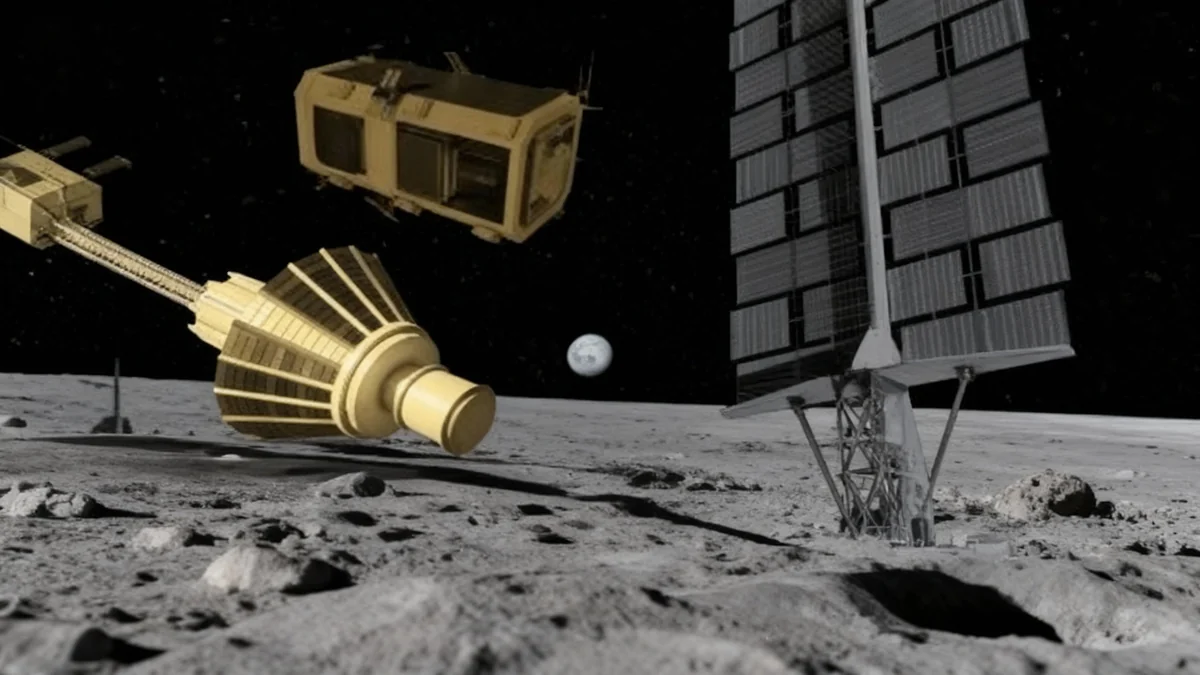


A fundamental shift is underway in space exploration, with mission planners now identifying the ability to survive the two-week lunar night as a critical requirement. This new focus is driving the adoption of nuclear power systems as the primary solution to operate in the extreme -250°C temperatures of the lunar darkness, a capability once considered optional but now deemed essential for long-term presence on the Moon and future missions to Mars.
Key Takeaways
- Surviving the extreme cold and darkness of the two-week lunar night has become a top priority for space agencies and commercial companies.
- Radioisotope power systems (RPS), a form of nuclear power, are emerging as the most reliable technology to provide continuous energy for lunar hardware.
- Technology developed for lunar survival is seen as a direct stepping stone for enabling long-duration missions on Mars.
- International regulations for space-based nuclear power are being modernized for the first time in 16 years to support this technological shift.
The New Mandate: Enduring the Lunar Darkness
For decades, lunar missions were designed as short sprints, operating during the sunlit lunar day and shutting down before the punishing two-week night descended. That paradigm is now changing. The goal is no longer just to land on the Moon, but to establish a persistent presence, which requires technology that can function without interruption.
This has elevated lunar night survival from a desirable feature to a core mission objective. According to Tyler Bernstein, Co-Founder and CEO of Zeno Power, the industry is moving through a clear progression.
"Surviving the lunar night has crossed a critical threshold: what was once a ‘nice-to-have’ is now the imperative for any serious lunar mission. We’re seeing this ‘survive, operate, thrive’ progression play out in real time."
The challenge is immense. Without sunlight, surface temperatures plummet to approximately -250°C (-418°F), conditions that can destroy sensitive electronics and freeze mechanical systems. Simply surviving this environment is the first step; the ultimate goal is to continue scientific operations and prepare for sustained human activity.
Bernstein adds that this shift is influencing the design of new lunar hardware. "Missions originally scoped for short-term surface operations are being examined for lunar night survival," he notes, highlighting that as landers with larger payload capacities are developed, the need for robust, continuous power will only grow.
Space Nuclear Power Becomes a Mainstream Solution
To meet the demands of the lunar night, mission planners are increasingly turning to a proven technology: radioisotope power systems (RPS). These devices use the natural decay of radioisotope materials to generate a steady supply of heat and electricity, independent of sunlight.
Why Nuclear Power?
Unlike solar panels, which are useless during the two-week lunar night, or batteries, which struggle in extreme cold and have limited capacity, RPS provides a constant, reliable source of power and heat for decades. This makes it ideal for missions in permanently shadowed craters or for surviving long periods of darkness.
This technology is not new—it has powered deep space probes like Voyager and the Mars rovers for years—but its application for lunar surface missions is becoming a primary focus. Experimental solutions remain years away, making nuclear power the most viable option for near-term ambitions.
"Radioisotope power systems are becoming the most promising long-term power solution for a multitude of lander and mobility operators," Bernstein explains. "When we talk with mission planners today, RPS is a primary choice because it’s reliable and enables missions in extreme environments."
The consensus is growing across international space agencies that nuclear power is a foundational requirement for expanding humanity's reach into the solar system. "You simply cannot survive two-week lunar nights, thrive in permanently shadowed craters, or eventually support Mars surface missions without it," Bernstein states.
From the Moon to Mars: A Dual-Use Strategy
The technologies being developed to conquer the lunar night are not just for the Moon. For the first time, Mars exploration is being directly integrated into the architectural planning for NASA's Artemis program, with a clear strategy of developing dual-use systems.
The Mars Challenge
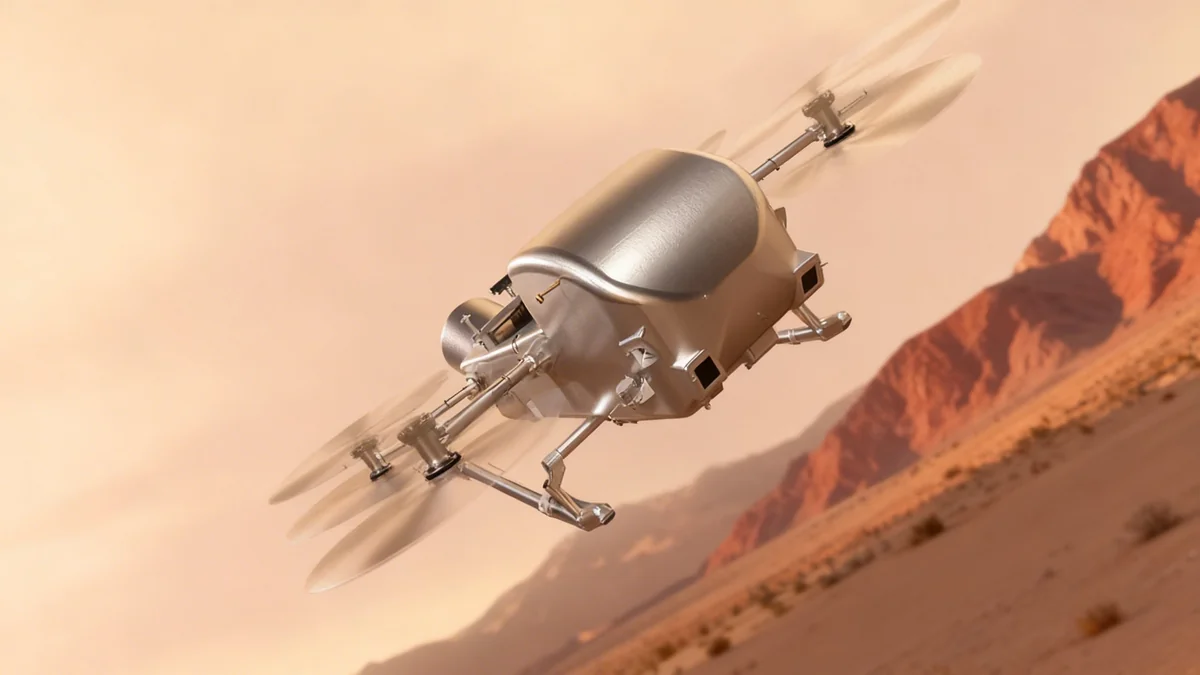
The Martian environment is even more demanding than the Moon's. While not as cold as the lunar night, Mars has a thin atmosphere, planet-encircling dust storms that can block sunlight for weeks, and significantly longer mission durations, making reliable power even more critical.
According to A.C. Charania, SVP of Space Business Development at Zeno Power, the framework is simple: "Prove it on the moon, apply it to Mars." The power and thermal management systems built for lunar landers and rovers must be directly adaptable for future Martian hardware.
This long-term planning is expected to accelerate. "In 2026, agencies will begin explicitly articulating what ‘surviving on Mars’ requires, and space nuclear power systems sit at the center of that conversation," Charania says. This positions the current lunar efforts as a crucial proving ground for the next giant leap in space exploration.
Policy and Regulation Begin to Catch Up
As technology races ahead, the regulatory frameworks governing space are starting to modernize. This is a critical component for enabling commercial investment and scaling the industry beyond government-led missions.
One of the most significant developments is the expected progress on launch indemnification in 2026, which will help de-risk commercial space operations involving nuclear materials. Alex Gilbert, VP of Regulation at Zeno Power, calls this "foundational for commercial investment."
Equally important is the renewal of international dialogue on the use of nuclear power in space. For the first time in 16 years, major international bodies are addressing the topic, driven by American programs, European interest, and China's own ambitious lunar plans.
"The UN and International Atomic Energy Agency are organizing conferences... This international dialogue will reduce future geopolitical friction and unlock essential technology for all deep-space endeavors."
This policy momentum signals a broad recognition that advanced power systems are not just a technical solution but a geopolitical and economic enabler for the future of space exploration. By creating clear and updated regulations, governments are paving the way for a new era of sustained operations on the Moon, Mars, and beyond.