
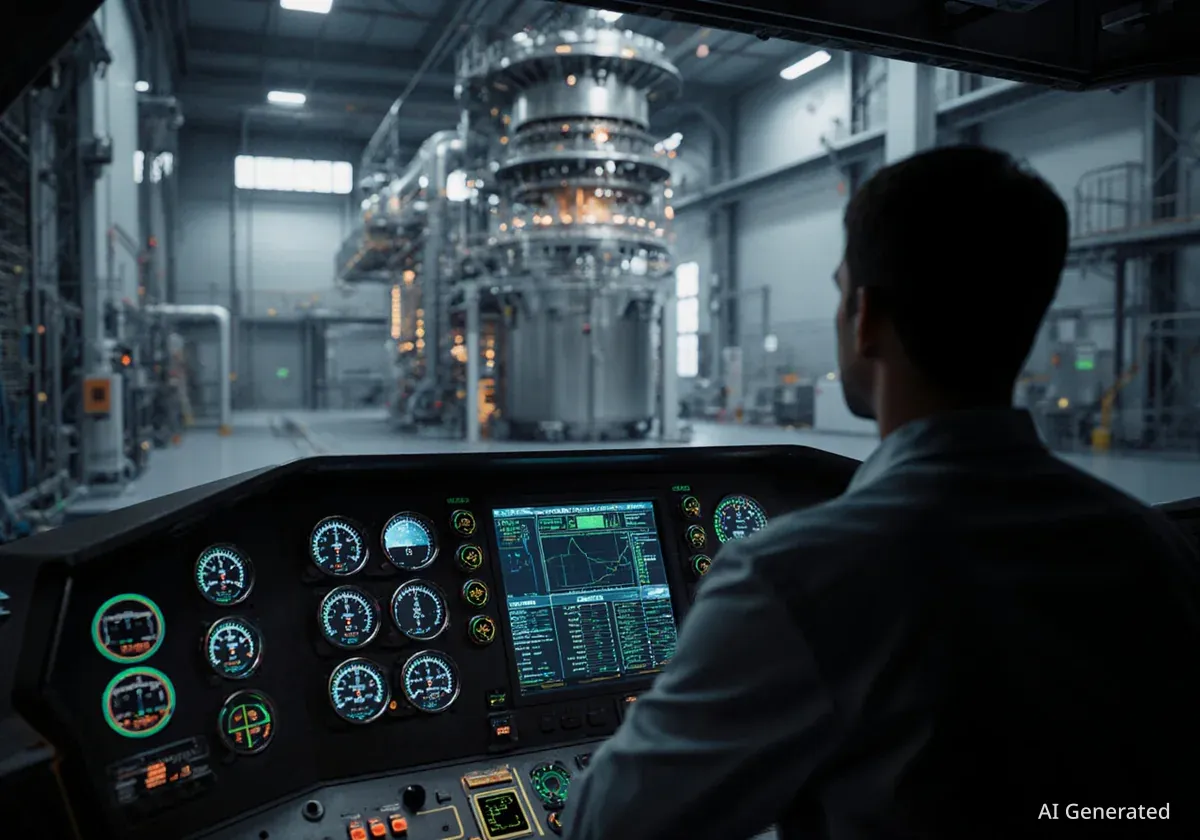
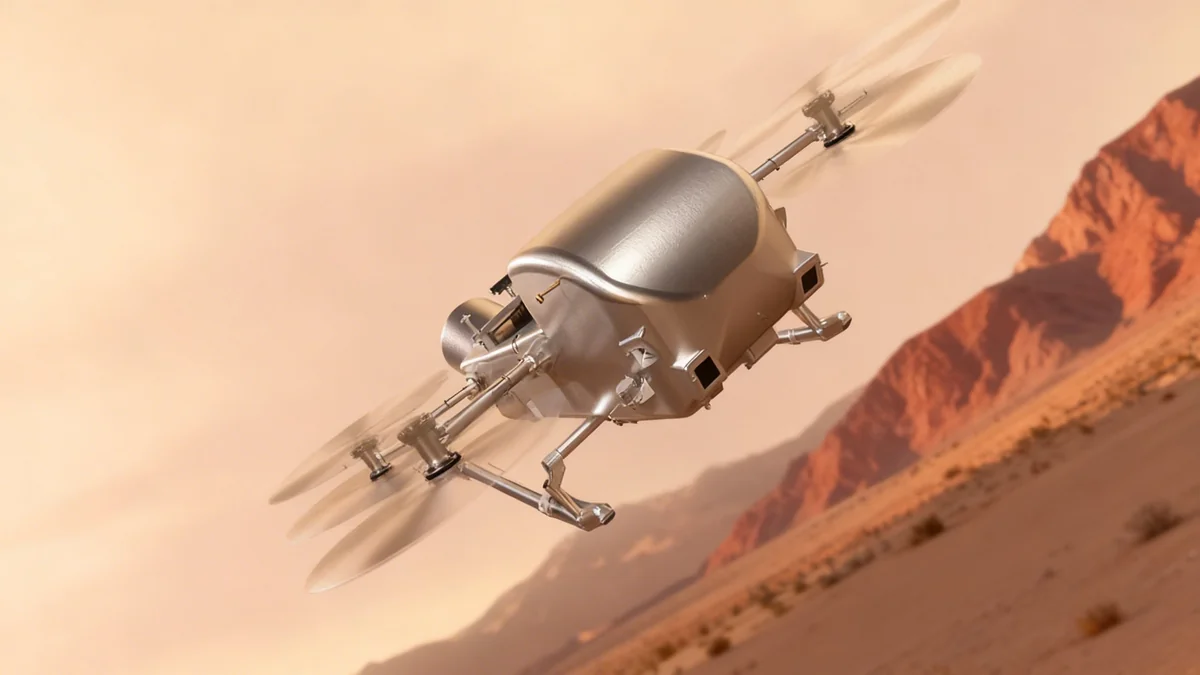


Engineers at NASA's Marshall Space Flight Center in Alabama have completed a critical series of ground tests on a full-scale nuclear reactor prototype, marking a significant step forward in developing propulsion systems for rapid deep space travel. The tests, which concluded in late 2025, are the first of their kind on flight-scale hardware since the 1960s and aim to validate designs for engines that could drastically reduce travel times to Mars and beyond.
The successful test series moves the agency closer to a future where human and robotic missions can venture farther into the solar system more efficiently and safely than ever before. This technology could enable entirely new classes of scientific exploration that are currently impossible with conventional chemical rockets.
Key Takeaways
- NASA conducted over 100 non-nuclear tests on a flight-ready nuclear reactor engineering unit at Marshall Space Flight Center.
- These "cold-flow" tests simulated propellant flow to validate the reactor's structural design and fluid dynamics without using radioactive material.
- The primary goal of nuclear thermal propulsion is to significantly shorten mission durations, cutting a trip to Mars by months.
- Shorter trips reduce astronaut exposure to dangerous deep-space radiation and decrease the need for life-support resources.
- The data gathered will refine computer models and inform the design of flight control systems for future nuclear-powered spacecraft.
A New Era of Propulsion Testing
In a specialized facility in Alabama, a barrel-sized piece of hardware represents a potential leap for space exploration. Engineers recently concluded an extensive testing campaign on an engineering development unit of a nuclear thermal rocket engine. This unit, measuring 44 inches by 72 inches, was built by BWX Technologies and is a full-scale representation of a reactor that could one day power a spacecraft across the solar system.
The tests performed were what engineers call "cold-flow" tests. Instead of using nuclear fuel, the team ran liquid hydrogen propellant through the reactor core's channels to study how the fluid behaves. This approach allows them to analyze the system's mechanical and fluid dynamics in a safe, non-radioactive environment.
Over several months in 2025, the team conducted more than 100 individual tests. The primary objective was to ensure that the flow of super-cooled propellant through the reactor would not cause destructive vibrations or oscillations. The data collected from these trials is invaluable for validating the stability of the reactor design under flight-like conditions.
What is Nuclear Thermal Propulsion?
Unlike conventional chemical rockets that burn fuel and an oxidizer to create thrust, a nuclear thermal propulsion (NTP) system works differently. It uses a compact nuclear reactor to heat a propellant, such as liquid hydrogen, to extreme temperatures. This superheated gas is then expelled through a nozzle at very high velocities, generating thrust. Because it can achieve much higher exhaust velocities, an NTP engine is two to three times more efficient than the best chemical rockets.
The Need for Speed in Deep Space
For decades, humanity's reach into the solar system has been limited by the constraints of chemical propulsion. While effective for reaching Earth orbit and the Moon, these rockets are slow for interplanetary journeys. A trip to Mars, for example, can take seven to nine months one way, exposing astronauts to prolonged periods of dangerous cosmic radiation.
Nuclear propulsion offers a solution. By dramatically increasing efficiency, a nuclear-powered spacecraft could shorten the journey to Mars significantly. This reduction in travel time is not just a matter of convenience; it is a critical safety measure. Less time in deep space means a lower cumulative dose of radiation for the crew and a reduced need for life-support supplies like food, water, and oxygen.
Key Benefits of Nuclear Propulsion
- Faster Transit: Reduces travel time to Mars and other destinations, lowering crew radiation exposure.
- Greater Payload: Allows spacecraft to carry more scientific instruments, supplies, and equipment.
- Enhanced Power: Provides abundant onboard electrical power for complex experiments and high-speed communications.
- Mission Flexibility: Opens up more launch windows and enables new types of missions, such as those to the outer planets.
Validating the Digital Models
Beyond confirming the hardware's physical integrity, the recent tests served another crucial purpose: validating the computer models used to predict the reactor's performance. In space exploration, engineers rely heavily on complex simulations to understand how systems will behave in environments that cannot be perfectly replicated on Earth.
"We're doing more than proving a new technology; the test series generated extraordinarily detailed flow response data for a flight-like space reactor design,” said Jason Turpin of NASA's Space Nuclear Propulsion Office.
The precise data gathered from the cold-flow experiments will now be used to fine-tune these computational models. This ensures that when NASA does proceed with a flight-ready system, its behavior will be well-understood and predictable. This process is essential for designing the sophisticated flight control systems that will manage the engine's power and thrust in space.
The Path to the Planets
While NASA is not currently building this nuclear engine for a specific mission, the project is a foundational technology development effort. The goal is to mature the technology to a point where it becomes a viable, off-the-shelf option for future mission planners, whether for ambitious robotic probes to Uranus and Neptune or for the first human expeditions to Mars.
For robotic missions, the benefits are equally transformative. A nuclear-powered probe could enter orbit around distant planets rather than performing a brief flyby, allowing for years of detailed scientific study. It could also carry a much larger suite of scientific instruments, revolutionizing our understanding of the outer solar system.
Each milestone, from component manufacturing to the successful completion of these ground tests, brings humanity a step closer to a new era of space exploration—one defined not by the tyranny of distance but by the power of the atom.