
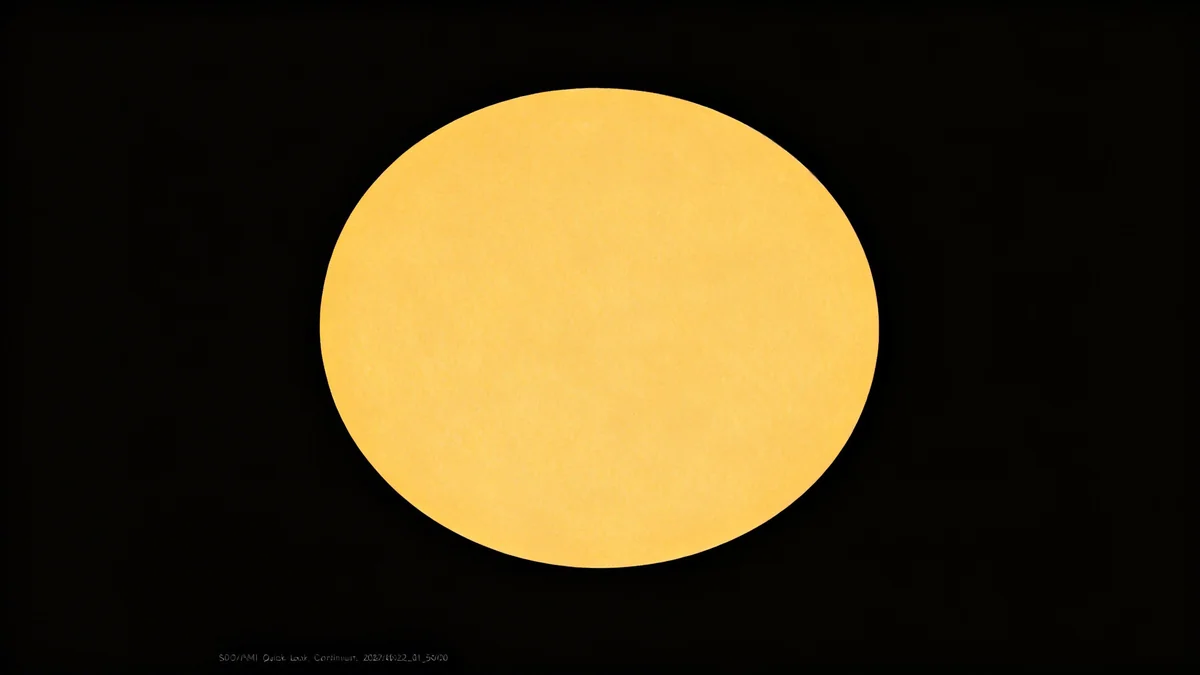

For the first time since June 2022, the face of the sun appeared completely clear of sunspots, a brief but significant event that suggests the current cycle of solar activity may be starting to wind down. This spotless period, lasting approximately two days, marked a notable pause in the sun's otherwise turbulent behavior.
This lull in activity provides a stark contrast to the frequent solar storms observed over the past year. The last time our star presented a similarly unblemished disk was more than 1,355 days ago, highlighting the cyclical nature of solar phenomena.
Key Takeaways
- The sun's visible surface was completely free of sunspots for the first time since June 8, 2022.
- This event indicates that the current solar cycle, which peaked in 2024, is likely entering its declining phase.
- Sunspots are the primary source of solar flares and coronal mass ejections that can impact Earth.
- The next period of minimum solar activity is not expected to begin until around 2030.
Understanding the Sun's Quiet Moment
The sun operates on an approximately 11-year cycle, swinging between periods of high and low activity. The peak of this cycle, known as the solar maximum, is characterized by a high number of sunspots and frequent solar events. The current cycle, designated Solar Cycle 25, reached its maximum earlier in 2024.
Sunspots are temporary phenomena on the sun's surface that appear as dark spots compared to surrounding regions. They are areas of reduced surface temperature caused by concentrations of magnetic field flux that inhibit convection. These intense magnetic fields are also the origin of powerful energy releases.
What Are Sunspots?
Sunspots are cooler regions on the sun's photosphere, with temperatures around 6,500 degrees Fahrenheit (3,600 Celsius), compared to the surrounding 10,000 F (5,500 C). Their strong, tangled magnetic fields are the launching pads for solar flares and coronal mass ejections (CMEs).
When the magnetic field lines around these spots snap and realign, they can release vast amounts of energy in the form of solar flares and send massive clouds of plasma, known as CMEs, hurtling into space. When directed at Earth, these events can trigger geomagnetic storms, leading to auroras and potential disruptions to satellites and power grids.
A Temporary Calm in the Solar Storm
This recent spotless period, though brief, is a clear indicator that the sun's activity is beginning to decline from its peak. Observations confirmed the absence of any visible sunspots for about 48 hours before a new active region began to emerge on the solar disk.
It is important to note that this does not mean an immediate end to solar storms. Even as a solar cycle wanes, significant solar events can still occur. However, the frequency of these events is expected to decrease as we head towards the next solar minimum.
The Last Solar Minimum
The previous solar minimum occurred between 2018 and 2020. During that time, the sun experienced extended periods without any sunspots. According to space weather observers, there were a total of 700 spotless days during that phase, demonstrating how quiet our star can become during its minimum.
The transition from maximum to minimum is a gradual process. Experts from meteorological offices, like the UK Met Office, predict that the next solar minimum will not be fully established before 2030. Therefore, while this spotless event is a sign of change, we can still expect periods of solar activity in the coming years.
Implications for Earth and Space Weather
The level of solar activity has direct consequences for Earth. A more active sun increases the likelihood of space weather events that can affect our technology-dependent society.
- Satellite Operations: Intense solar radiation can damage satellite electronics and alter their orbits.
- Power Grids: Geomagnetic storms can induce currents in power lines, potentially causing widespread blackouts.
- Communications: Solar flares can interfere with high-frequency radio communications and GPS signals.
- Auroras: On the positive side, increased solar activity produces more frequent and vibrant auroral displays, visible at lower latitudes than usual.
As Solar Cycle 25 continues its downward trend, the threat from severe space weather will gradually diminish. This recent spotless day serves as a scientific marker, confirming that the sun is following its predictable, albeit powerful, rhythm. While the calm was short-lived, it offers a glimpse into the quieter solar years that lie ahead.
For now, scientists and space weather forecasters will continue to monitor the sun closely. Even as the sunspot count dwindles, the potential for an isolated, significant solar storm remains, reminding us of the dynamic nature of our star.