
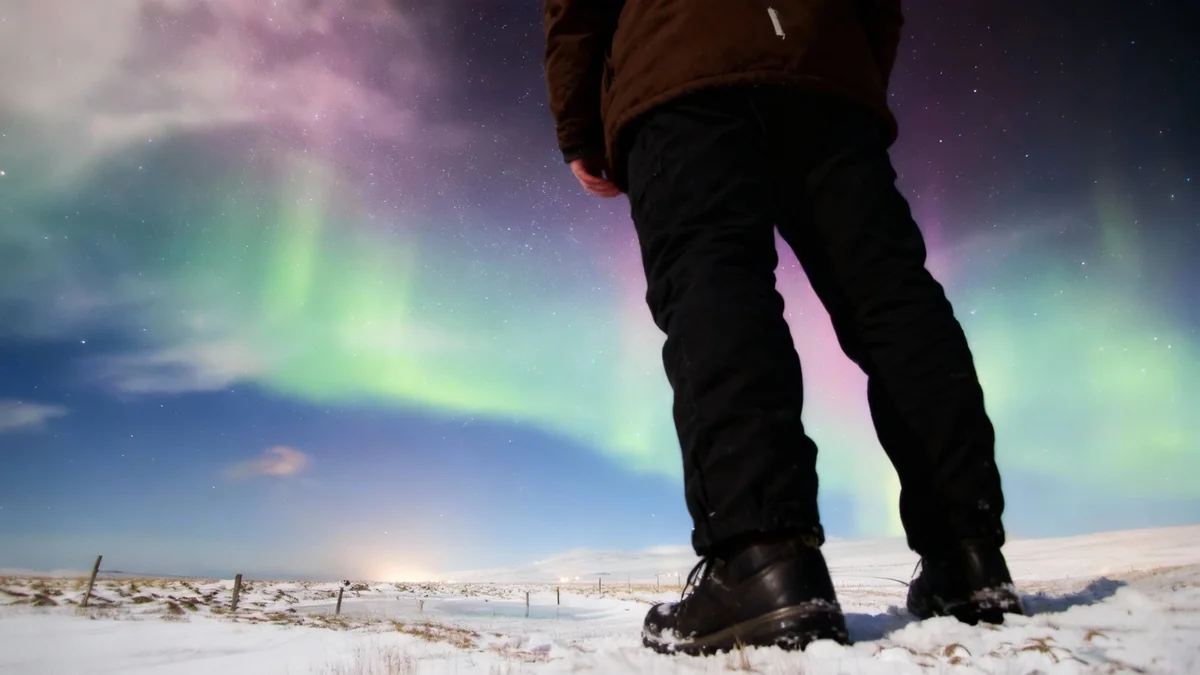

Increased activity from the sun is producing more frequent and intense displays of the northern lights, with recent solar storms pushing the ethereal glow into lower latitudes than typically expected. Forecasters are closely monitoring a series of solar events, including coronal mass ejections and high-speed solar wind streams, which are responsible for the recent surge in geomagnetic activity.
For skywatchers, this heightened solar cycle means the chances of witnessing the aurora borealis have significantly improved, provided local weather conditions are favorable. The dynamic interplay between solar particles and Earth's magnetic field is creating a period of vibrant celestial activity expected to continue in the coming months.
Key Takeaways
- Solar activity, including coronal mass ejections (CMEs) and coronal holes, is currently the primary driver of enhanced northern lights displays.
- Geomagnetic storms, rated from G1 (minor) to G5 (extreme), determine the intensity and geographic reach of the aurora.
- Recent events have pushed aurora visibility into mid-latitude regions like the northern United States and parts of Europe.
- Forecasters use data on solar wind speed and the orientation of the interplanetary magnetic field (Bz) to predict aurora intensity.
What's Causing the Increased Aurora Activity?
The recent uptick in northern lights sightings is directly linked to activity on the sun's surface, which is currently in an active phase of its 11-year cycle. Two primary phenomena are responsible for sending charged particles toward Earth: coronal mass ejections (CMEs) and coronal holes.
CMEs are massive explosions of plasma and magnetic fields from the sun's corona. When a CME is directed at Earth, it can take one to three days to arrive, slamming into our planet's magnetic field and triggering a geomagnetic storm. These storms are the main ingredient for widespread and vibrant auroras.
Coronal holes, on the other hand, are areas in the sun's upper atmosphere where the magnetic field opens up, allowing a continuous stream of high-speed solar wind to escape. When Earth passes through one of these streams, the sustained buffeting can also lead to prolonged periods of geomagnetic activity and consistent aurora displays, especially in polar regions.
Understanding Geomagnetic Storms
Geomagnetic storms are rated on a scale from G1 (minor) to G5 (extreme). While G1 storms typically produce auroras visible in high-latitude regions like Alaska and northern Canada, stronger storms can push the lights much farther south. For example, a G3 (strong) storm can make the aurora visible in states like Illinois and Oregon, while a rare G4 or G5 event could bring them to Alabama and northern California.
Recent Solar Events and Their Impact
Over the past several months, a series of solar events has kept skies active. In early January, a "cannibal CME"—where a faster CME overtakes and consumes a slower one—arrived at Earth, sparking periods of geomagnetic storming and delighting aurora chasers at high latitudes.
Throughout the winter, fast solar winds flowing from persistent coronal holes have been the dominant driver, maintaining unsettled to active conditions. These events have consistently produced G1-level storms, ensuring that skywatchers in places like northern Scotland, Scandinavia, and Alaska have had regular opportunities to see the lights.
"When you see them in person, it's nothing short of magical. It's an awe-inspiring phenomenon that every person should witness at least once in their lifetime."
Forecasters noted that even when CMEs miss Earth, their glancing blows can still be enough to disturb our magnetic field and enhance the auroral oval, the ring of light that typically sits over the polar regions.
How to See the Northern Lights
Catching the aurora requires a combination of the right solar conditions and favorable local circumstances. While no forecast is a guarantee, following a few key steps can significantly increase your chances.
Understanding the Forecasts
Two key metrics are crucial for aurora hunting: the Kp index and the Bz value.
- The Kp Index: This is a global scale of geomagnetic activity, ranging from 0 to 9. A Kp of 4 or 5 indicates a minor storm, which is often enough for good visibility at high latitudes. A Kp of 6 or 7 suggests a moderate to strong storm, where auroras may be visible from mid-latitudes.
- The Bz Value: This measures the north-south orientation of the interplanetary magnetic field (IMF). A strong southward Bz is ideal. When the Bz is negative (southward), it more easily connects with Earth's northward-pointing magnetic field, allowing solar energy to pour into our atmosphere and create brilliant auroras.
Did You Know?
The colors of the aurora depend on which gas particles are being excited and at what altitude. The most common color, a pale green, is produced by oxygen molecules at about 60 to 150 miles high. Red auroras, which are rarer, are created by oxygen at higher altitudes, above 150 miles. Pinks and dark reds can appear at the lower edges of the display, while nitrogen produces blue or purplish-red hues.
Practical Tips for Viewing
- Get Away from City Lights: Light pollution is the biggest obstacle to seeing the aurora. Travel to a dark location with an unobstructed view of the northern horizon.
- Check the Weather: Clear skies are essential. A G3 storm won't matter if your view is blocked by thick clouds.
- Be Patient: The aurora often appears in waves. Activity can be quiet for an hour and then suddenly burst into a vibrant display. Plan to stay out for several hours, typically between 10 p.m. and 2 a.m. local time.
- Dress Warmly: Aurora hunting is often a cold activity. Layering clothing, insulated boots, hats, and gloves are essential for staying comfortable.
What to Expect in the Coming Months
As the sun continues its journey toward the peak of its current cycle, known as solar maximum, the frequency of solar flares, CMEs, and other energetic events is expected to increase. This suggests that the next year could offer even more spectacular opportunities for aurora viewing around the globe.
Forecasters will continue to monitor active sunspot regions and coronal holes as they rotate to face Earth. While predicting the exact timing and strength of a geomagnetic storm remains a challenge, the overall trend points toward a period of heightened celestial beauty. For those willing to brave the cold and dark, the reward could be an unforgettable light show painted across the night sky.