

Japanese astronaut Kimiya Yui is providing a unique perspective on Earth's weather systems and ongoing orbital operations by sharing images and updates from the International Space Station (ISS). His social media posts offer a rare glimpse into the activities of the Expedition 73 crew, including the observation of two major typhoons, as official updates from NASA are currently limited due to a U.S. government shutdown.
Key Takeaways
- JAXA astronaut Kimiya Yui photographed Typhoon 22 and Typhoon 23 from the ISS during the week of October 6, 2025.
- Work aboard the space station continues, with the crew preparing for the arrival of Japan's next-generation HTV-X cargo vehicle.
- As of October 10, 2025, there are seven astronauts from the U.S., Russia, and Japan living and working on the ISS.
- Official communication from NASA has been halted by a U.S. government shutdown, making astronaut social media a primary source for updates.
Orbital Weather Observation
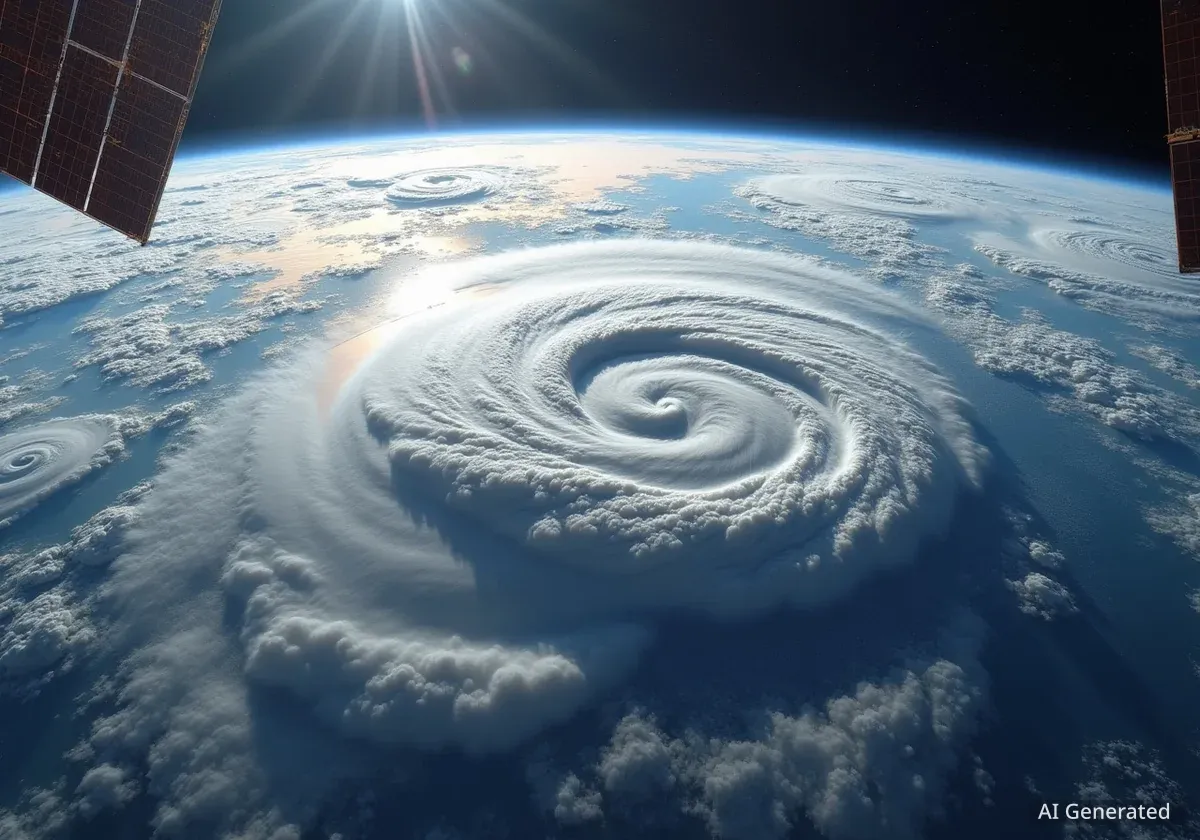
From his vantage point approximately 400 kilometers (250 miles) above Earth, Kimiya Yui, a flight engineer with the Japan Aerospace Exploration Agency (JAXA), has been monitoring significant weather events. This week, he captured detailed photographs of two powerful storm systems in the Northwest Pacific, identified as Typhoon 22 and Typhoon 23.
On Thursday, October 9, 2025, Yui shared his observations on social media, providing insights into the storms' structures.
"The eye of Typhoon 22 has become somewhat unclear, but it still appears to be maintaining its strong intensity as before," Yui wrote. He added, "Typhoon 23 is a bit distant, but it is swirling with thick rain clouds on its southern side."
Yui also included a message of caution for those on the ground: "Stay safe while keeping up with the latest typhoon information!" His images highlight the immense scale of these weather phenomena, which are difficult to appreciate from a terrestrial perspective.
Typhoons, Hurricanes, and Cyclones
The terms typhoon, hurricane, and cyclone all refer to the same type of powerful, rotating storm system known as a tropical cyclone. The name used depends on the region where the storm originates. Storms in the Northwest Pacific are called typhoons, while those in the Atlantic and Northeast Pacific are called hurricanes.
Station Operations Continue Uninterrupted
Despite the communication pause from U.S. ground agencies, the international crew aboard the ISS remains focused on scientific research and station maintenance. The crew’s work is critical for the long-term operation of the orbiting laboratory and for preparing for future missions.
Preparations for New Cargo Vehicle
A significant task for the crew involves preparing for the arrival of Japan's next-generation cargo spacecraft, the HTV-X. Yui and his crewmates have been conducting checkouts of a device named PROX, which is essential for the new vehicle's approach and berthing process. According to a social media post from Yui on October 8, these preparations are advancing as planned.
"Preparations to welcome HTV-X to the ISS are steadily progressing," Yui stated. He also shared his personal involvement in the upcoming mission: "I've been assigned to operate the arm and grasp it this time as well. The responsibility is significant, but I'll cooperate with everyone to reliably carry out the mission!"
This role involves using the station's robotic arm, Canadarm2, to capture the uncrewed HTV-X vehicle upon its arrival. This procedure requires precise coordination between the astronaut operating the arm and ground control teams.
A Hub of Activity in Orbit
As of October 10, 2025, the International Space Station has been continuously inhabited by astronauts for 24 years, 11 months, and 8 days. This continuous human presence has enabled thousands of scientific experiments and technology demonstrations.
Current Status of the International Space Station
The ISS currently hosts a seven-member international crew and serves as a docking port for multiple spacecraft, reflecting ongoing collaboration in space exploration.
Expedition 73 Crew Complement
The crew of Expedition 73 includes astronauts and cosmonauts from three different space agencies:
- Roscosmos (Russia): Commander Sergey Ryzhikov, and flight engineers Alexey Zubritsky and Oleg Platonov.
- NASA (USA): Flight engineers Jonny Kim, Zena Cardman, and Mike Fincke.
- JAXA (Japan): Flight engineer Kimiya Yui.
Docked Spacecraft Overview
The station is a busy hub with several vehicles currently attached. These spacecraft are essential for transporting crew, delivering supplies, and conducting scientific research.
The docked vehicles include:
- Crew Vehicles: SpaceX's Dragon "Endeavour" and the Roscosmos Soyuz MS-27.
- Cargo Vehicles: Two Russian Progress resupply ships (MS-31 and M-32), one SpaceX Dragon cargo craft (CRS-33), and one Northrop Grumman Cygnus spacecraft (NG-23).
This diverse array of spacecraft highlights the station's role as a vital piece of international infrastructure, supporting a wide range of scientific and logistical operations in low-Earth orbit.