
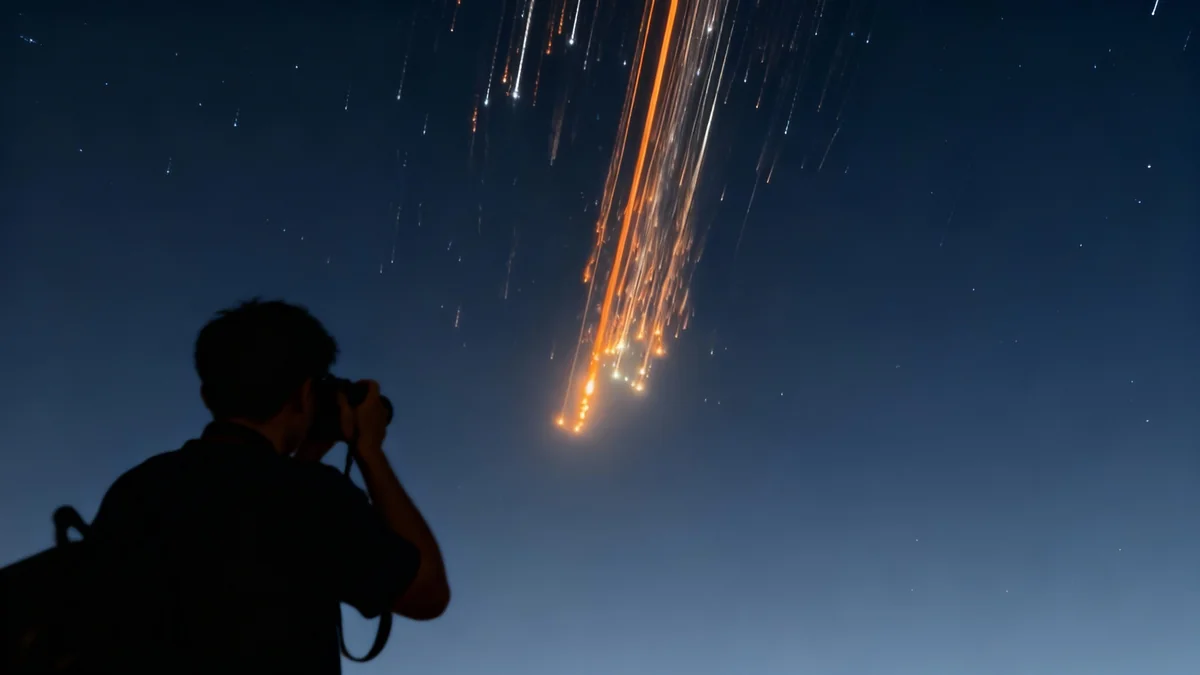

The year 2025 was marked by ambitious strides in space exploration, but it also served as a stark reminder of the immense challenges involved. Across the globe, from established space powers to emerging private companies, a series of high-profile rocket and spacecraft failures underscored the unforgiving nature of reaching for the stars.
While many successful missions achieved new milestones, the year was also defined by dramatic explosions, failed landings, and lost payloads. These setbacks, while costly, provide critical data that engineers and scientists use to refine technology and improve the safety and reliability of future launches.
Key Takeaways
- 2025 saw numerous launch and mission failures from both government agencies and private aerospace companies worldwide.
- Several inaugural orbital launch attempts from new spaceports and by new companies, including in Europe, Australia, and South Korea, ended in failure.
- Private lunar landing missions from both Japan and the United States encountered significant problems, with one crashing and another tipping over.
- Even established players like SpaceX experienced setbacks with its Starship program, though these were part of an aggressive iterative testing schedule.
The Perils of Inaugural Flights
For many emerging players in the space industry, 2025 was a year of difficult first steps. Launching a new rocket is one of the most complex engineering feats, and history shows that initial attempts rarely go perfectly. This year was no exception, with several debut flights ending moments after liftoff.
On March 30, Europe's first orbital launch from continental soil met a fiery end. The Spectrum rocket, developed by German company Isar Aerospace, launched from Norway’s Andøya Spaceport but suffered a critical anomaly just 18 seconds into its flight, causing it to crash back to Earth.
A similar fate befell Australia's first homegrown orbital rocket attempt. On July 29, Gilmour Space's Eris rocket lifted off from Bowen Orbital Spaceport but failed 14 seconds later. In South Korea, startup Innospace launched the nation's first private orbital rocket, the Hanbit-Nano, on December 22. The vehicle experienced an issue about a minute after launch and did not reach orbit.
Why First Flights Often Fail
Inaugural rocket launches are essentially massive, real-world experiments. Despite countless hours of simulations and ground tests, the combination of extreme forces, vibrations, and temperatures during ascent can expose unforeseen weaknesses in a vehicle's design or manufacturing. These early failures provide invaluable data for future success.
Setbacks for Established and Emerging Powers
Failures were not limited to newcomers. Several nations with established space programs also faced significant challenges throughout the year.
The Indian Space Research Organisation (ISRO) experienced a setback on May 17 when its Polar Satellite Launch Vehicle (PSLV-XL) failed during the launch of the EOS-09 radar satellite. The issue occurred with the rocket's third stage approximately six minutes into the flight, resulting in the loss of the payload.
Japan's space program also encountered a major hurdle late in the year. On December 21, the country's new H3 rocket failed to deliver the Michibiki 5 navigation satellite to its correct orbit due to a second-stage malfunction. Officials with the Japan Aerospace Exploration Agency (JAXA) declared the satellite lost.
Challenges in the Private Sector
The burgeoning private space industry in China also saw its share of mishaps. Landspace's Zhuque-2 rocket, which uses advanced methane-fueled engines, failed during a mission on August 14. This was the second failure for the vehicle. Later, on November 9, a Ceres-1 rocket from Galactic Energy suffered an anomaly with its fourth stage, dooming its satellite payloads.
In the United States, Texas-based Firefly Aerospace had a difficult year. Its Alpha rocket failed to reach orbital velocity on April 29, leading to the loss of a technology demonstration payload. The company's return-to-flight efforts were further complicated on September 29 when a first-stage booster exploded during a ground test.
A Global Issue: Failures in 2025 were not concentrated in one region. Incidents involved rockets from India, Japan, China, Germany (launching from Norway), Australia, South Korea, and the United States, highlighting the universal difficulty of spaceflight.
The Moon Remains a Formidable Destination
Reaching the moon is one challenge, but landing on it safely is another entirely. In 2025, two private companies learned this lesson the hard way.
On June 5, the Japanese company ispace attempted to land its Resilience spacecraft in the moon's Mare Frigoris region. However, the vehicle crashed into the lunar surface during its final descent. This marked the company's second failed lunar landing attempt, following a similar incident in April 2023.
A month earlier, on March 6, Houston's Intuitive Machines achieved a successful touchdown with its Athena lander, which carried NASA science instruments. The celebration was short-lived, as the lander tipped over shortly after arrival. Its sideways position prevented some payloads from deploying and blocked its solar panels from recharging, ending the mission after just one day. It was a repeat of the company's 2024 Odysseus mission, which also toppled upon landing.
Learning from Explosions: The Starship Program
Perhaps the most visible setbacks of the year involved SpaceX's Starship, the largest and most powerful rocket ever built. The company conducted five suborbital test flights from its facility in South Texas as part of its rapid, iterative development process.
The first three flights of the year saw dramatic failures:
- January 16: The Super Heavy booster landed successfully, but the upper stage exploded less than 10 minutes after liftoff.
- March 6: A similar outcome occurred, with the loss of the upper stage.
- May 27: Both the booster and the upper stage were lost prematurely during the flight.
An additional setback occurred on the ground on June 18, when a Starship upper stage vehicle exploded during a test. However, SpaceX's philosophy treats these failures as learning opportunities. The company quickly analyzed the data and implemented changes, leading to fully successful test flights on August 26 and October 13. These incidents, while spectacular, are a planned part of a development strategy designed to push boundaries quickly.
A Note on Booster Landings
The year also saw four failed booster landing attempts during otherwise successful orbital launches. These involved Blue Origin's New Glenn, SpaceX's Falcon 9, Landspace's Zhuque-3, and China's Long March 12A. While technically failures of a secondary objective, three of these were first-ever attempts for their respective vehicles, pushing the envelope for reusable rocket technology.
While 2025 was fraught with explosions, crashes, and malfunctions, each event provided crucial lessons. For the global space community, these failures are not just endings, but the difficult and often fiery beginnings of more advanced and reliable technologies for the future.