

For a quarter-century, the International Space Station (ISS) has been a symbol of global cooperation and scientific achievement in low-Earth orbit. But with its planned retirement and deorbit set for after 2030, a new era of space exploration is beginning, driven by private companies competing to build its successor.
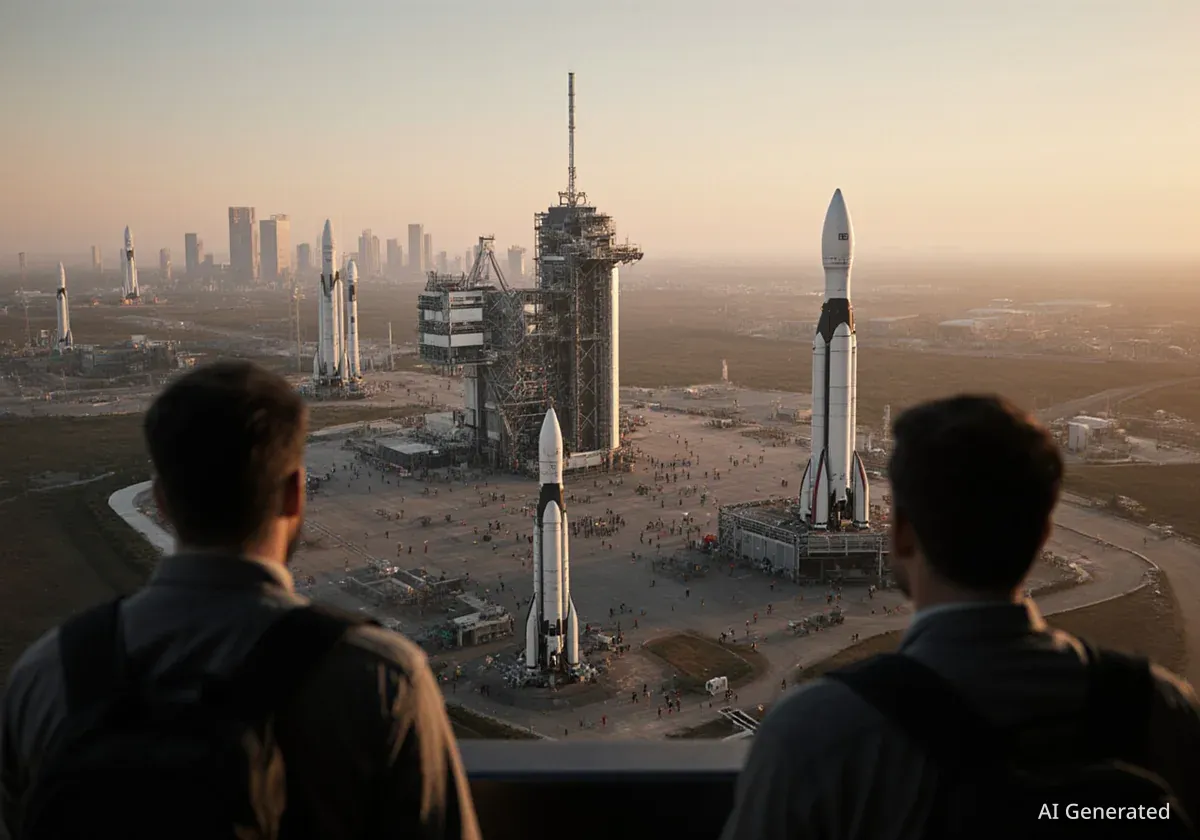
Four major ventures are now in a race to launch the world's next orbital habitats, each with a unique vision for the future of humanity in space. NASA is overseeing the transition, aiming to become a customer rather than an owner of these new commercial outposts.
Key Takeaways
- The International Space Station (ISS) is scheduled to be deorbited and crash into the Pacific Ocean after 2030.
- A new commercial race is underway, with companies like VAST, Starlab, Axiom Space, and Blue Origin competing to build the next generation of space stations.
- NASA will act as a customer, commissioning services from these private stations to ensure a continuous human presence in orbit.
- The new stations vary in focus, from scientific research and manufacturing to space tourism and luxury habitats.
The End of an Era for the ISS
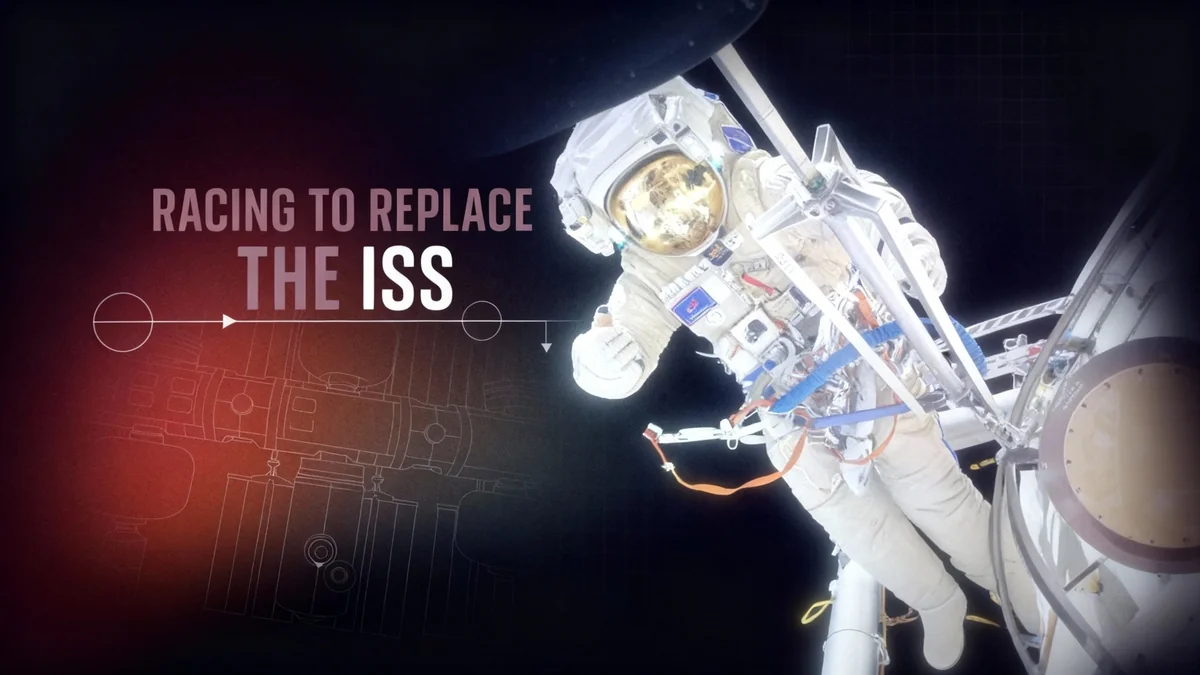
After more than two decades of continuous human habitation, the aging International Space Station is nearing the end of its operational life. The monumental structure, which has hosted astronauts from numerous countries, will be carefully guided into Earth's atmosphere after 2030.
The fiery reentry will cause smaller components to burn up, while larger, more resilient pieces are projected to land in a remote area of the Pacific Ocean. This controlled conclusion marks the end of a government-led model for orbital research platforms and opens the door for a new commercial chapter.
NASA's Transition to a Commercial Model
To prevent a gap in American presence in low-Earth orbit, NASA has established clear criteria for the companies vying to replace the ISS. The agency is looking for affordable and reliable platforms that can host at least four astronauts, support scientific research, and deorbit safely at the end of their lifespan. This shift positions the U.S. government as one of many potential customers in a burgeoning orbital economy.
VAST Haven-1: A Focus on Human Comfort
California-based startup VAST is poised to be the first out of the gate, with its prototype station, Haven-1, scheduled for launch this year. This will mark the first time a fully commercial space station enters orbit.
Haven-1 is designed to house four astronauts in a 45-cubic-meter habitable volume, roughly the size of a single-decker bus. Acknowledging the psychological toll of long-duration spaceflight, VAST has prioritized creating a comfortable and aesthetically pleasing environment.
"Living and working in space for long periods of time can be challenging psychologically, mainly because you experience such a great separation from Earth," former NASA astronaut and VAST's chief astronaut Drew Feustel explained. "We think if we make an aesthetically pleasing interior of our spacecraft that's comfortable to live and work in, you can reduce some of that sense of separation."
The initial mission will see a crew of four spend at least 10 days aboard Haven-1 to test its systems. While the business model involves selling seats, potentially to private individuals, Feustel believes the competition will ultimately democratize space access, similar to how air travel became more accessible over time.
Starlab: A Dedicated Orbital Laboratory
Taking a different approach is Starlab, a joint venture that includes aerospace veterans like Voyager Space and Airbus. With a planned launch in 2028, Starlab is being designed from the ground up as a dedicated platform for scientific research and development.
Marshall Smith, Starlab's CEO and a 37-year NASA veteran, emphasized that the ISS was adapted for science, whereas Starlab is being built specifically for it. He views the station as valuable "real estate" where customers can conduct business in microgravity.
Why Microgravity Matters
Research in microgravity is critical for advancing deep space exploration. According to Smith, systems vital for human survival, such as life support, behave differently in space. "Fluids behave differently, for example, and there's a lot of fluids involved in keeping humans alive in space," he noted. Testing these systems in orbit is essential for future missions to the Moon and Mars.
Starlab will have the same payload capacity as the ISS and accommodate a crew of four. Smith is confident in his team's experience, stating, "We don't feel the need to go demonstrate systems that we know work."
Axiom Station: Building on the ISS Legacy
Axiom Space has a unique strategy: it will begin by attaching its modules directly to the International Space Station. This allows the company to leverage the existing infrastructure before becoming a free-flying station.
This approach offers a significant advantage. When the ISS is deorbited, Axiom plans to detach its modules, taking with them decades of valuable scientific experiments and flight hardware that would otherwise be destroyed. The company's cargo module is specifically designed with a large hatch to facilitate the transfer of this equipment.
Axiom has accelerated its timeline and now plans for its station to be free-flying by 2028. Once independent, it will expand by adding more modules, eventually accommodating up to eight astronauts and featuring a dedicated module for industrial space strategies.
Orbital Reef: A 'Business Park' in Space
The most ambitious vision comes from Blue Origin and Sierra Space with their Orbital Reef concept. Described as a "village" or "mixed-use business park," it is designed to host a diverse community of scientists, commercial businesses, and space tourists.
- Capacity: Up to 10 people
- Volume: 830 cubic meters (nearly the size of the ISS)
- Transportation: Boeing's Starliner spacecraft
The project aims to broaden access to space beyond government astronauts. "Throughout the 20th century, space exploration has been the realm of the hero... But with Orbital Reef, we will make it accessible for so many more people," said Lindy Elkins-Tanton of Arizona State University's Interplanetary Initiative.
Brent Sherwood, a senior vice president at Blue Origin, echoed this sentiment, stating, "We're working very hard to make sure that orbital reef is not just for the entities that have had access to so far." The plans even include a single-person spacecraft that could allow for spacewalks without a traditional suit, further expanding the possibilities for life and work in orbit.