



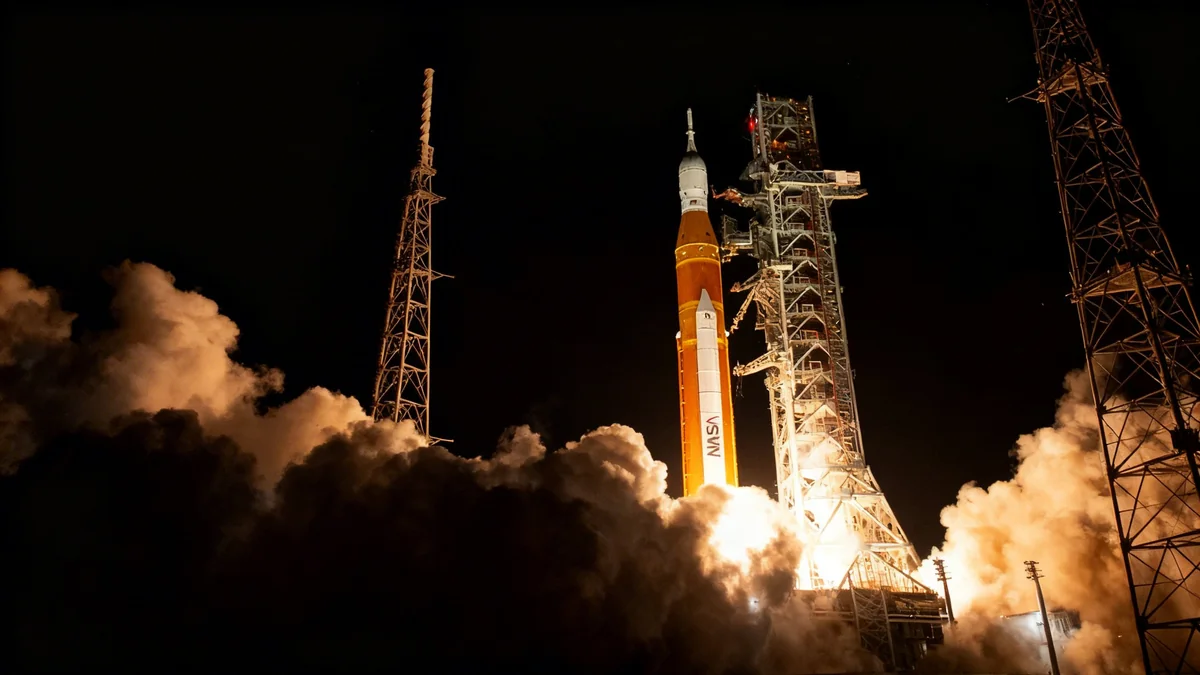
In an industry dominated by billionaires and government-funded giants, Rocket Lab has emerged as a leader in space launch and systems, reaching its 75th Electron rocket launch faster than any other company in history. With a relentless focus on efficiency and in-house production, the company has carved out a significant share of the rapidly expanding space economy.
Founded by Peter Beck in New Zealand, the company now employs over 2,500 people across three countries, with annual revenues approaching $600 million. Its success story offers a compelling look at how strategic resourcefulness can outperform massive capital in one of the world's most challenging sectors.
Key Takeaways
- Rocket Lab achieved its 75th launch milestone faster than any competitor, launching a record 21 rockets in 2025 alone.
- The company was founded on the principle of fierce efficiency, developing its Electron rocket for less than $100 million.
- A strategy of vertical integration, from building rocket components to entire satellites, gives Rocket Lab control over cost, speed, and quality.
- The company has expanded beyond launch services, with its Space Systems division now accounting for approximately 70% of its revenue.
- Upcoming projects include the larger Neutron rocket, designed to deploy constellations and support deep-space missions.
A Childhood Dream Becomes an Industry Disruptor
The story of Rocket Lab begins not in a Silicon Valley boardroom, but in a workshop in the lower South Island of New Zealand. Founder Peter Beck's early life was defined by a fascination with the night sky and a preference for tinkering with engines over formal schooling.
This hands-on approach led him through apprenticeships and research roles, all while he spent his nights and weekends experimenting with rocket engines in his garage. His goal was to work in the space industry, but New Zealand had none. A 2006 trip to the United States, which Beck calls his "rocket pilgrimage," proved to be a pivotal moment.
He found that while satellites were shrinking due to advances in electronics, the rockets to launch them had not. Small satellite operators had two poor choices: rideshare on a large rocket with no control over timing, or pay upwards of $60 million for a dedicated launch. Beck saw a clear gap in the market for a smaller, cost-effective rocket designed specifically for this purpose.
The Small Satellite Revolution
The rise of CubeSats and other small satellite technologies created a bottleneck in the space industry. While building and deploying a satellite became cheaper and faster, accessing space remained a major hurdle. Rocket Lab's Electron rocket was conceived to directly address this problem, offering frequent and affordable launch opportunities for a growing market.
Returning to New Zealand, Beck decided to build the solution himself. He founded Rocket Lab in 2006 with engineer Shaun O’Donnell, using his personal savings. By 2009, they had successfully launched their first rocket, Atea-1, marking New Zealand's inaugural space launch and proving their concept could work.
Building an Empire on Efficiency
From its inception, Rocket Lab has operated under a principle Beck describes as fierce efficiency. This philosophy was born from necessity, as the company has always competed against rivals with significantly deeper pockets.
For example, the company's workhorse, the Electron rocket, was developed for less than $100 million with a team of about 150 people. This stands in stark contrast to competitors like Virgin Orbit, which, despite a $1.2 billion investment from founder Richard Branson, ultimately failed.
Financial Discipline in Action
Scarcity has bred a culture of resourcefulness at Rocket Lab. All company expenses over $30,000 require direct approval from the CEO, Peter Beck. This level of scrutiny ensures that every dollar is spent with purpose, a discipline enforced by its status as a publicly traded company.
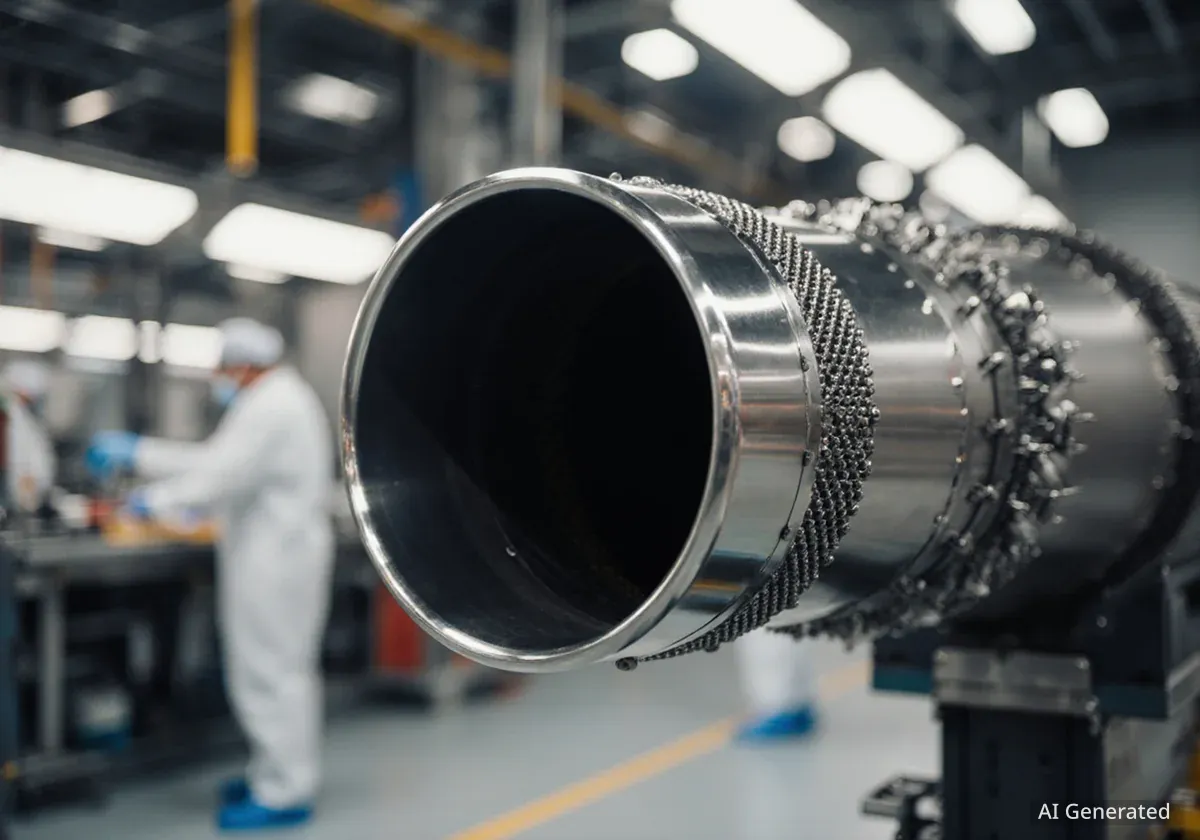
This efficiency is most evident in the company's commitment to self-sufficiency. Rather than waiting on long supply chains for critical parts, Rocket Lab often builds its own solutions.
- When a specific valve was unavailable, the team 3D-printed its own.
- The composite materials team built its own industrial ovens for curing rocket parts.
- The Rutherford engine, which powers the Electron, was the world's first 3D-printed, battery-powered orbital rocket engine.
This approach extends to launch infrastructure. Rocket Lab built the world's first private orbital launch complex on New Zealand's Māhia Peninsula. Owning its launch sites gives the company complete control over schedules and costs, avoiding the need to compete for launch windows at government-owned facilities.
"I don’t believe in throwing more heads at a problem. I believe in throwing the right heads at a problem," Beck has stated, emphasizing the company's focus on a small, highly dedicated team.
More Than Just a Rocket Company
While spectacular launches capture public attention, Rocket Lab's strategy has evolved far beyond being just a delivery service to orbit. The company has methodically pursued a strategy of vertical integration, aiming to control every aspect of a space mission from design to operation.
This expansion began in earnest in 2019 with the acquisition of Sinclair Interplanetary, a leading producer of satellite components. Since then, five more acquisitions have brought critical technologies in-house, including:
- Simulation, guidance, and navigation software.
- Satellite separation systems.
- High-efficiency solar panels for spacecraft.
- Optical communication technology.
- Advanced sensor payloads.
Today, Rocket Lab's Space Systems division builds everything from individual components for other companies to entire satellite constellations for national security customers. This diversification has been a financial success, with the division now accounting for around 70% of the company's total revenue.
A prime example of this end-to-end capability is the twin spacecraft designed and built for NASA's EscaPADE mission to Mars. The entire mission is being executed for approximately $80 million, a fraction of the billion-dollar cost typical for a Mars mission.
Executing on Promises
A core tenet of Rocket Lab's success is its focus on execution. In an industry known for ambitious PowerPoint presentations and missed deadlines, the company has built its reputation by delivering tangible results.
When the company announced its groundbreaking Rutherford engine, it presented a finished machine, not just drawings. Its first satellite, Photon, was only revealed to the public after it was already successfully operating in orbit. This "show, don't tell" approach has built immense credibility with customers and investors.
This track record has led to high-profile contracts, including hurricane-monitoring missions for NASA, national security launches for the National Reconnaissance Office, and hypersonic test missions for the U.S. Department of Defense. In a significant vote of confidence, the Space Development Agency awarded Rocket Lab a $515 million contract to build a national security satellite constellation.
The Next Frontier: Neutron and Beyond
With the Electron rocket established as the second most frequently launched U.S. rocket, Rocket Lab is now looking toward its next major project: the Neutron rocket. The company went public in 2021, raising $777 million, with about $300 million of that capital earmarked for Neutron's development.
Neutron represents a massive leap in capability. While Electron can lift 300 kilograms to orbit, Neutron is designed to carry a payload of 13,000 kilograms. This will allow Rocket Lab to compete for contracts to deploy large satellite constellations, launch heavier national security missions, and conduct deep-space exploration.
As the space economy is projected to reach nearly $2 trillion in the next decade, Rocket Lab's journey from a New Zealand workshop to a global space leader demonstrates that in the capital-intensive business of rockets, a culture of fierce efficiency and relentless execution can be the most valuable asset of all.