
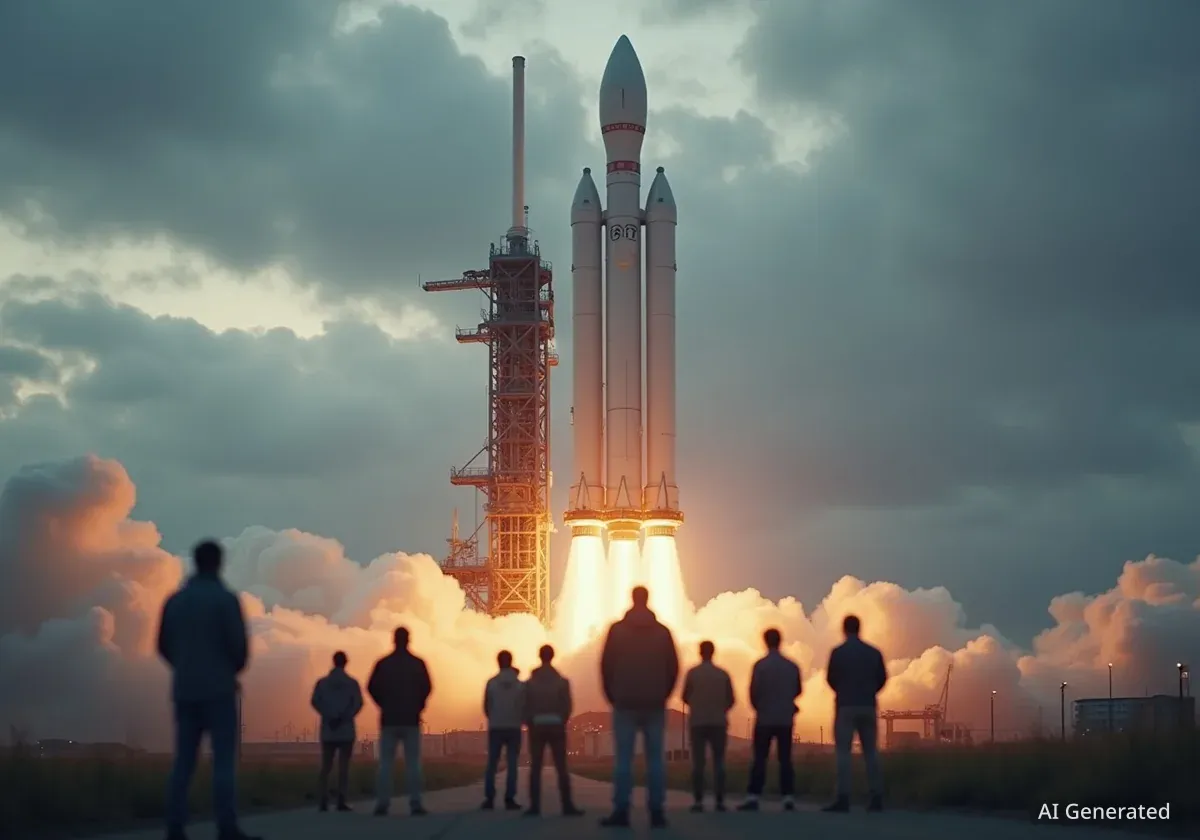



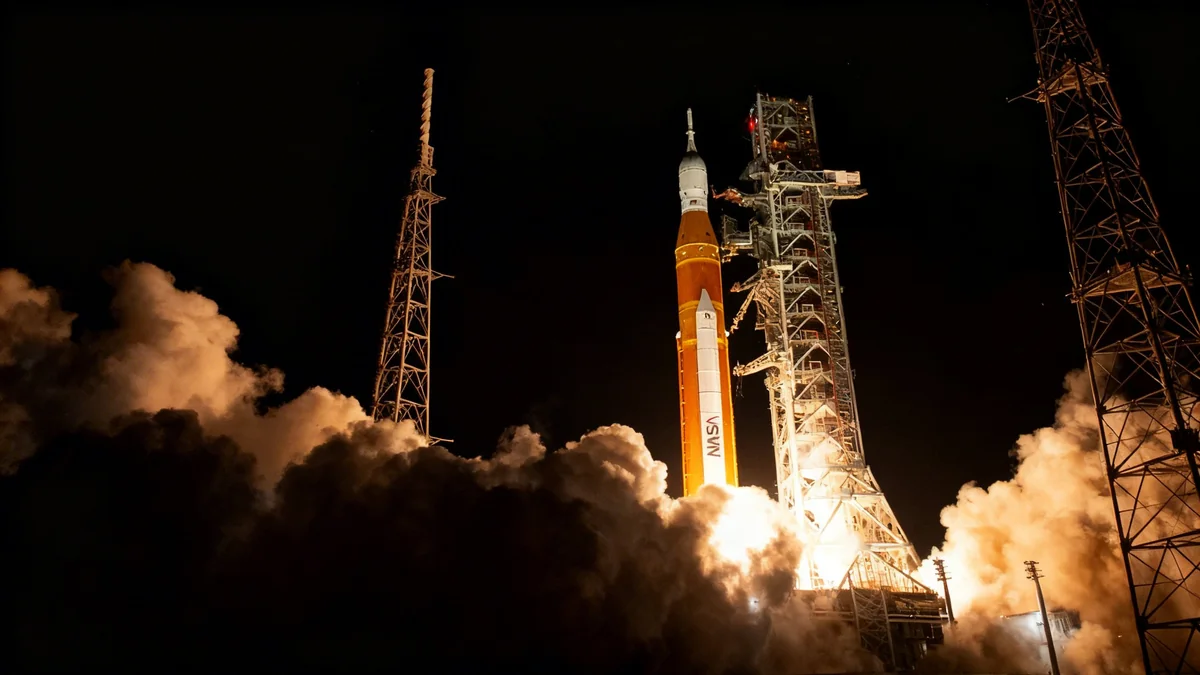
China's ambition to become a dominant space power is rapidly expanding beyond its state-run programs. A dynamic and growing private space industry is now on the verge of a major breakthrough: successfully recovering and reusing the first stage of a rocket. This achievement, a critical step in reducing launch costs, could reshape the global commercial space market.
Over the past decade, China has demonstrated its spacefaring capabilities with achievements like a Mars rover and its own operational space station. Now, the focus is shifting to a commercial model, with private companies poised to accelerate the nation's presence in orbit and beyond.
Key Takeaways
- Private Chinese space companies are close to achieving reusable rocket technology, a crucial step for lowering launch costs.
- This development aims to parallel the success of companies like SpaceX, which has dominated the market with its reusable boosters.
- Significant investment is flowing into new infrastructure, including private launchpads and satellite manufacturing facilities.
- The Chinese government is increasing its support for the commercial space sector, signaling a strategic shift in its national space policy.
The Shift from State to Private Ambition
For years, China's space program was the exclusive domain of the state. However, a strategic vision outlined about a decade ago by President Xi Jinping to establish China as a formidable "space power" has opened the door for private enterprise. This initiative has cultivated a vibrant ecosystem of startups and established firms eager to compete on the global stage.
This transition is not just about building rockets. It represents a fundamental change in approach, fostering innovation and competition within the country's aerospace sector. The government is actively encouraging this growth by creating new departments to channel state resources and support into these private ventures.
A New Generation of Space Entrepreneurs
The rise of China's commercial space sector is driven by a new generation of engineers and entrepreneurs. Many of these companies are focusing on the most challenging aspect of modern rocketry: reusability. The ability to land and reuse a rocket's first stage, the largest and most expensive part, dramatically reduces the cost of sending satellites and other payloads into orbit.
Success in this area would position Chinese firms as direct competitors to established players like SpaceX, potentially offering more affordable launch options for a global market hungry for satellite deployment, from communications to Earth observation.
A Decade of Progress
China's progress in space over the last ten years has been substantial. Key milestones include landing the Zhurong rover on Mars in 2021 and completing the Tiangong space station in 2022. These state-led achievements have built a strong foundation of technology and expertise that the private sector is now leveraging.
The Critical Milestone: Reusable Rockets
The primary technical hurdle that Chinese private space companies are racing to overcome is the controlled recovery of a rocket's first-stage booster. This complex maneuver involves reigniting the engine mid-descent to slow the booster for a soft landing, either on a ground pad or a sea-based platform. Mastering this technology is seen as the key to unlocking a new era of low-cost space access.
Several companies are reportedly close to attempting this feat. A successful recovery would be a landmark moment, not just for the company that achieves it, but for China's entire commercial space industry. It would prove that they can replicate and potentially innovate upon the technologies that have given Western companies a significant market advantage.
The Economics of Reusability
The first stage of a rocket can account for up to 80% of its total manufacturing cost. By reusing this component multiple times, companies can slash the price of a single launch, making space more accessible for a wider range of customers, including satellite constellation operators, research institutions, and even other nations.
Building an End-to-End Ecosystem
The ambition extends far beyond just launching rockets. A comprehensive infrastructure is being built to support this burgeoning industry. This includes the construction of new, privately operated launchpads, which will provide more flexibility and a higher launch frequency than relying solely on state-run facilities.
Simultaneously, new satellite factories are being established to ramp up production. These facilities are designed for mass production, capable of building hundreds or even thousands of satellites per year. This vertical integration—controlling both the satellites and the rockets that launch them—is a strategy for creating a self-sustaining and highly competitive commercial space ecosystem.
Government Support and Strategic Goals
The rapid growth of China's private space sector is not happening in a vacuum. It is a direct result of strategic government policy and increased state support. Recognizing the economic and geopolitical importance of space, Beijing is funneling more resources into the industry and streamlining regulations to encourage commercial development.
The dream of becoming a 'space power' is evolving from a purely national endeavor to a public-private partnership, aiming to capture a significant share of the multi-billion dollar global space economy.
This state backing provides a crucial safety net for private companies tackling high-risk, capital-intensive projects like rocket development. It also aligns the commercial sector's goals with the nation's broader strategic objectives, which include building out its own satellite internet constellations and expanding its capabilities for scientific research and national security in space.
The Global Implications
The emergence of a competitive Chinese commercial space industry will have significant global ramifications. It could lead to lower launch prices worldwide, benefiting any organization that needs to put assets into orbit. This increased competition may also spur further innovation among existing players in the United States and Europe.
However, it also introduces new geopolitical complexities. As space becomes more commercialized and crowded, questions about regulation, space traffic management, and international cooperation will become more urgent. The race for reusable rocket technology in China is more than just a technical challenge; it is a clear signal of the changing dynamics in the 21st-century space race, one that is increasingly driven by commercial interests as much as national prestige.