
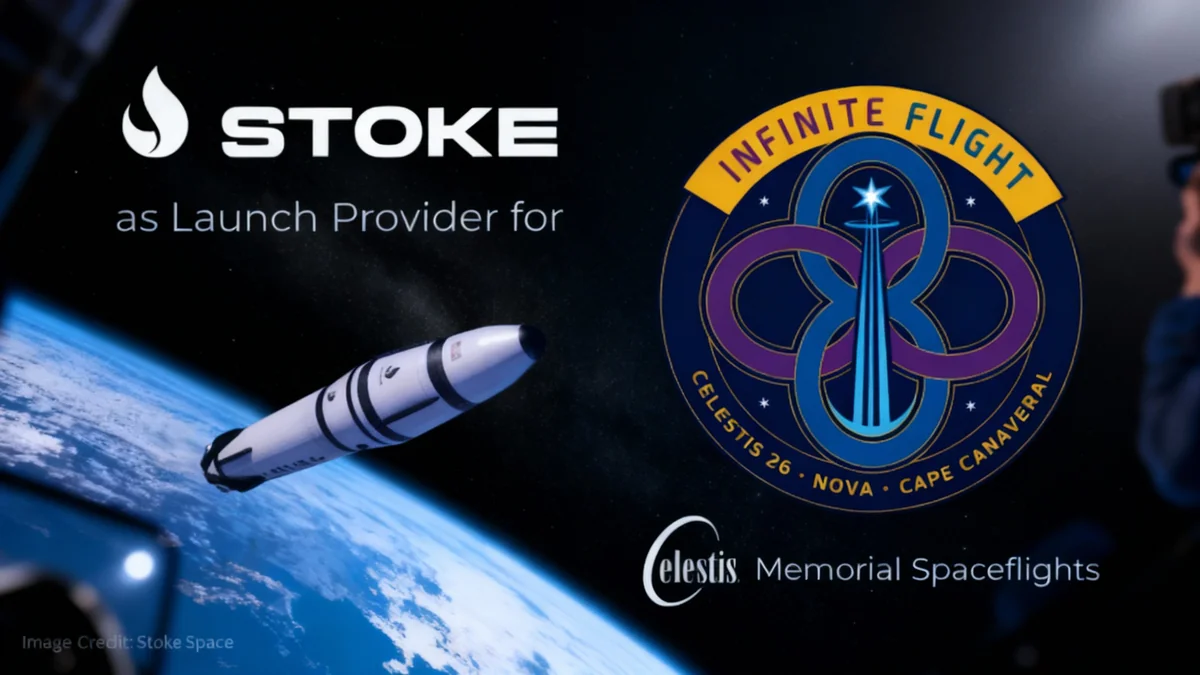


Celestis, a company specializing in memorial spaceflights, has announced a new deep-space mission named Infinite Flight. The mission will carry cremated remains and DNA into a permanent orbit around the sun aboard a fully reusable rocket developed by Stoke Space. The launch is scheduled for the fourth quarter of 2026 from Cape Canaveral, Florida.
This collaboration marks the second commercial deep-space memorial flight in history, both organized by Celestis. The mission aims to provide a unique form of remembrance while supporting the development of sustainable space technology.
Key Takeaways
- Celestis announced the "Infinite Flight" mission, a deep-space memorial service.
- The mission will use Stoke Space's fully reusable Nova rocket.
- It is scheduled to launch in Q4 2026 from Cape Canaveral's historic Space Launch Complex 14.
- The payload, containing cremated remains and DNA, will be sent into a permanent orbit around the sun.
- This partnership highlights a growing synergy between commercial space ventures and unique service industries.
A New Era for Memorial Services
For over three decades, Celestis has offered families a way to honor loved ones by sending a symbolic portion of their cremated remains or DNA into space. The upcoming Infinite Flight mission represents the company's most ambitious offering to date, moving beyond Earth's orbit into the vastness of the solar system.
The mission will place its payload of memorial capsules into a heliocentric orbit, meaning it will circle the sun indefinitely. This creates a perpetual tribute traveling through deep space. Charles M. Chafer, Co-Founder and CEO of Celestis, described the goal of these missions.
"Our Voyager missions ensure that every story we carry into space helps extend humanity’s presence across the solar system," Chafer stated. "The Infinite Flight continues what began nearly thirty years ago when we promised that remembrance could itself be an act of discovery."
The mission is part of Celestis' Voyager Service, which is dedicated to deep-space journeys. By partnering with emerging players in the aerospace industry, the company is securing its place in the future of commercial spaceflight.
The Technology Driving the Mission
A key element of the Infinite Flight mission is the choice of launch vehicle: Stoke Space's Nova rocket. Unlike traditional rockets, Nova is designed to be fully and rapidly reusable, a technological advancement aimed at significantly lowering the cost and environmental impact of space launches.
This reusability is central to the vision of a more accessible and sustainable space economy. Stoke's technology is part of a broader industry trend focused on making spaceflight more like commercial aviation, with frequent and reliable launches.
Launch from a Historic Site
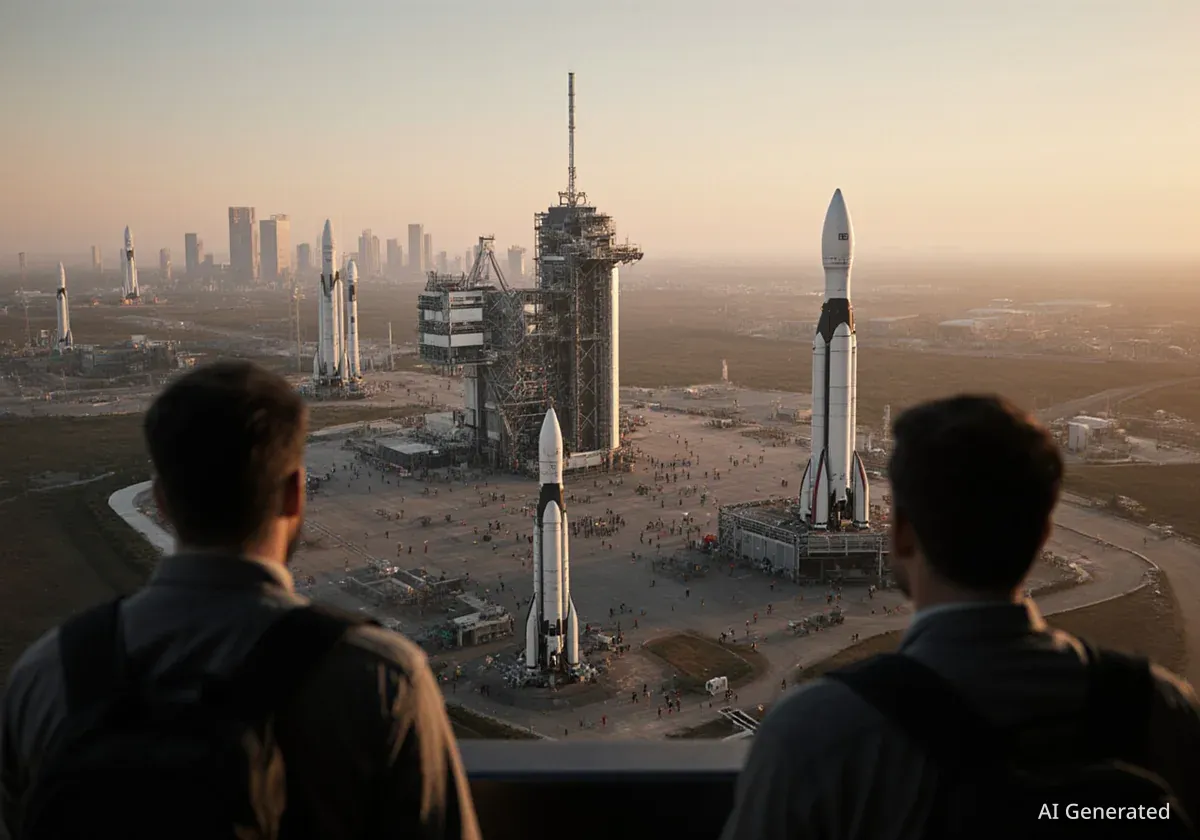
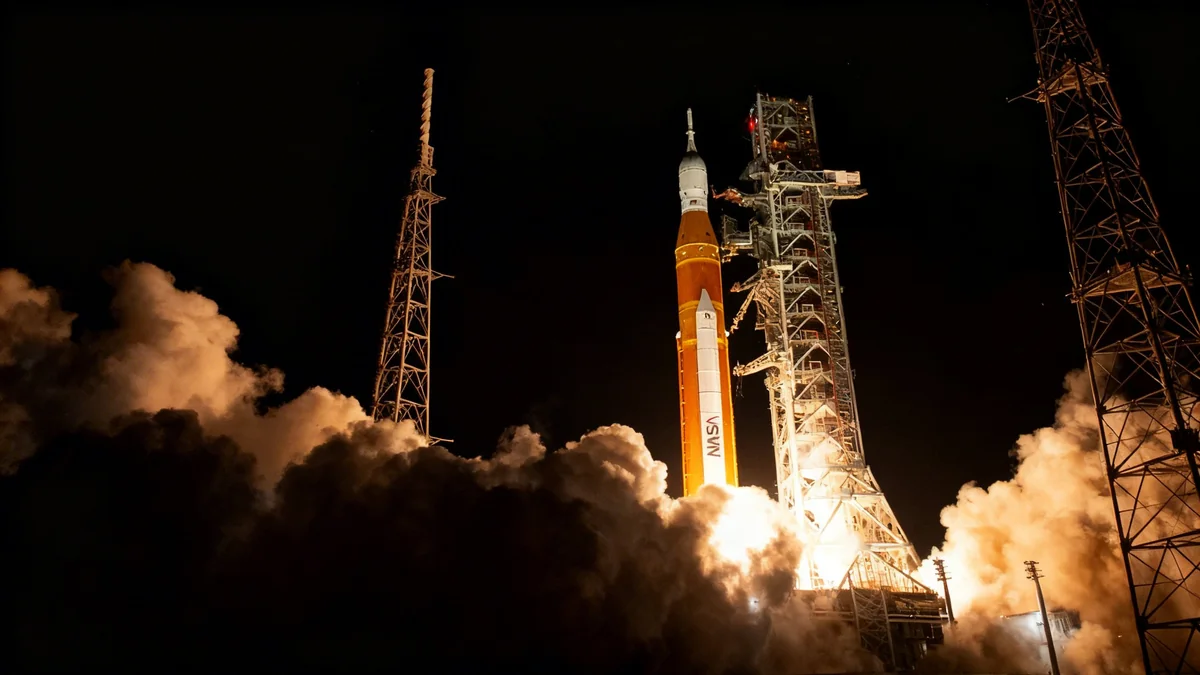
The mission will lift off from Space Launch Complex 14 at Cape Canaveral Space Force Station. This is the same launchpad from which astronaut John Glenn began his historic orbital flight aboard Friendship 7 in 1962, linking this modern commercial mission to the dawn of American space exploration.
The technical aspects of the mission are being managed by Ensemble, a company founded by former NASA engineers. Ensemble will oversee the integration of the Celestis payload with the Nova rocket, ensuring that the memorial capsules are safely delivered to their final deep-space destination. After reaching Earth's orbit, Nova's upper stage will perform a final engine burn to push the spacecraft beyond Earth's gravity and onto its solar trajectory.
What is a Heliocentric Orbit?
A heliocentric orbit is an orbit around the Sun. Objects in such an orbit, like planets, asteroids, and comets, are gravitationally bound to the Sun rather than a planet like Earth.
- Earth Orbit (LEO, GEO): Satellites in these orbits circle our planet.
- Lunar Orbit: Spacecraft in this orbit circle the Moon.
- Heliocentric Orbit: The spacecraft becomes an artificial planetoid, traveling through the solar system indefinitely.
By placing the memorial capsules in this type of orbit, Celestis ensures they become a permanent fixture in the solar system, a silent monument to the individuals they represent.
The Growing Commercial Space Ecosystem
This mission is a clear example of the evolving landscape of the space industry. It showcases how different companies with specialized expertise can collaborate to achieve complex goals. Celestis provides the memorial service concept, Stoke Space develops the innovative launch hardware, and Ensemble provides the mission management and integration services.
Pioneers in Memorial Spaceflight
Since its founding in 1994, Celestis has launched the remains of notable figures, including Star Trek creator Gene Roddenberry and his wife Majel Barrett Roddenberry, as well as astronaut Philip K. Chapman and actress Nichelle Nichols. These missions have helped establish memorial spaceflight as a legitimate and meaningful option for remembrance.
The partnership with Stoke Space is particularly significant. Stoke's focus on rapid reusability is considered a critical next step in the quest to make space more accessible. While companies like SpaceX have mastered first-stage booster reuse, Stoke aims to make its entire vehicle, including the upper stage, reusable with minimal turnaround time.
By selecting Nova for the Infinite Flight, Celestis is not only fulfilling its mission but also investing in and validating a next-generation launch platform. Families participating in the mission are, in a sense, becoming patrons of this new technology. Their participation helps fund the development of a more sustainable approach to space exploration.
As the space economy continues to expand beyond government-led missions, such unique commercial ventures are expected to become more common. They demonstrate a future where space is not just a destination for scientific instruments and astronauts, but also for human culture, art, and memory.