
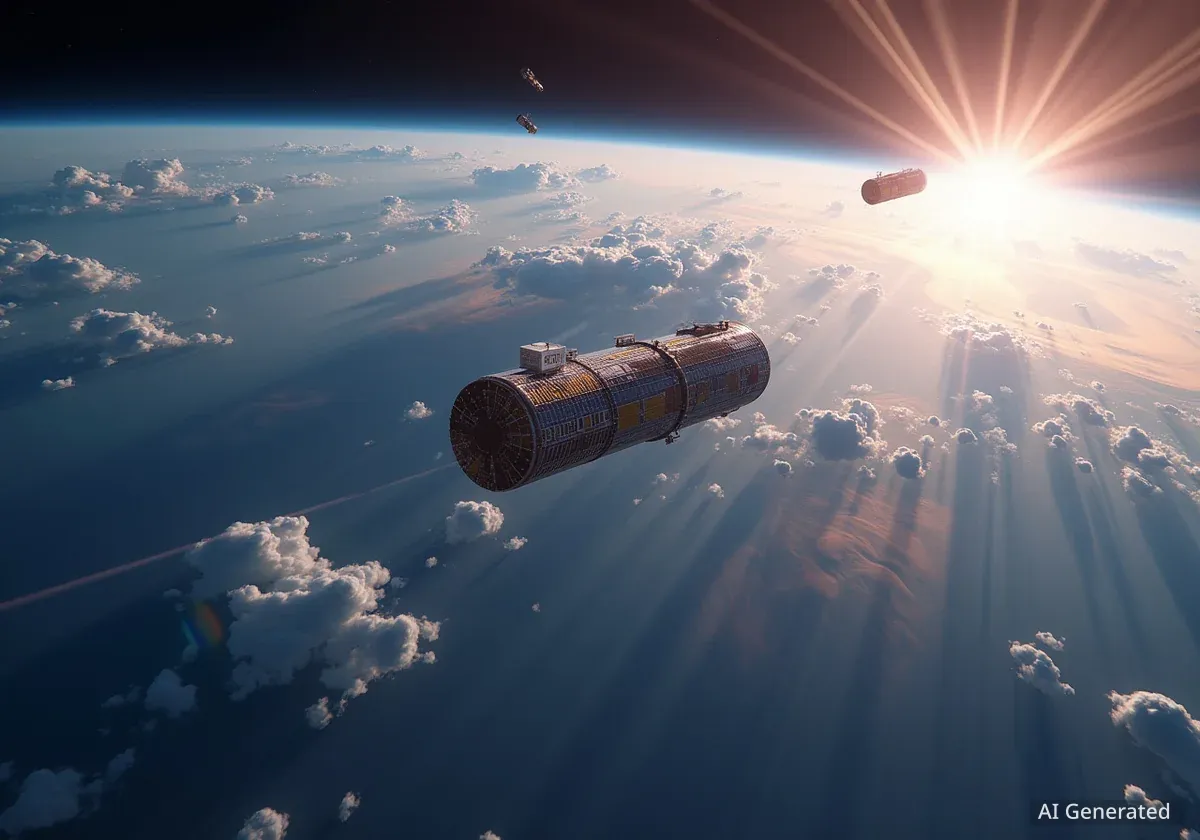


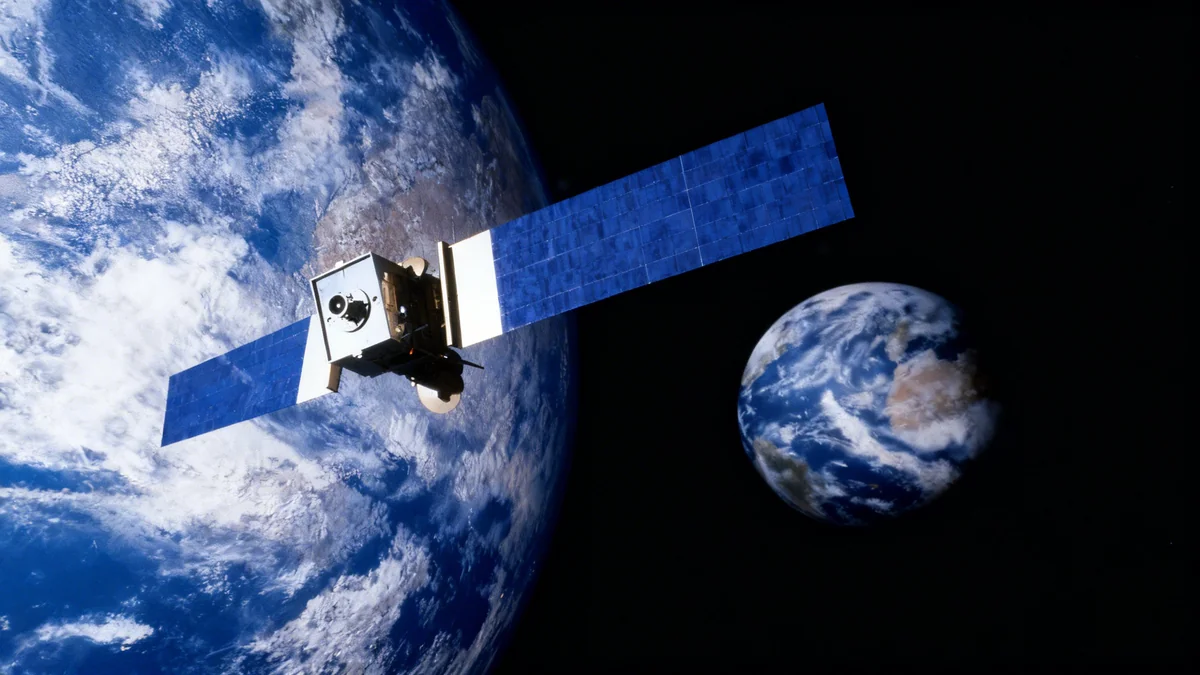
SpaceX has announced a significant operational shift for its Starlink satellite constellation, planning to lower the orbit of approximately 4,400 satellites by 2026. The move is designed to enhance space safety by reducing collision risks and accelerating the disposal of defunct satellites in an increasingly crowded Low Earth Orbit (LEO).
The company will move the satellites from their current altitude of 550 kilometers (342 miles) down to 480 kilometers (298 miles). This adjustment addresses growing concerns from the scientific and aerospace communities about the long-term sustainability of operations in space.
Key Takeaways
- SpaceX will lower the orbit of roughly 4,400 Starlink satellites over the course of 2026.
- The new, lower orbit of 480 km is intended to reduce the risk of collisions with other objects.
- Satellites at this altitude will deorbit much faster, from over four years to just a few months, due to increased atmospheric drag.
- The decision comes as the number of active satellites in LEO surpasses 14,000, with Starlink accounting for over 9,000 of them.
The Congestion Challenge in Low Earth Orbit
The space directly above our planet is becoming a crowded highway. Low Earth Orbit, the region vital for communications, navigation, and Earth observation, is now home to thousands of active satellites. This orbital real estate is finite, and the rapid expansion of satellite networks has introduced new challenges for operators.
SpaceX's Starlink project is the largest single contributor to this population. With over 9,000 active satellites, the network makes up a substantial portion of the more than 14,300 total active satellites orbiting Earth. The company's long-term plans envision a constellation of up to 42,000 satellites, a figure that underscores the urgency of proactive space traffic management.
What is Low Earth Orbit?
Low Earth Orbit (LEO) is an area of space up to 2,000 kilometers (1,200 miles) above the planet. Its proximity to Earth makes it ideal for satellite imaging, communications services like Starlink, and the International Space Station. However, its popularity has led to significant traffic and debris concerns.
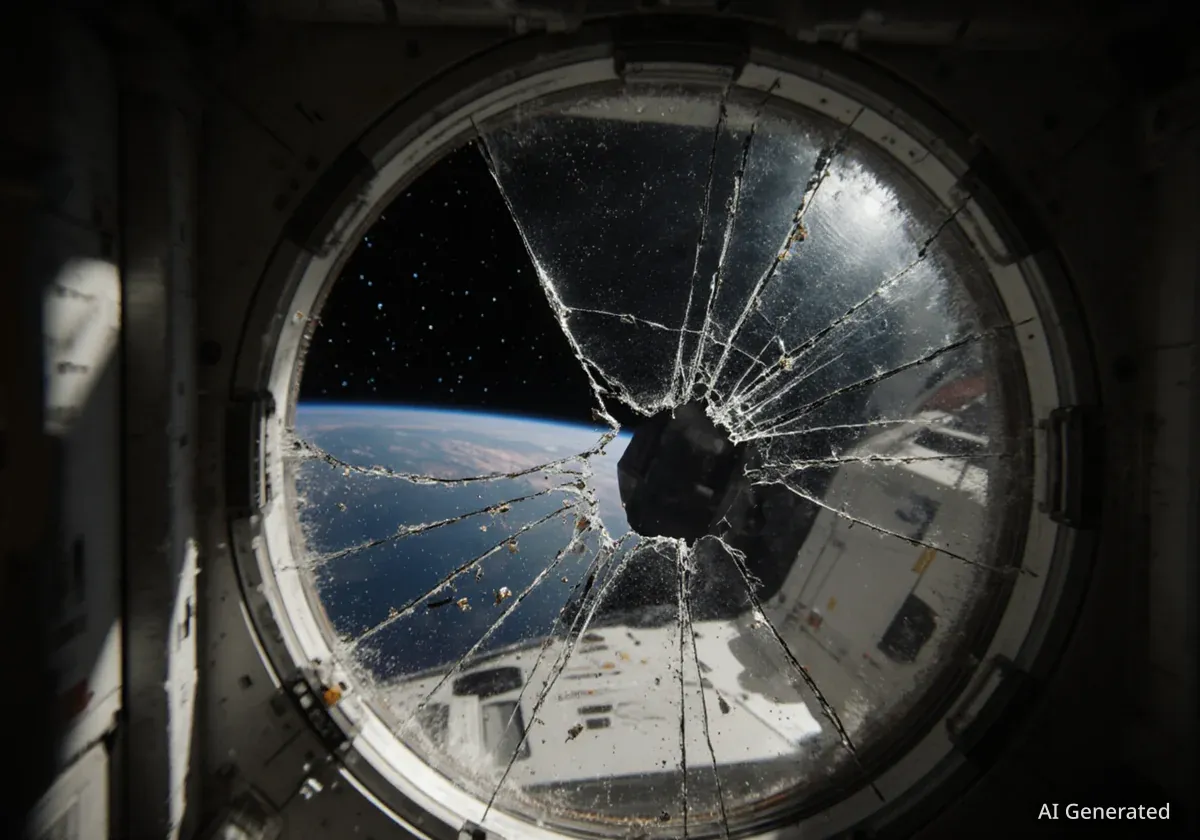
Experts have warned that the density of objects in LEO is reaching a critical point. A recent study highlighted the constant need for satellites, particularly Starlinks, to perform avoidance maneuvers to prevent collisions. Researchers concluded that a failure in these automated systems could lead to a catastrophic crash in less than three days.
A Proactive Move to a Lower Altitude
To address these risks, SpaceX is undertaking a massive orbital reconfiguration. Michael Nicolls, the company's vice president of Starlink engineering, confirmed the plan to systematically lower 4,400 satellites into a less populated orbital band.
The reconfiguration will put these Starlinks in a much less crowded orbit, reducing the aggregate likelihood of collision.
This strategic descent is not just about finding empty space. The primary benefit lies in leveraging Earth's atmosphere for natural satellite disposal. At a lower altitude, satellites encounter greater atmospheric drag, which causes their orbits to decay much more rapidly once they are no longer active.
From Years to Months
According to Nicolls, the time it takes for a defunct Starlink satellite to naturally fall back to Earth and burn up in the atmosphere will be reduced by 80%. The deorbit time will drop from more than four years at the 550 km altitude to just a few months at the new 480 km orbit.
This accelerated deorbiting process is a critical component of responsible space stewardship. It ensures that retired satellites do not become long-term hazards, contributing to the growing cloud of space debris that threatens active missions.
Anticipating the Solar Cycle
The timing of this orbital adjustment is also influenced by the Sun's natural activity cycle. The Sun is currently approaching a period of high activity, known as the solar maximum. However, it will eventually transition toward a solar minimum, expected around 2030.
Why Solar Minimum Matters
During a solar minimum, the Sun emits less extreme ultraviolet radiation. This causes Earth's upper atmosphere to cool and contract, becoming less dense. The reduced atmospheric density results in less drag on satellites.
- Reduced Drag: Less atmospheric resistance means defunct satellites and debris stay in orbit for much longer periods.
- Increased Risk: A longer orbital lifetime for debris increases the cumulative probability of collisions over time.
By moving the Starlink fleet lower before the next solar minimum, SpaceX aims to ensure its satellites will still deorbit quickly even when atmospheric drag is naturally weaker. This forward-thinking approach is designed to prevent a buildup of non-operational Starlink satellites in the coming decade.
The Kessler Syndrome and Future of Spaceflight
The underlying concern driving these measures is the prevention of a theoretical scenario known as the Kessler syndrome. Proposed by NASA scientist Donald J. Kessler in 1978, this theory describes a tipping point where the density of objects in LEO becomes so high that collisions generate a cascade of debris, leading to more collisions.
Such a chain reaction could render certain orbits unusable for generations, severely hampering everything from GPS services and weather forecasting to future space exploration missions. While the simplest solution—launching fewer satellites—is not practical given our growing reliance on space-based infrastructure, proactive management of existing and future constellations is essential.
The Starlink reconfiguration is a complex logistical operation that will require precise, coordinated maneuvers across thousands of individual satellites. SpaceX will need to collaborate closely with other satellite operators, international regulators, and U.S. Space Command to execute the transition safely and without disrupting other services.
While the planned benefits for space safety are significant, their real-world effectiveness will be closely watched by the entire aerospace industry as a potential model for managing the future of our planet's orbital environment.