
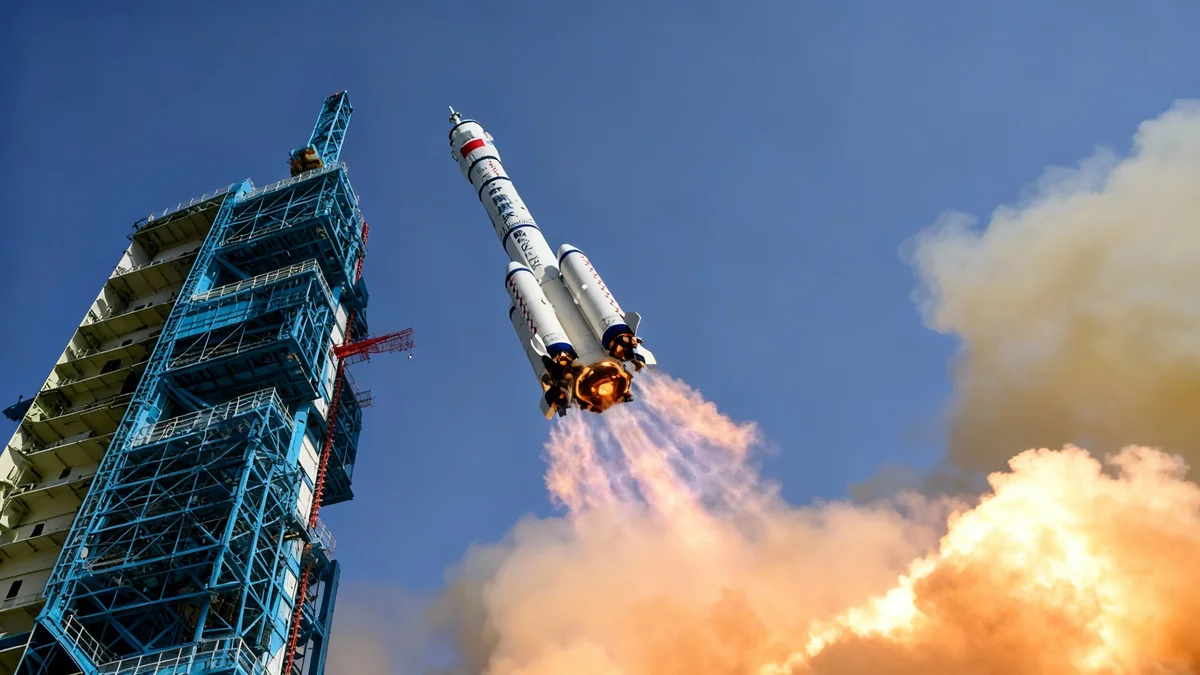



Two Chinese astronauts have completed a challenging eight-hour spacewalk outside the Tiangong space station to inspect a spacecraft previously damaged by space debris. The extravehicular activity (EVA) on Tuesday, December 9, focused on assessing the Shenzhou 20 vehicle, which was deemed unsafe for re-entry last month.
The spacewalk is a direct response to a growing threat in low Earth orbit and highlights the operational challenges space agencies face in protecting their crews and multi-billion dollar assets from orbital debris.
Key Takeaways
- Shenzhou 21 astronauts conducted an eight-hour spacewalk to inspect the damaged Shenzhou 20 spacecraft.
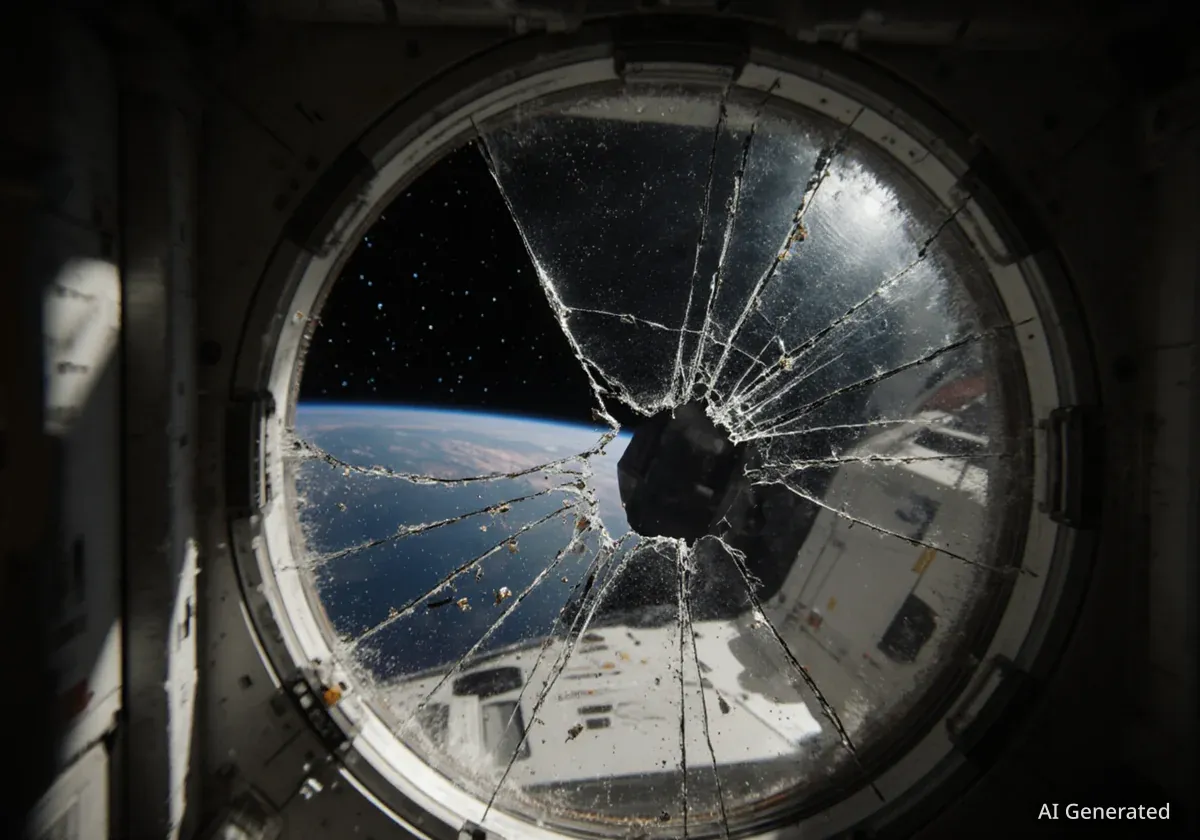
- The Shenzhou 20 was rendered unsafe for crew return after its windows were cracked by a suspected space junk strike.
- Astronauts also installed new space debris protection systems on the Tiangong space station during the EVA.
- The event forced a complex logistical shuffle, including the early return of one crew and the launch of an empty replacement vehicle.
A Close-Up Look at Orbital Damage
The spacewalk began as Shenzhou 21 mission commander Zhang Lu and rookie astronaut Wu Fei exited the Tiangong space station. Their primary objective was to get a detailed, hands-on look at the Shenzhou 20 return capsule, which remains docked at the station.
Using specialized tools and cameras, the duo meticulously inspected and photographed the capsule's windows. These were the components that showed visible cracks following an impact in November, leading mission controllers to ground the vehicle for crewed flight.
Mission Timeline
- Late April: Shenzhou 20 launches with three astronauts.
- November 5: Scheduled return of Shenzhou 20 is cancelled after damage is found.
- Halloween Night: Shenzhou 21 arrives with a new crew.
- November 14: The original Shenzhou 20 crew returns to Earth aboard the newly arrived Shenzhou 21 vehicle.
- November 24: An uncrewed Shenzhou 22 is launched to serve as the new return vehicle for the current crew.
- December 9: Shenzhou 21 crew performs spacewalk to inspect the damaged Shenzhou 20.
In addition to the inspection, the astronauts were tasked with installing new debris shielding on the exterior of the Tiangong station. This proactive measure is part of a broader effort by the China Manned Space Agency (CMSA) to harden the orbital outpost against future impacts. They also replaced a multi-layered cover on a temperature control adapter.
The Growing Threat of Space Debris
The incident with Shenzhou 20 serves as a stark reminder of the dangers posed by space junk. Millions of pieces of debris, from defunct satellites to spent rocket stages and tiny fragments, orbit the Earth at speeds exceeding 17,000 miles per hour. At such velocities, even a small object can cause catastrophic damage.
What is Space Debris?
Space debris, or space junk, refers to any man-made object in orbit around Earth that no longer serves a useful purpose. This includes everything from old satellites and rocket parts to flecks of paint and frozen coolant. The U.S. Space Surveillance Network currently tracks over 27,000 pieces of orbital debris, but countless smaller pieces remain untracked.
The damage to Shenzhou 20 forced an unprecedented series of events. The original three-person crew had their six-month mission extended while officials on the ground assessed the situation. After determining the vehicle was unsafe for the intense heat and pressure of atmospheric re-entry, a rescue plan was put into motion.
The Shenzhou 21 mission, already scheduled for launch, became the recovery vehicle. It arrived at Tiangong on Halloween, and its crew took over station operations. The stranded Shenzhou 20 crew then used the newly arrived Shenzhou 21 capsule to return safely to Earth on November 14.
This left the current crew without a designated return craft. To solve this, China launched an empty Shenzhou 22 spacecraft on November 24, which is now docked at the station, ready to bring the Shenzhou 21 crew home at the end of their tour.
A Test of Resilience and Redundancy
The successful handling of the Shenzhou 20 incident demonstrates the importance of redundancy in spaceflight operations. Having a new mission ready to launch allowed for a quick and effective solution to a potentially life-threatening problem. The ability to launch an uncrewed vehicle as a replacement further showcases the maturity of China's space program.
According to a statement from the China Manned Space Agency, the astronauts "fully utilized their active role as first responders outside the spacecraft" to complete their assigned tasks successfully.
The data gathered during Tuesday's spacewalk will be crucial for engineers on the ground. Understanding the full extent of the damage will inform decisions about the future of the Shenzhou 20 capsule, which officials still plan to return to Earth without a crew at a later date. It will also provide invaluable data for designing more resilient spacecraft and shielding in the future.
A New Generation in Space
The spacewalk was a significant milestone for the Shenzhou 21 crew. Commander Zhang Lu, 48, is a veteran of a previous mission, but it was the first EVA for Wu Fei, 32. At 32, Wu Fei is the youngest member of China's astronaut corps and now holds the record as the youngest Chinese national to perform a spacewalk.
The third crew member, Zhang Hongzhang, 39, assisted the spacewalkers from inside the station, monitoring systems and coordinating with ground control. The successful completion of the complex, eight-hour task highlights the rigorous training and capability of China's taikonauts.
As nations expand their presence in orbit, incidents like the one affecting Shenzhou 20 are likely to become more common. This event underscores the urgent need for international cooperation on space traffic management and debris mitigation to ensure the long-term safety and sustainability of space exploration.