


With NASA's Artemis II mission reigniting public fascination with lunar travel, the people who have actually journeyed beyond Earth are sharing which films best capture the reality, danger, and wonder of space. Eleven astronauts offered their top picks, revealing a surprising mix of gritty realism, scientific problem-solving, and heartfelt science fiction.
Their choices highlight recurring themes that resonate with real-life space explorers: the critical importance of teamwork, the necessity of ingenuity under pressure, and the profound human element that drives the quest for the stars.
Key Takeaways
- Ron Howard's "Apollo 13" is a near-unanimous favorite among astronauts for its stunning realism and accurate portrayal of NASA's problem-solving culture.
- "The Martian" is praised for its scientific accuracy, particularly its depiction of resourcefulness and the collaboration between ground control and the crew.
- Films like "Galaxy Quest" and "The Right Stuff" are celebrated for capturing the spirit of exploration, camaraderie, and the human side of spaceflight, even without perfect scientific accuracy.
- Classic and modern sci-fi epics such as "2001: A Space Odyssey" and "Interstellar" earn respect for their ambitious visuals and exploration of complex scientific concepts.
The Uncontested Champion of Realism: Apollo 13
For many who have experienced the rigors of spaceflight, one film stands above all others in its authentic depiction of a mission in crisis: Ron Howard's 1995 docudrama, "Apollo 13." The true story of the near-disastrous lunar mission is lauded by astronauts for its meticulous attention to detail and its tribute to the collaborative spirit of NASA.
Nicole Stott, who spent over 100 days on the International Space Station (ISS), said the film embodies a core lesson from her time as a NASA engineer. "To really make things happen, we have to adopt a ‘here’s how we can, not why we can’t’ approach to everything," she explained.
A Brush with Disaster
The Apollo 13 mission, launched in 1970, was intended to be the third lunar landing. An onboard explosion crippled the spacecraft, forcing the crew and Mission Control to improvise a series of life-saving procedures to bring the astronauts safely back to Earth. The event is often called NASA's "finest hour."
Chris Hadfield, a former commander of the ISS, praised the film's commitment to accuracy. He noted that director Ron Howard went to great lengths to use the real dialogue transmitted between the damaged capsule and Houston.
"It intensely dramatizes the urgent, high-stakes, life-or-death reality of spaceflight," Hadfield said.
The film's portrayal of the ground team also earned high marks. Michael Massimino, a veteran of two shuttle missions to service the Hubble Space Telescope, felt it "paid well deserved tribute to the dedicated men and women of Mission Control." According to Scott Altman, who commanded two final Hubble missions, the movie perfectly captured the tension felt by both the crew and the ground team.
Science in Action: The Martian
While "Apollo 13" dramatizes a real event, Ridley Scott's 2015 film "The Martian" earns astronauts' respect for its plausible depiction of survival on another world. Based on the novel by Andy Weir, the story follows an astronaut, played by Matt Damon, who is stranded on Mars and must use his scientific knowledge to survive.
Dr. Kate Rubins, who logged nearly 300 days in space and was the first person to sequence DNA in orbit, commended the film's scientific realism. "It does a great job of showing how biology and chemistry can be used to make what you need from what you have on hand," she said. For astronauts, this kind of resourcefulness is not just a plot device; it is a fundamental skill.
Living Off the Land
In "The Martian," the protagonist grows potatoes in Martian soil fertilized with human waste. This concept of in-situ resource utilization—using local materials to become self-sufficient—is a cornerstone of NASA's long-term plans for human exploration of the Moon and Mars.
Clayton C. Anderson, who lived aboard the ISS for five months, saw a reflection of NASA's real-world culture in the film's depiction of teamwork. He noted that the movie accurately shows "the dedication of NASA’s workforce, working together, sometimes at huge personal sacrifice, to get the job done."
Capturing the Spirit of Exploration
Not all astronaut favorites are grounded in strict realism. Some films earn their place by capturing the intangible elements of space travel: the humor, the camaraderie, and the pioneering spirit that defines the astronaut corps.
The Heart and Humor of 'Galaxy Quest'
The 1999 sci-fi comedy "Galaxy Quest" is a beloved choice for its focus on the human relationships behind the adventure. The film, which follows the cast of a defunct space TV show who are mistaken for real heroes by aliens, resonates with astronauts for its portrayal of teamwork and friendship.
"It might not have the verisimilitude of ‘Apollo 13,’... but it captures the wonder of space exploration … and it’s very funny," said Garrett Reisman, a retired astronaut who flew on three different Space Shuttles. Nicole Stott also listed the film as a favorite, emphasizing that she gravitates toward movies that highlight "the human interaction between the characters, which felt so familiar to me."
The Pioneers of 'The Right Stuff'
For a look back at the origins of the U.S. space program, astronauts point to the 1983 epic "The Right Stuff." Adapted from Tom Wolfe's book, the film chronicles the story of the original Mercury 7 astronauts. For Michael Massimino, the movie was more than just entertainment; it was a pivotal moment in his life. Seeing it as a college senior, he said, "rekindled my dream of becoming an astronaut."
Ambitious Visions of the Future
Some of the most iconic space films are those that push the boundaries of imagination and science, inspiring awe with their grand visions of humanity's future in the cosmos.
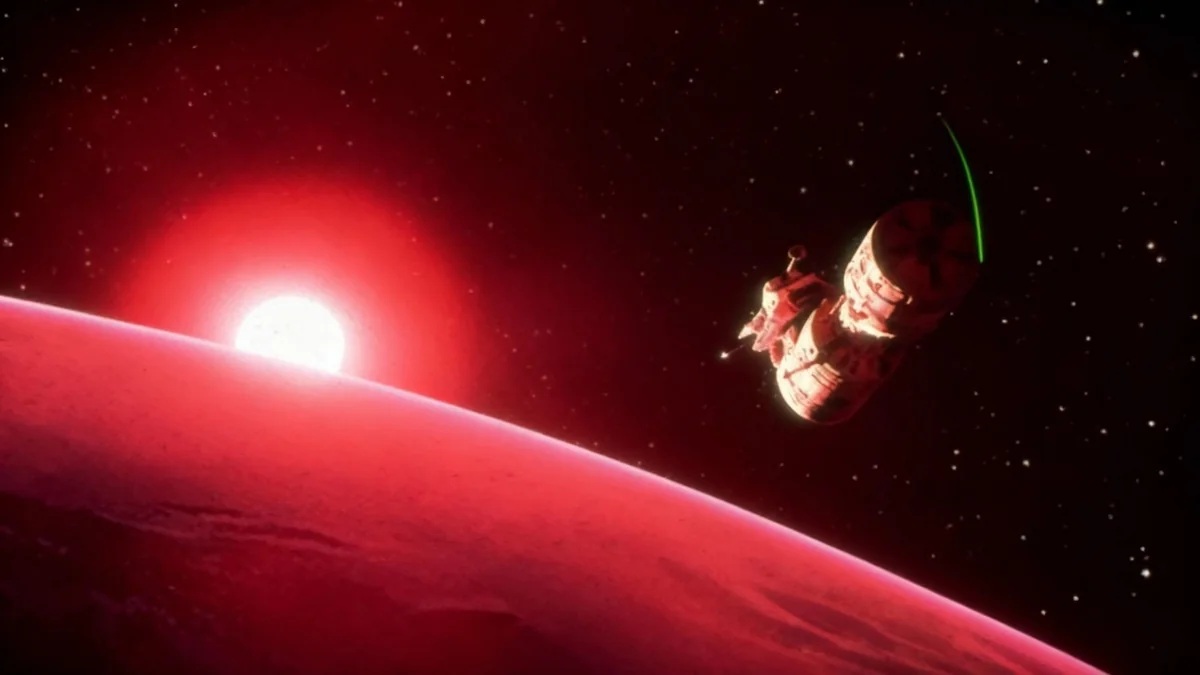
Stanley Kubrick's 1968 masterpiece, "2001: A Space Odyssey," remains a benchmark for its visual achievements. Leroy Chiao, who commanded Expedition 10 on the ISS, praised the film's groundbreaking special effects. "The way that Kubrick was able to film real-looking space scenes back then was fantastic," he commented, though he recommends reading Arthur C. Clarke's book first to fully grasp the complex plot.
Fact vs. Fiction
While many films take creative liberties, movies like "Interstellar" and "The Martian" employed scientific consultants to ensure their depictions of physics, biology, and engineering were as accurate as possible. Caltech physicist Kip Thorne, a consultant on "Interstellar," even published a book about the science behind the film.
More recently, Christopher Nolan's 2014 film "Interstellar" has been hailed as a modern classic. The movie explores a future where humanity must find a new home among the stars. Josh Cassada, who flew on SpaceX's Crew-5 mission, said the film succeeds in capturing both scientific and emotional depth.
The film's exploration of time dilation, a consequence of Einstein's theory of General Relativity, was particularly powerful. NASA scientist Dr. Sylvain Costes remarked that the film "masterfully transforms the cold equations of General Relativity into a visceral human tragedy," showing how time itself becomes a precious resource in deep space.
The Power of Documentary: Apollo 11
Finally, for an experience that requires no fictional narrative, retired astronaut Terry Virts recommends the 2019 documentary "Apollo 11." The film uses newly discovered, large-format footage to present the historic moon landing as never seen before.
The documentary's raw power had a profound effect on Virts, who has experienced a launch firsthand. "It has amazing newly discovered IMAX-quality footage, a great soundtrack, and when they showed the launch sequence," he said, "my heart was racing faster than when I actually launched into space."