
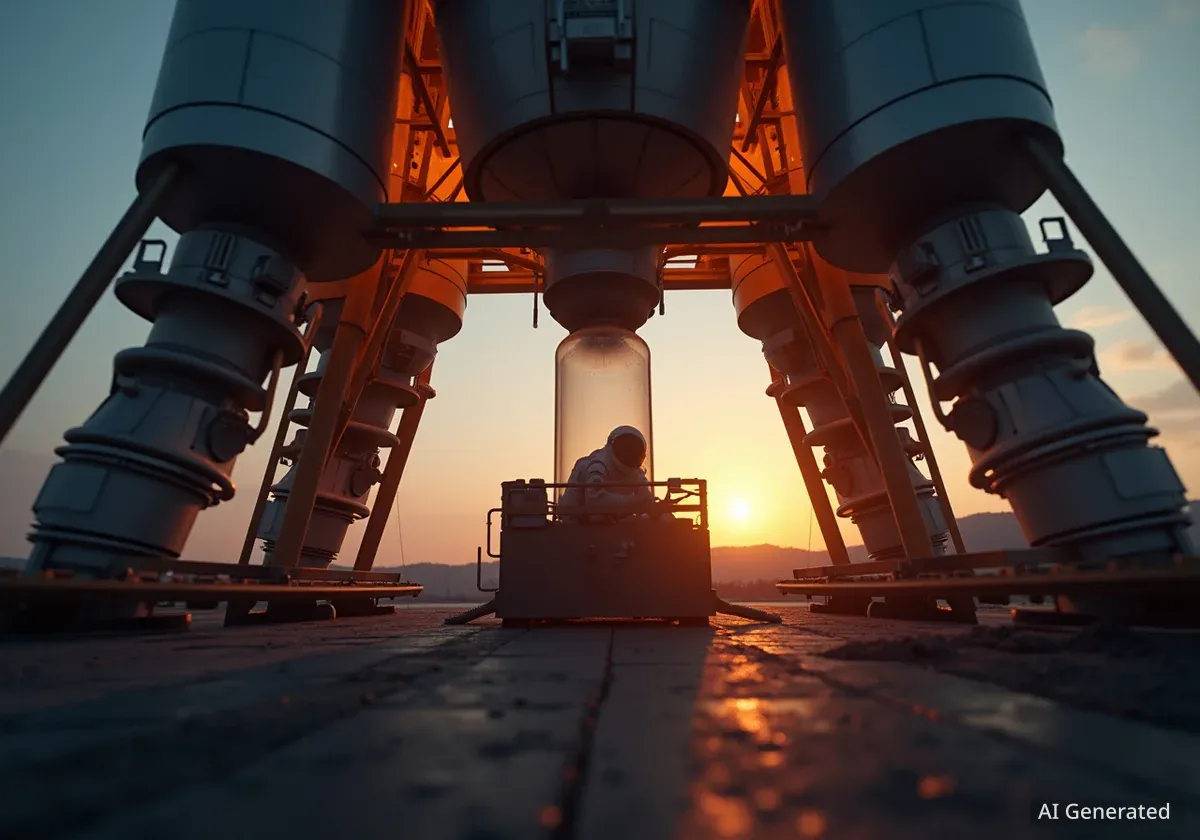
The four astronauts assigned to NASA's Artemis 2 mission have completed a critical launch day simulation, strapping into their Orion spacecraft for a full practice countdown. The successful test, conducted inside the Vehicle Assembly Building at the Kennedy Space Center, marks a significant step toward the first crewed flight to the moon in over 50 years.
Key Takeaways
- The Artemis 2 crew conducted a full dress rehearsal of their launch day procedures, including a practice countdown.
- The test took place with the astronauts inside their Orion capsule atop the Space Launch System (SLS) rocket.
- Commander Reid Wiseman acknowledged minor issues but called the overall test an "extremely successful day."
- The mission is tentatively scheduled for early February, but a slip to March is possible due to the tight schedule.
- Artemis 2 will be the first human mission to travel to the vicinity of the moon since Apollo 17 in 1972.
A Realistic Simulation Inside the VAB
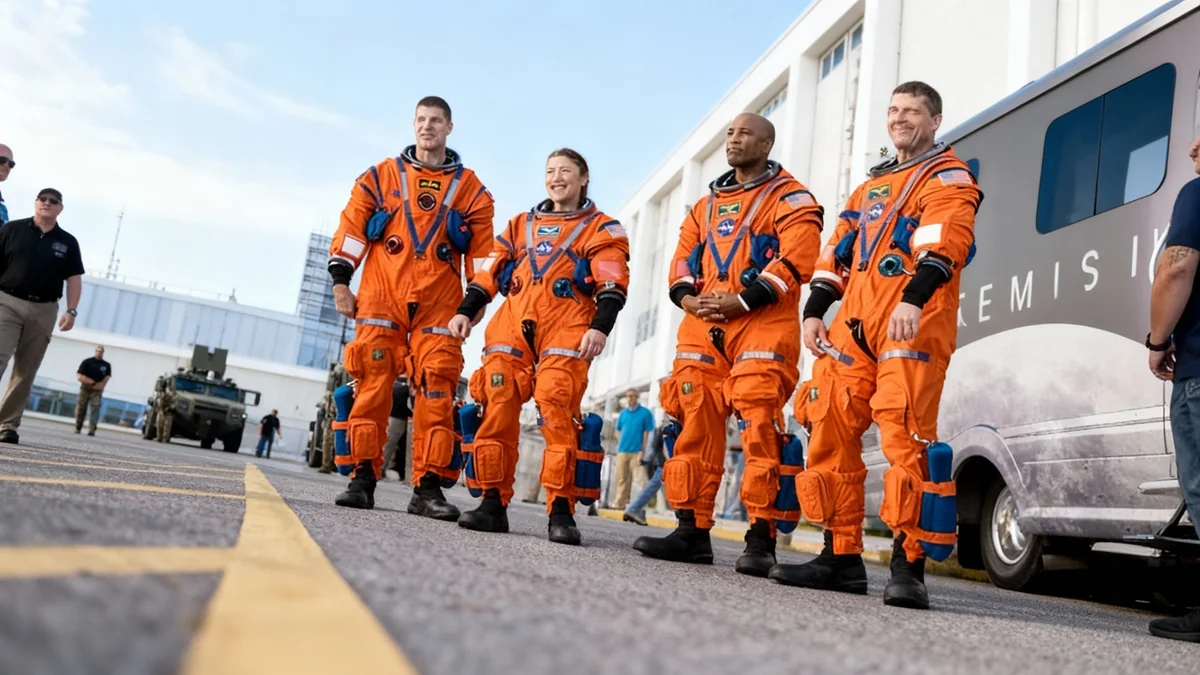
In a crucial step preparing for humanity's return to deep space, the Artemis 2 crew participated in a full-scale countdown demonstration test this past weekend. Commander Reid Wiseman, Pilot Victor Glover, and Mission Specialists Christina Koch and Jeremy Hansen donned their iconic orange flight suits and boarded the Orion capsule, just as they will on launch day.
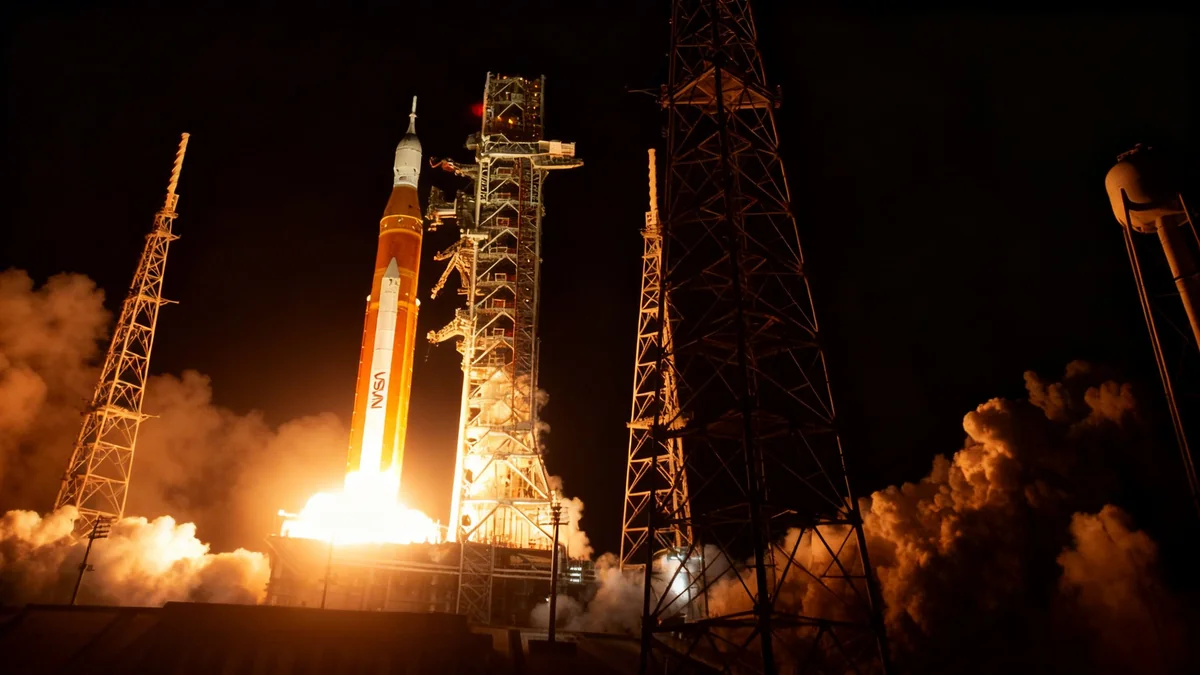
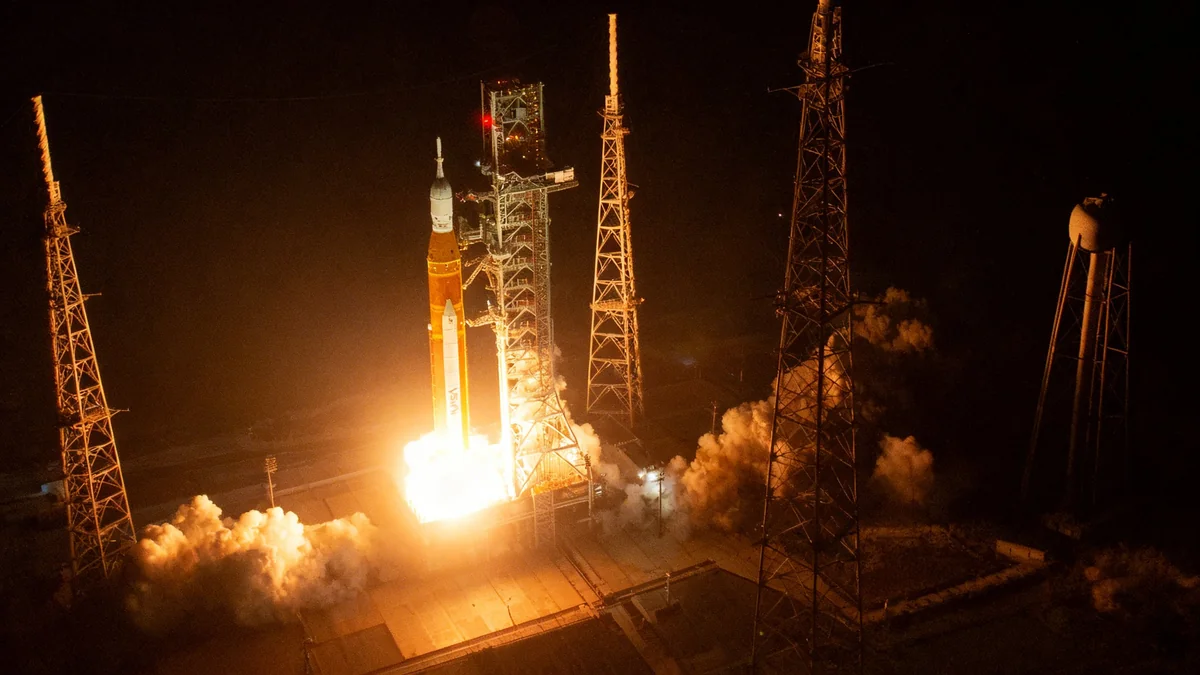
Unlike traditional dress rehearsals held at the launch pad, this exercise occurred inside the immense Vehicle Assembly Building (VAB) at NASA's Kennedy Space Center. The Orion spacecraft, already positioned atop the 322-foot-tall Space Launch System (SLS) rocket, provided a high-fidelity environment for the crew and the launch control team to synchronize their procedures.
The simulation progressed through the complex steps of a real countdown, ending just moments before the simulated ignition sequence would have begun. This allows teams to iron out any issues in a controlled setting before the rocket is moved to the launch pad and loaded with propellant.
Navigating Challenges and Building Confidence
While the test was deemed a major success, it was not without its challenges. The countdown clock experienced several stops and starts during the procedure, indicating that the teams were actively working through technical issues as they arose. NASA has not provided specific details on the nature of these pauses.
Despite the interruptions, mission commander Reid Wiseman expressed strong confidence in the team and the hardware. In a public statement following the rehearsal, he conveyed a positive outlook on the day's events.
"Extremely successful day in our spacecraft #Integrity. Did everything go perfectly? Absolutely not. But this vehicle and our team showed us they're up to the challenge. Launch is getting very close."
This kind of problem-solving is a primary goal of such rehearsals. Identifying and resolving issues now is critical to ensuring a smooth and safe countdown when the mission is ready for flight.
The Road to Launch Pad 39B
Before the Artemis 2 mission can take flight, the fully assembled SLS rocket and Orion spacecraft must be rolled out from the VAB to Launch Pad 39B. Once at the pad, it will undergo a "wet dress rehearsal," a final major test that includes loading the rocket with super-cooled liquid propellants. The success of that test is the final green light for setting an official launch date.
Mission Objectives and Timeline
The Artemis 2 flight is scheduled for a 10-day journey that will take its crew on a flyby of the moon. This will be the first time humans have traveled beyond low-Earth orbit since the final Apollo mission in 1972, and they are expected to travel farther from Earth than any human in history.
Key Phases of the Artemis 2 Flight:
- Initial Orbit: After launch, the crew will spend approximately 25 hours in a high, elliptical Earth orbit to test the Orion's life support, navigation, and control systems.
- Rendezvous Test: The astronauts will pilot Orion in close proximity to the discarded upper stage of the SLS rocket. This maneuver will test the spacecraft's handling and rendezvous capabilities, which are essential for future docking operations on lunar landing missions.
- Lunar Flyby: Once initial checkouts are complete, Orion will fire its engines for the translunar injection burn, sending it on a "free-return" trajectory that will loop it around the far side of the moon.
- Return and Splashdown: After its lunar flyby, the spacecraft will return to Earth, re-entering the atmosphere at high speed and splashing down in the Pacific Ocean.
The Artemis 2 mission builds upon the success of Artemis 1, an uncrewed test flight that sent an Orion capsule on a similar trajectory around the moon in late 2022. However, the Artemis 2 vehicle is equipped with a full life support system necessary to sustain its four-person crew.
The Broader Artemis Program
Artemis 2 is a foundational mission for NASA's long-term goals of establishing a sustainable human presence on the moon. The data and experience gathered from this flight are vital for the next step: Artemis 3. That mission, currently targeted for 2028, aims to land the first woman and the next man on the lunar surface, specifically near the moon's south pole.
The timeline for Artemis 3 has seen several adjustments. Originally targeted for 2024, the mission has been delayed by factors including pandemic-related slowdowns and the complex development of the Human Landing System (HLS), the lunar lander being built by SpaceX.
NASA's push to return to the moon is also part of a renewed international focus on lunar exploration. China has stated its own ambitious goal of landing taikonauts on the moon by 2030, setting the stage for a new era of space competition and collaboration. For now, all eyes are on the Artemis 2 crew as they complete their final preparations for a historic journey.