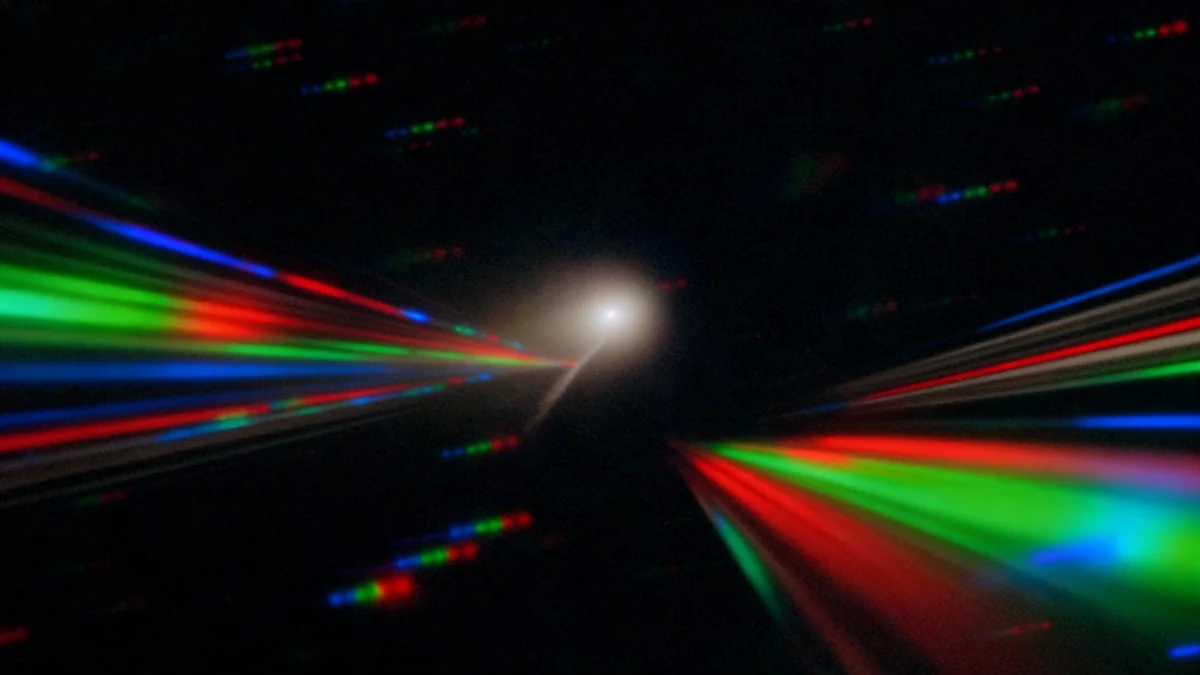
NASA Mission Captures Unprecedented 40-Day View of Comet SWAN
NASA's PUNCH mission has completed a record-breaking, near-continuous 40-day observation of Comet SWAN, providing an unparalleled look at its journey.

#NASA#Comet#PUNCH Mission
11 articles tagged
NASA's PUNCH mission has completed a record-breaking, near-continuous 40-day observation of Comet SWAN, providing an unparalleled look at its journey.
A student-built satellite, the size of a loaf of bread, is set to launch for NASA to study solar wind, highlighting student innovation in space research.
New research reveals that 'space tornadoes,' or flux ropes, can form between the Sun and Earth, creating a previously unknown source of geomagnetic storms.
NASA's IMAP mission, launched in 2025, is collecting data on the heliosphere, the Sun-created bubble protecting our solar system from cosmic radiation. Positioned at Lagrange Point 1, IMAP's findings
NASA and NOAA have successfully launched three new spacecraft, including the IMAP and SWFO-L1 missions, to study the Sun and improve space weather forecasting.
NASA and SpaceX have launched the IMAP mission to study solar wind. The data will help protect satellites, power grids, and astronauts from space weather.
NASA and NOAA have launched three new spacecraft on a mission to a gravitationally stable point one million miles from Earth to study solar wind and improve space weather forecasting.
NASA's IMAP spacecraft launched on a SpaceX Falcon 9 to study space weather, solar wind, and the heliosphere. The mission will protect astronauts, satellites, and communications.
NASA and NOAA have launched a trio of satellites to study the Sun's influence, from the edge of the solar system to its impact on Earth's infrastructure.
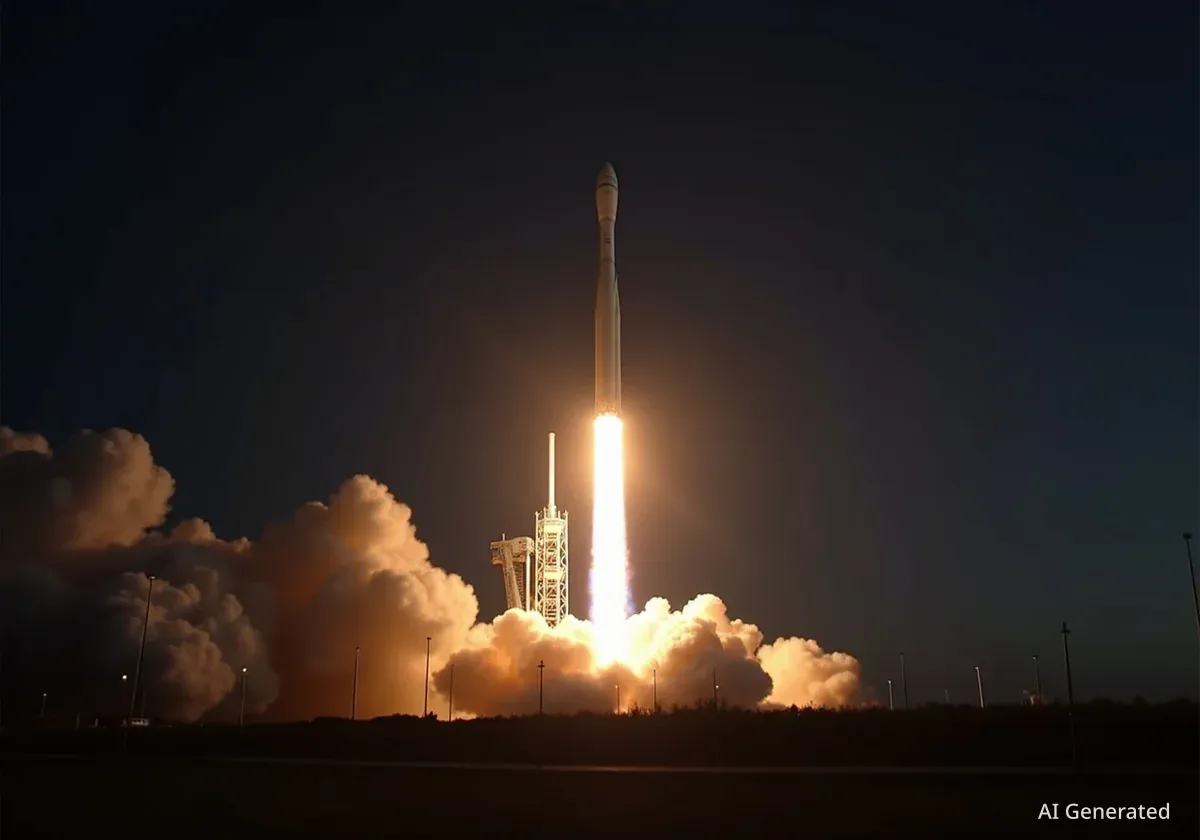
NASA has launched the Interstellar Mapping and Acceleration Probe (IMAP) to study the heliosphere, our solar system's protective bubble. The two-year mission will analyze solar wind interaction with i
NASA's MMS mission has provided the first direct evidence that pickup ions create waves in the solar wind near Earth, a discovery that could reshape scientific models.