
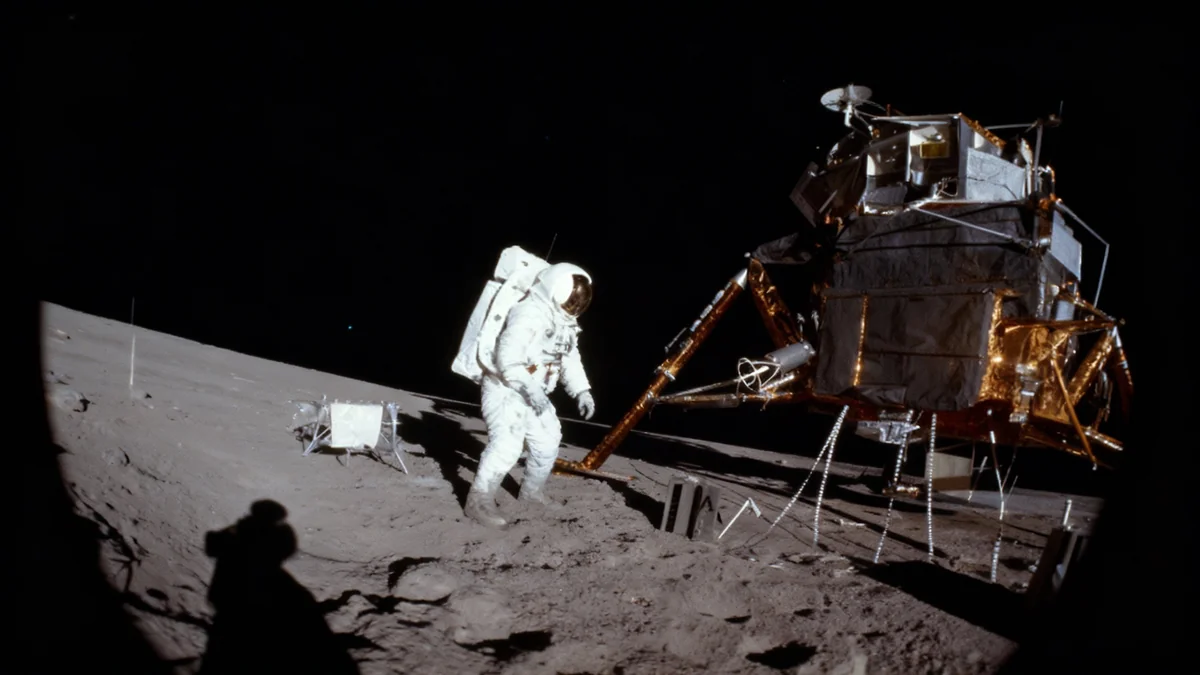



The United States is advancing a plan to establish a nuclear fission reactor on the Moon by 2030, a move aimed at securing a continuous power source for future lunar missions and asserting leadership in a new era of space exploration. This initiative is designed to overcome the limitations of solar power, which cannot function during the Moon's two-week-long nights, and to enable more ambitious scientific and commercial activities on the lunar surface.
NASA's plan involves deploying a 100-kilowatt reactor, a critical piece of infrastructure for long-term human presence. Industry experts and government officials believe that the first nation to successfully operate a nuclear power source on the Moon will significantly influence the standards for future lunar development and economic activity.
Key Takeaways
- NASA has announced a goal to deploy a 100-kilowatt nuclear fission reactor on the Moon by the year 2030.
- Nuclear power provides a consistent energy source, essential for surviving the 14-day lunar night and powering extensive operations.
- The initiative builds on a U.S. history of using nuclear power in space, including the SNAP-10A reactor launched in 1965.
- Success depends on strong government-industry collaboration, including clear regulations and risk-sharing agreements.
- The growing space economy, projected to reach $1.8 trillion by 2035, is a major driver for this technological push.
The Need for a New Power Source
Sustaining human life and complex machinery on the Moon presents a significant power challenge. Lunar nights last approximately 14 Earth days, plunging temperatures and cutting off access to solar energy, the primary power source for most space missions to date.
A small nuclear fission reactor offers a solution. It can provide a steady, reliable stream of electricity regardless of sunlight, enabling continuous operations for habitats, research equipment, and resource extraction machinery. From a physics standpoint, nuclear energy has the highest energy density available, meaning it can generate more power from a smaller, lighter package compared to any other source.
This capability is seen as a game-changer for establishing a permanent lunar base, which is a cornerstone of NASA's Artemis program and a stepping stone for future missions to Mars.
A History of Nuclear Power in Space
The United States is not new to using nuclear technology beyond Earth's atmosphere. Since the 1960s, radioisotope thermoelectric generators (RTGs), which use the heat from decaying plutonium, have successfully powered deep space probes like Voyager and Mars rovers like Curiosity and Perseverance. In 1965, the U.S. even launched a satellite, SNAP-10A, powered by a small fission reactor. This history provides a technical and regulatory foundation for the current lunar reactor project.
Overcoming Hurdles on Earth and in Space
While the technology is feasible, deploying a reactor on the Moon involves overcoming significant logistical and regulatory hurdles. Industry leaders are calling for clearer guidance from the federal government to streamline the development and launch process.
Policy and Regulation
Existing frameworks like the National Security Presidential Memorandum 20 (2019) and Space Policy Directive 6 (2020) have established processes for authorizing nuclear systems in space. However, private companies developing the reactors need more specific risk-sharing agreements, especially concerning liability during launch and operation.
A coordinated effort between NASA, the Department of Energy, and the Department of Defense is considered essential for success. This includes providing private firms with access to government-owned testing facilities and communication networks to reduce development costs and timelines.
Economic Stakes in the New Space Race
The push for lunar nuclear power is also driven by powerful economic incentives. A recent McKinsey analysis projects the global space economy will grow from $630 billion in 2023 to $1.8 trillion by 2035. Leadership in space infrastructure is expected to translate directly into economic leadership on Earth.
Engineering and Supply Chain Challenges
Designing a reactor that is small, durable, and safe enough to launch and operate remotely in the harsh lunar environment is a major engineering challenge. Furthermore, rebuilding a robust domestic supply chain for the high-assay low-enriched uranium (HALEU) fuel required for these advanced reactors is a national priority.
Despite these difficulties, numerous American companies, from innovative startups to established aerospace giants, are actively developing and testing reactor designs, signaling that the private sector is ready to invest and move forward.
The Strategic Importance of Lunar Power
The nation that first establishes a reliable power grid on the Moon will be positioned to lead the next phase of space exploration and utilization. A lunar reactor would not only support scientific missions but also enable commercial activities like mining for water ice and other resources.
"The first space race was about getting to the moon. Today’s race to the moon and Mars is about staying there. Resources, reactors and rivalries will decide the new moon race."
With a powerful energy source, the U.S. could enhance a wide range of space-based capabilities. These include:
- High-Bandwidth Communications: Powering advanced satellites to relay vast amounts of data back to Earth.
- Enhanced Scientific Instruments: Operating high-power radar for prospecting lunar resources and conducting deeper space research.
- Planetary Defense: Improving our ability to detect and track near-Earth objects.
- In-Situ Resource Utilization (ISRU): Extracting and processing local materials, such as water ice, to produce rocket fuel, oxygen, and water.
As launch costs continue to fall, the economic and strategic case for investing in foundational infrastructure like nuclear power grows stronger. The successful deployment of a lunar reactor would demonstrate American technological leadership and set a peaceful precedent for the sustainable development of space for all of humanity.
While the challenges are substantial, the potential rewards—from unlocking the secrets of our solar system to fueling new industries—are seen as a critical national objective. If the U.S. does not lead this effort, another nation will.